How a Buddhist Guardian Became China’s Most Famous Divine Child
Few figures in Chinese mythology reveal the process of cultural evolution as clearly as Nezha.
Unlike fictional characters created by a single author, Nezha emerged through more than a thousand years of continuous reinterpretation. His identity was shaped not only by religious texts, but also by temple worship, painters, sculptors, playwrights, novelists, and generations of believers.
From India to China, from Buddhism to Daoism, from solemn protector to mischievous child hero, every era left its own mark on his image.
The Nezha recognized today is therefore a collective creation—one that belongs not to a single person, but to centuries of Chinese civilization.
The timeline below follows that extraordinary transformation through history and art.
INDIAN ORIGINS
Nalakūvara
The Buddhist Guardian
Period: India – Early Buddhism
Period: India • Early Buddhism
Transformation:
Buddhist guardian deity and son of Vaiśravaṇa.
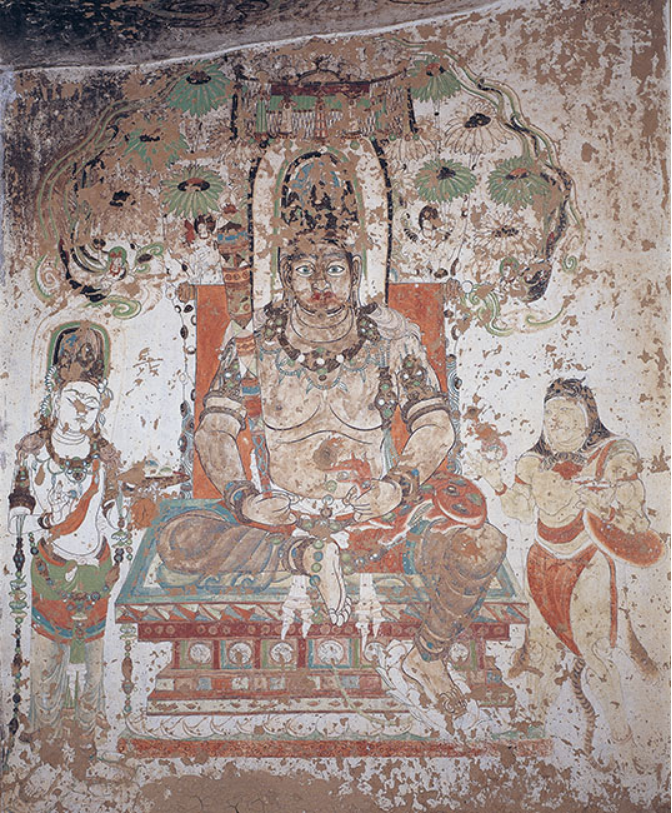
FIG. 13
Vessavaṇa
Vessavaṇa is one of the Four Heavenly Kings in Buddhism and Ne Zha’s grandfather (or father). The grotto mural of Vessavaṇa was found in Dunhuang, dated to late Tang Dynasty (618-907)/Dunhuang Academy.
TANG DYNASTY
The Armored Prince
Period:618–907
Transformation:
Nezha entered Chinese Buddhism as an armored celestial warrior.
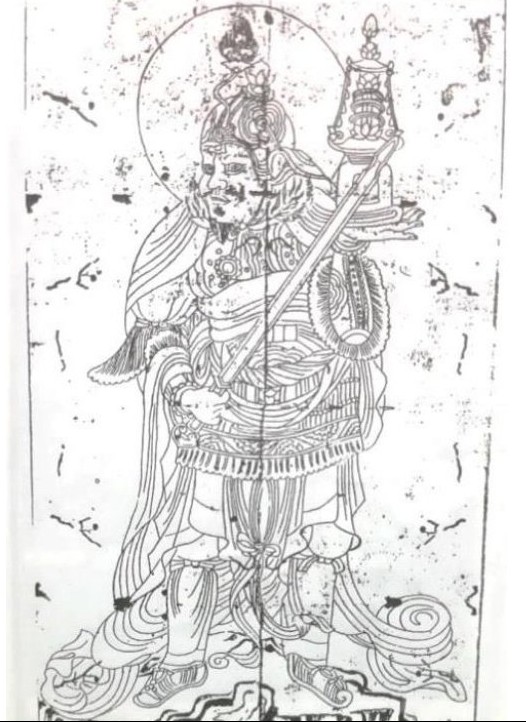
FIG. 15
This image depicts Prince Nezha during the Tang Dynasty. At that time, Nezha was portrayed not as a child, but as a fully armed, armor-clad warrior of imposing stature.《大正藏·图像部》“唐本哪吒太子像”.
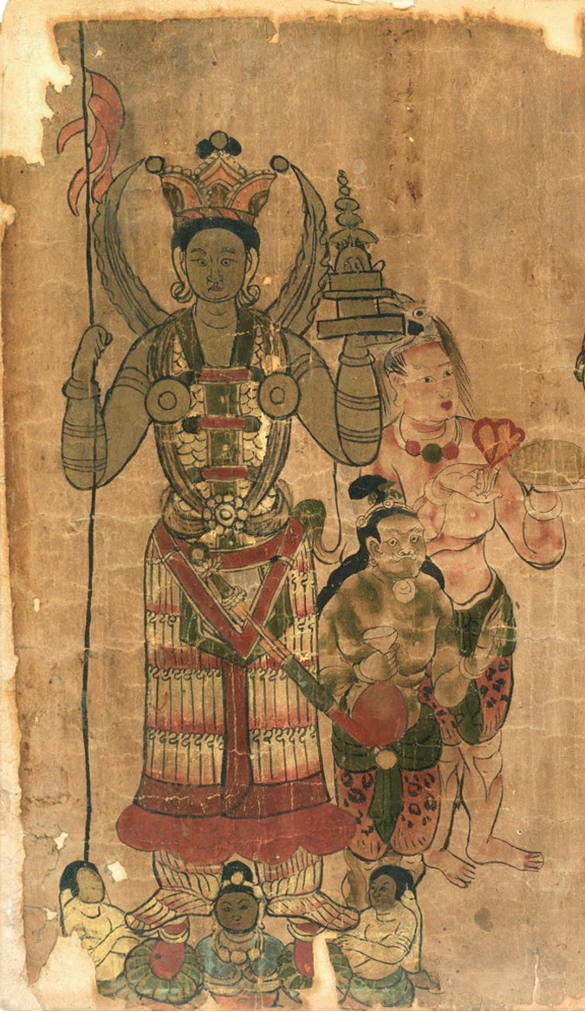
FIG. 16
Depiction of Vaiśravaṇa and Nezha from Dunhuang
In the Dunhuang painting Vaiśravaṇa Attending Nezha’s Assembly, Nezha is consistently depicted as a child attendant. The fair-skinned, rosy-cheeked youth holding a precious flower to the left of Vaiśravaṇa represents an early childlike depiction of Nezha. Among the two figures standing beside the Heavenly King, one is a child with a pale pink complexion, relatively large stature, and distinctly Chinese facial features, closely resembling the later “chubby-faced” image of Nezha. This figure can therefore be identified as the Sinicized Nezha, suggesting that the child Nezha of Ming and Qing vernacular fiction may ultimately trace its origins back to these Dunhuang representations.
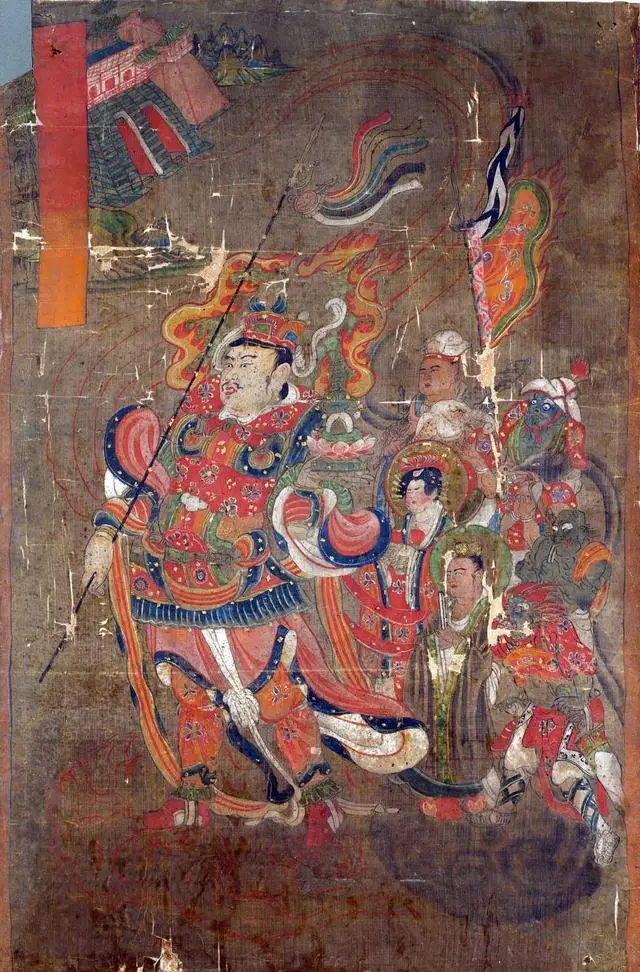
FIG. 17
The earliest identifiable image of Nezha was discovered in a Tang-dynasty silk painting of Vaiśravaṇa, unearthed from the Mogao Caves at Dunhuang. Beneath the Heavenly King’s knee stands a young warrior holding a halberd, accompanied by the inscription “Prince Nazha” (那咤太子). This figure derives from the Sanskrit name Nalakūvara, originally the third son of the Indian wealth deity Kubera. In Esoteric Buddhism, he served merely as an attendant carrying a spear.
According to the Taiping Guangji of the Northern Song dynasty, the Tang military hero Li Jing was later identified with Vaiśravaṇa himself. As Buddhism became increasingly Sinicized, Nalakūvara was incorporated into the newly constructed genealogy of Li Jing’s sons—Jinzha, Muzha, and Nezha. This transformation of a minor Indian Buddhist attendant into one of China’s most beloved divine heroes may be regarded as one of the most remarkable examples of religious and cultural adaptation in Chinese history.
SONG DYNASTY
The Son of Li Jing
Period:960–1279
Transformation:
Nezha became integrated into Chinese mythology and entered the Li family lineage.
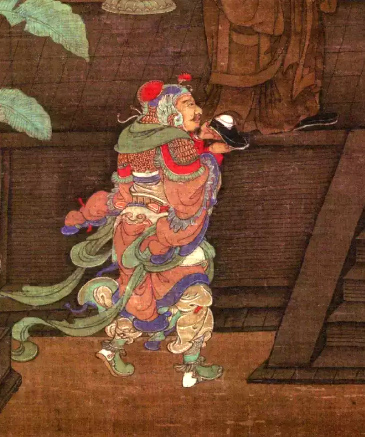
FIG. 18
This painting is a detail from The Five Hundred Arhats: Veneration at the Buddha Hall by Lin Tinggui of the Southern Song Dynasty. It illustrates a famous story about the eminent Tang monk Daoxuan. The figure supporting the monk’s feet with both hands is Nezha.
As seen in Lin Tinggui’s Buddhist painting, Nezha is still depicted as an adult rather than a child. This suggests that, in the minds of people during the Tang and Song dynasties, Nezha—as a powerful Buddhist guardian deity endowed with great supernatural abilities—was not envisioned as a youthful boy. The familiar image of Nezha as a child attendant would emerge from other, earlier traditions.
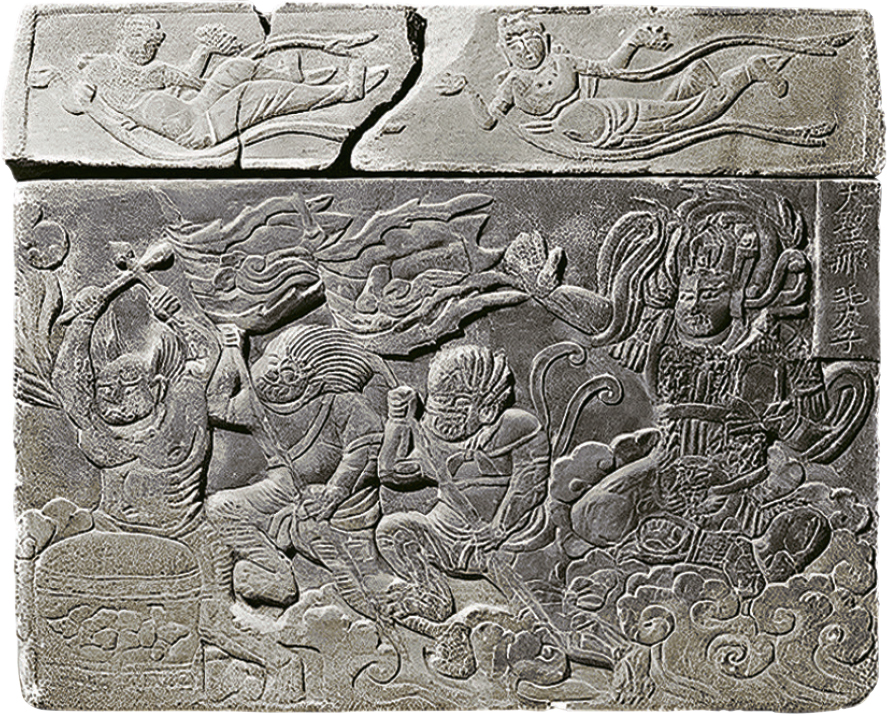
FIG. 19
During the Song dynasty, Nezha’s identity became further Sinicized. He was reimagined as the third son of Li Jing, completely severing his Indian Buddhist origins and becoming fully integrated into the Chinese pantheon.
Image of Nezha: A stone reliquary casket unearthed from the underground crypt of the North Pagoda in Chaoyang, Liaoning Province, and now housed in the Chaoyang North Pagoda Museum, is carved on its four sides with a series of scenes depicting the story of “Nezha as a Dharma Protector.” The carvings portray Nezha commanding yakshas and other divine attendants in pursuit of the rebellious Dragon King Xiuji, who was causing storms and disturbances.
It was also during the Song period that the image of Nezha as a “Prince” (Taizi) and a youthful hero began to emerge. This development may have been influenced by the widespread circulation of Buddhist stories depicting Nezha in his younger years. As a result, Nezha gradually evolved into the archetype of a heroic youth.
YUAN DYNASTY
The Divine Child
Period:1271–1368
Transformation:
The image of Nezha shifted from warrior deity to miraculous child hero.
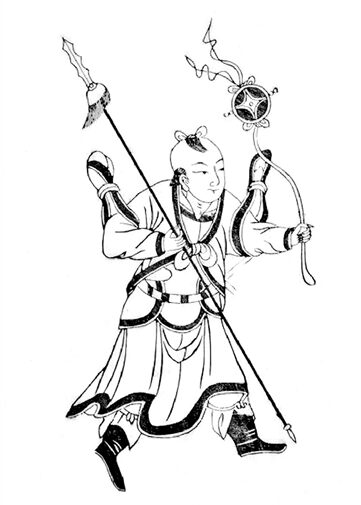
FIG. 20
元明刊本西域 哪吒
MING DYNASTY
The Canonical Nezha
Period:1368–1644
Transformation:
The mythology of Nezha was standardized through Fengshen Yanyi and Journey to the West.
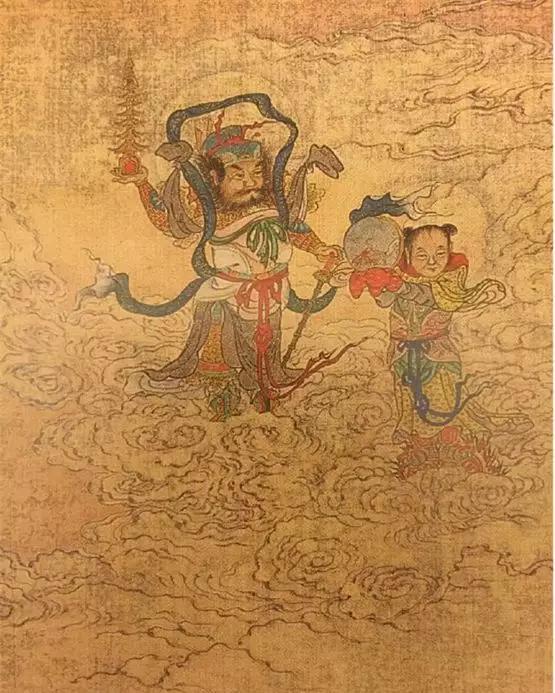
FIG. 21
国藏绢本《西游记》中的李靖和哪吒
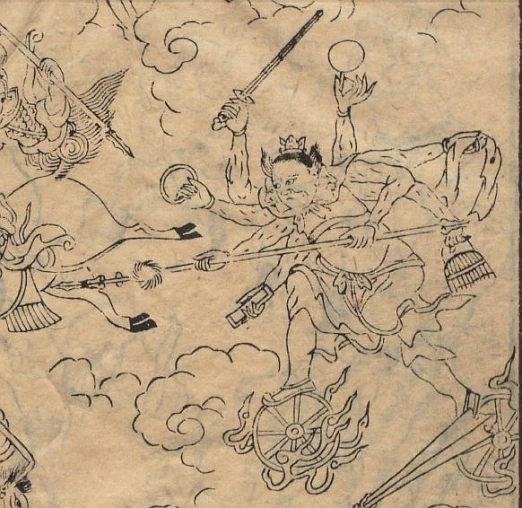
FIG. 22
Nezha as depicted in the Wanli-era Ming dynasty edition of The Investiture of the Gods (Fengshen Yanyi), published by Jinchang Zaiyangshu Wenyuan. He is portrayed as a fierce warrior figure with three heads and six arms.
QING DYNASTY
The Popular Warrior God
Period:1644–1912
Transformation:
Nezha became a widely worshipped folk deity and a popular subject in religious art.
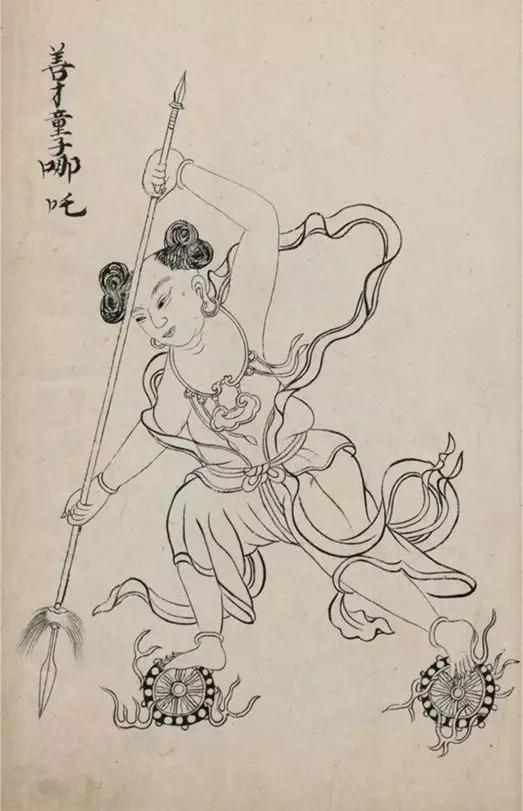
FIG. 23
清代《封神真形图》 哪吒
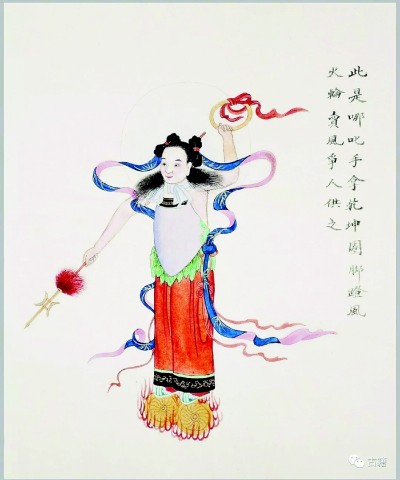
FIG. 25
Nezha, painted by Zhou Peichun in the late Qing dynasty. The inscription reads: “Worshipped by kite sellers.”
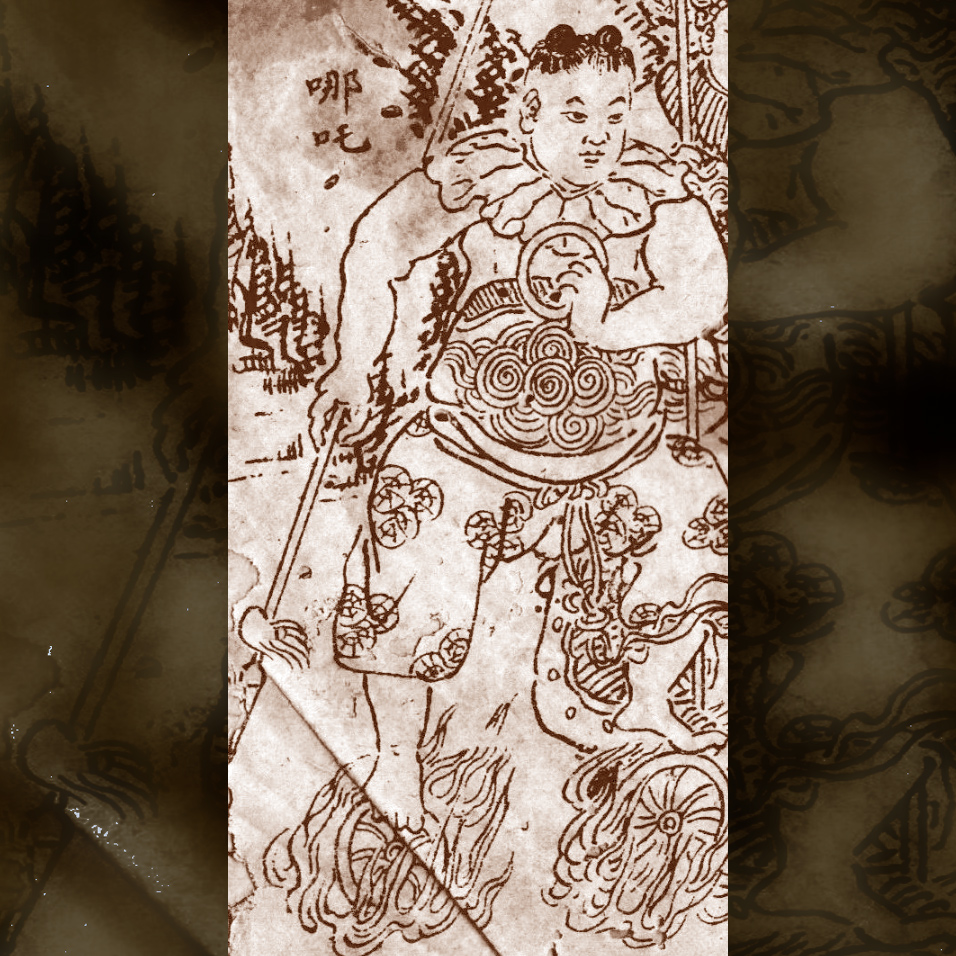
FIG. 26
清代《封神真形图》 哪吒
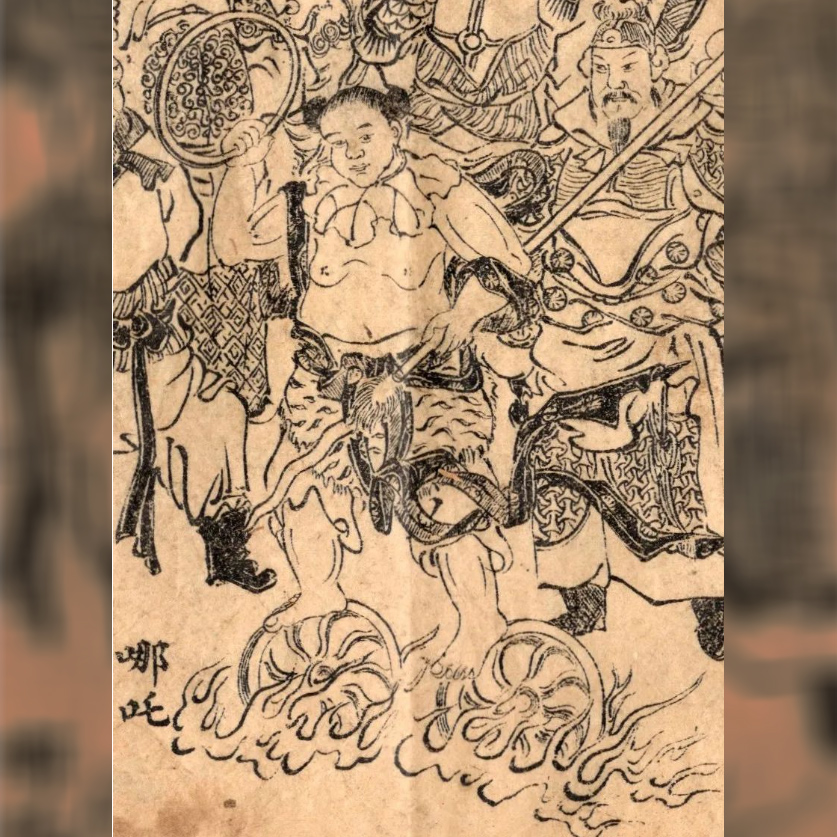
FIG. 27
清代《绣像南游记》中哪吒插图
REPUBLICAN ERA
The Hero of Popular Media
Period:1912–1949
Transformation:
Traditional religious imagery merged with commercial prints, opera, and modern illustration.
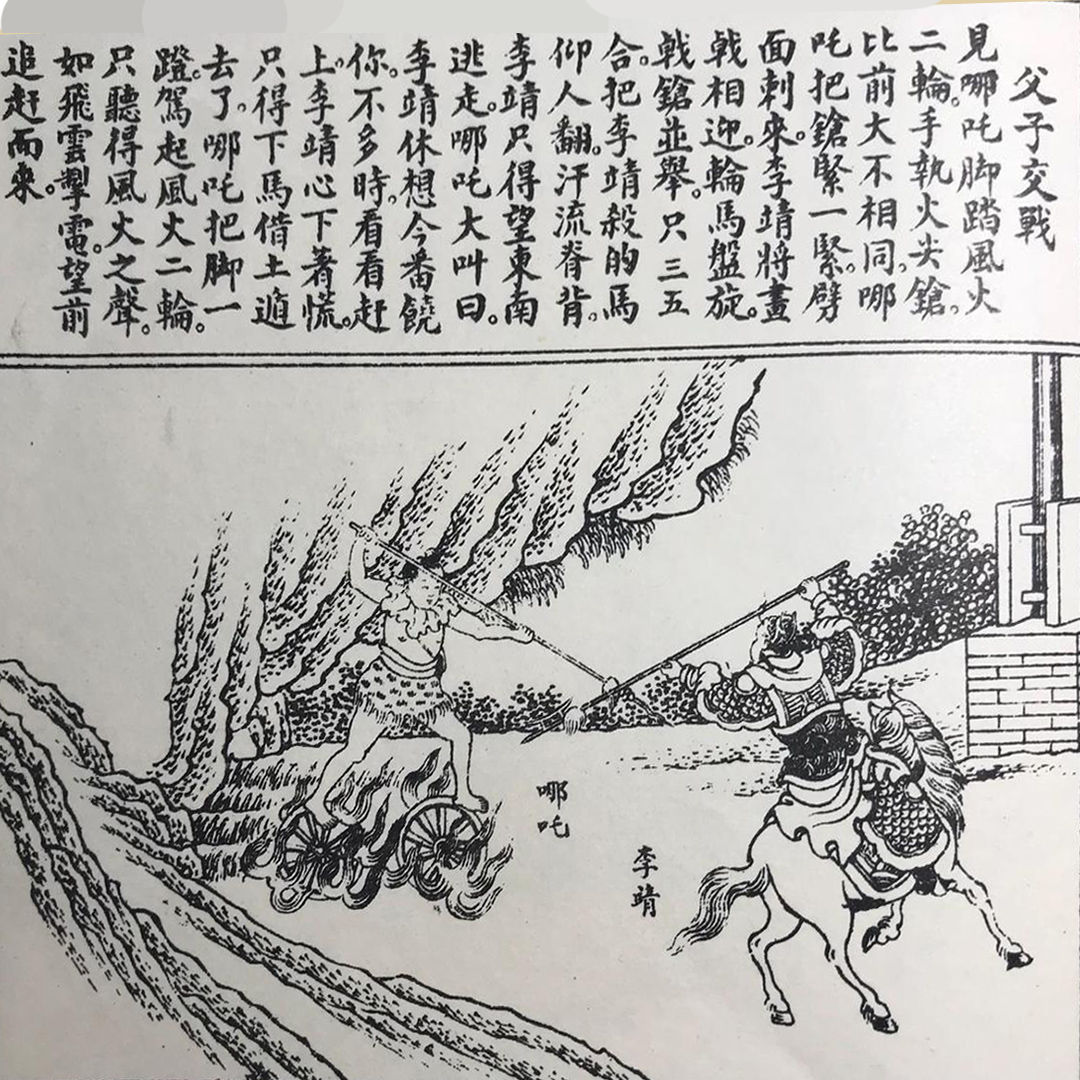
FIG. 28
Illustration from The Illustrated Investiture of the Gods (连环图画封神传), Shanghai Book Company, Republican China, 2nd edition, 1929. Reprinted by Heilongjiang Fine Arts Publishing House in 2001. Vol. 2, Chapter 14: “Nezha Appears in His Lotus Incarnation” [5]: “Father and Son in Battle.”
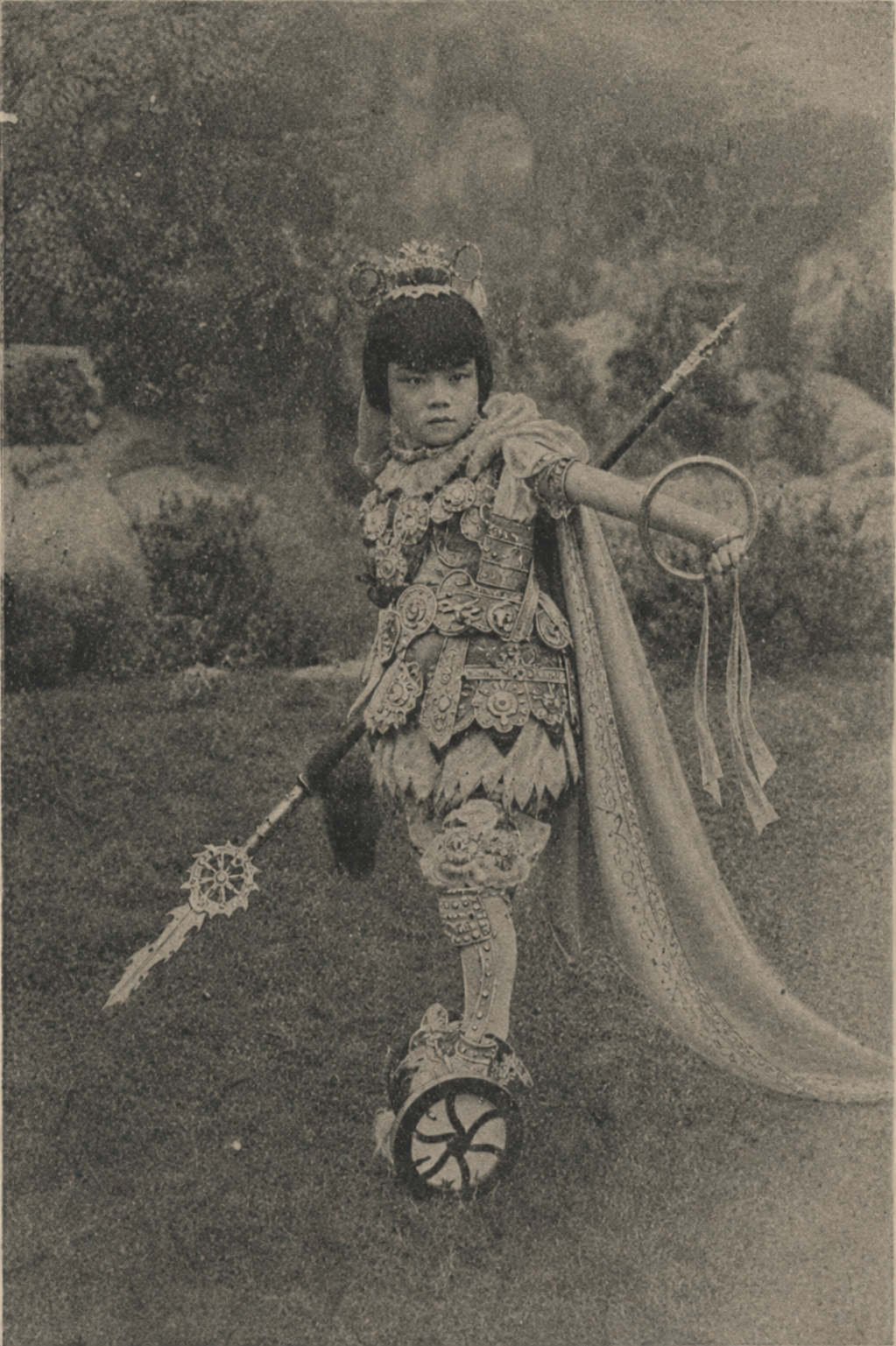
FIG. 29
Gu Baolian as Nezha in The Investiture of the Gods: Nezha Conquers the Sea (封神榜之哪吒闹海), produced by the Great China Film Company in 1927. The production was later adapted for the stage. Silver Star magazine, no. 10, 1927.
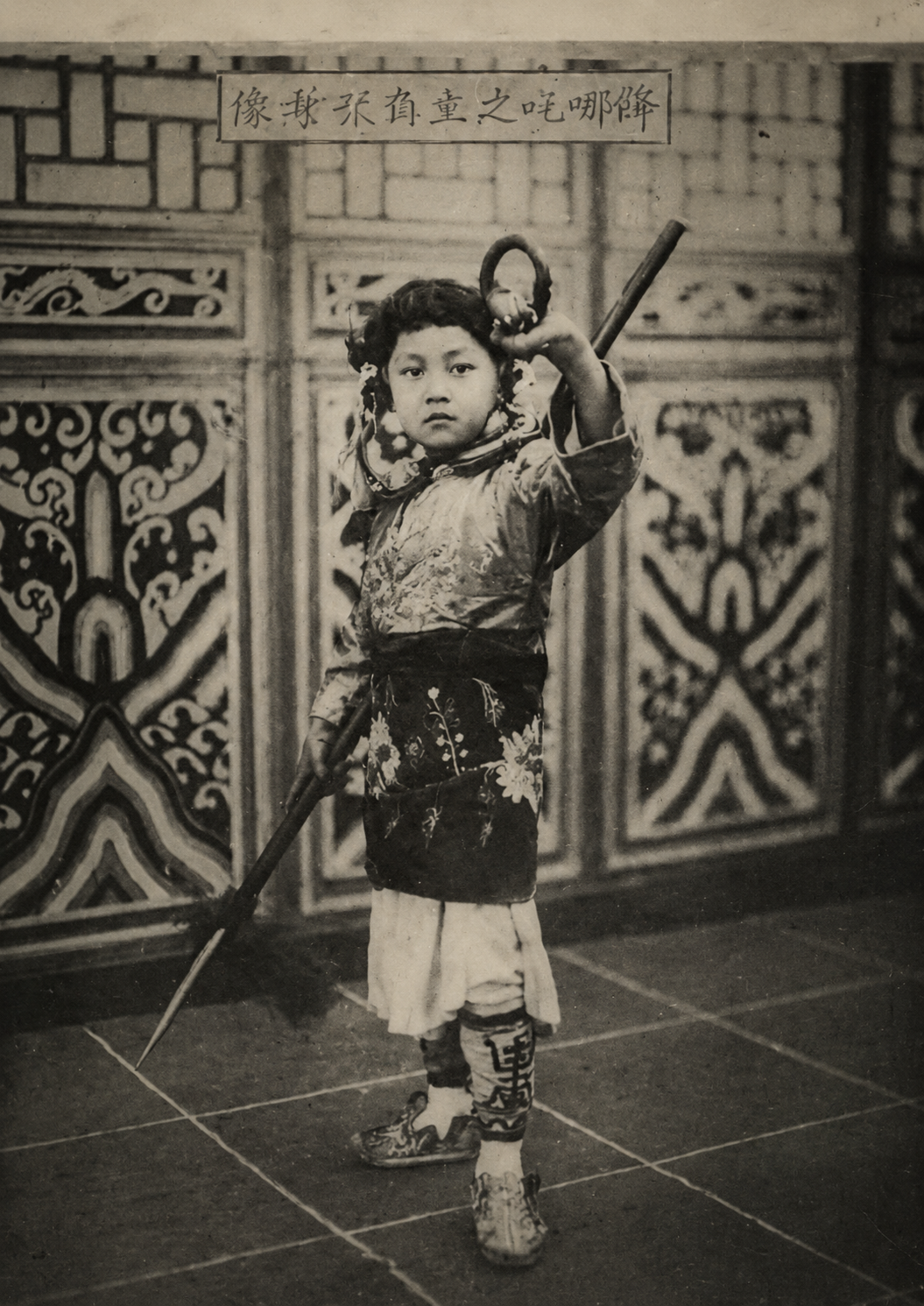
FIG. 30
Zhang Zhede as Nezha in The Birth of Nezha (1927), a film produced by the Great Wall Film Company. Image reproduced from The China Cinema Magazine, Vol. 1, No. 8 (1927).
CONTEMPORARY ERA
The Global Nezha
Period:1949–Present
Transformation:
Nezha evolved into one of the most recognizable icons of Chinese popular culture.
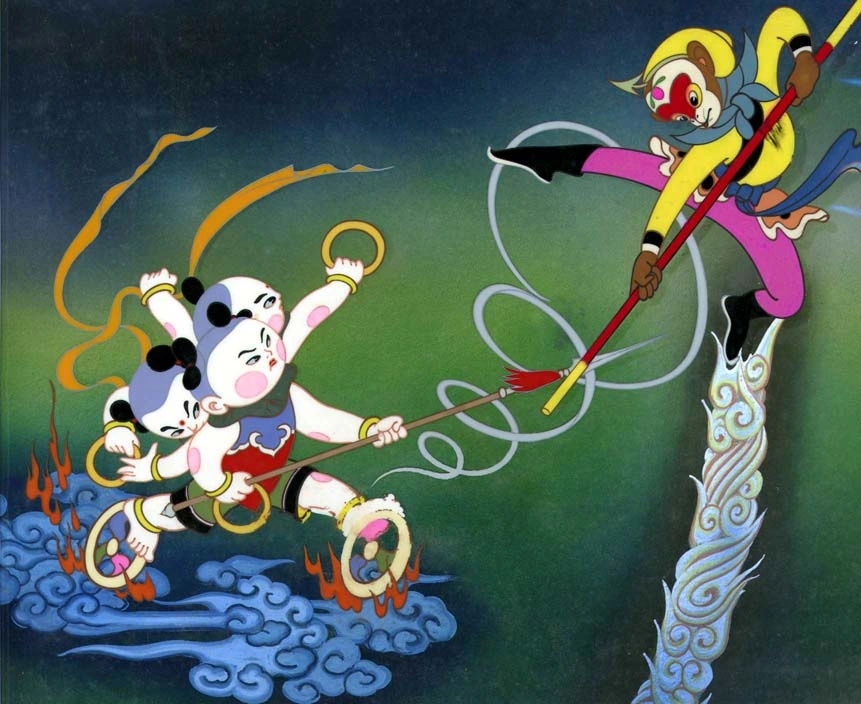
FIG. 31
In The Monkey King: Uproar in Heaven (1961–1964), Nezha’s character design was inspired by traditional yingxi tu (children-at-play New Year prints). Featuring an oversized head, a small and chubby body, refined facial makeup, fierce and haughty eyes, and brilliantly colored, ornate costume, he was depicted as an arrogant and willful child.
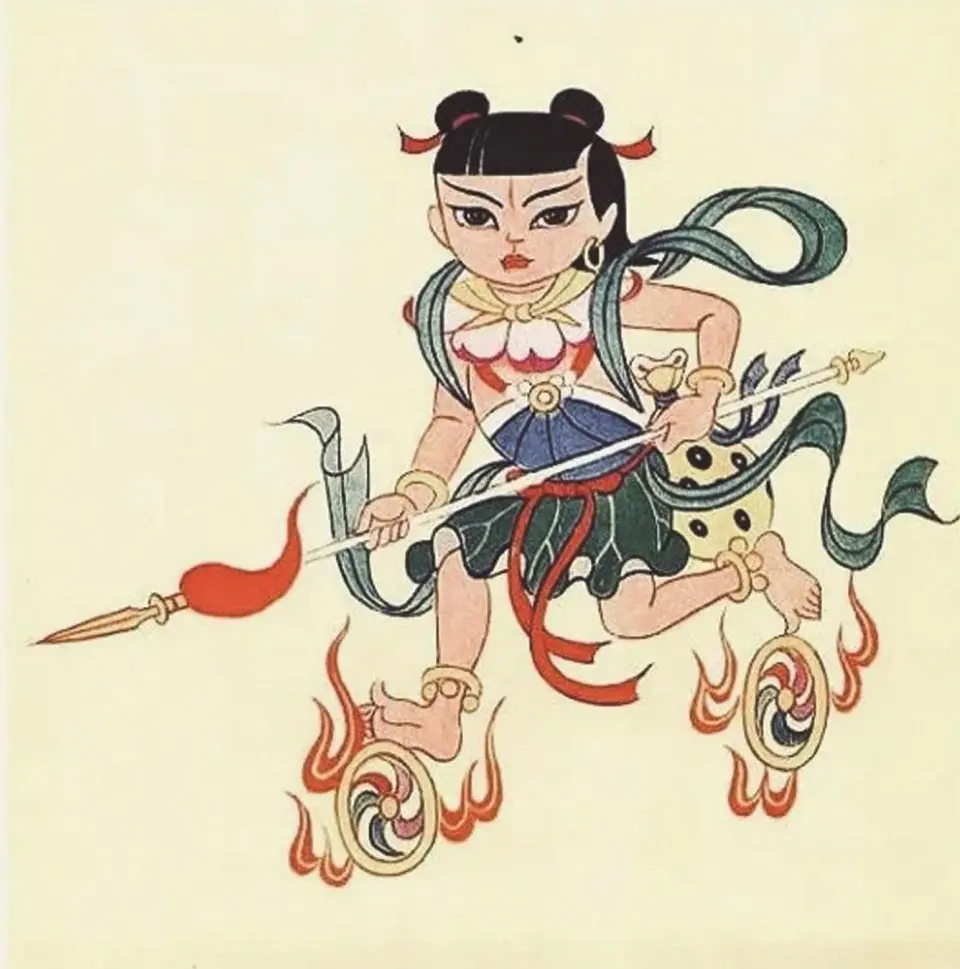
FIG. 32
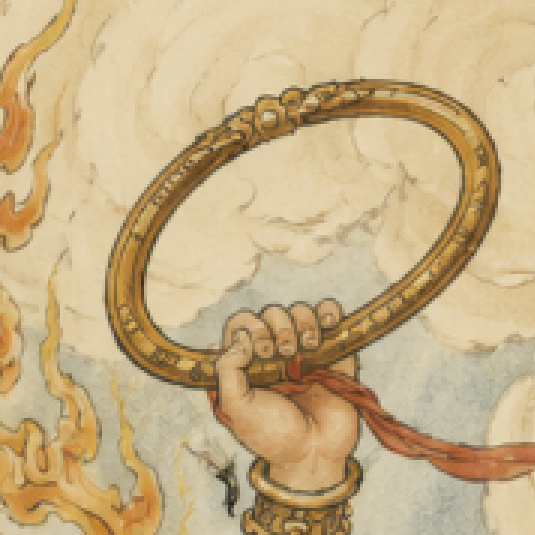
In Nezha Conquers the Dragon King (1979), Nezha appeared with twin topknots adorned with red ribbons, a stern and heroic gaze, and traditional Chinese costume consisting of a white robe and red dudou. Carrying the Universe Ring (Qiankun Quan) and the Red Armillary Sash (Huntian Ling), he was portrayed as a courageous and fearless young hero.
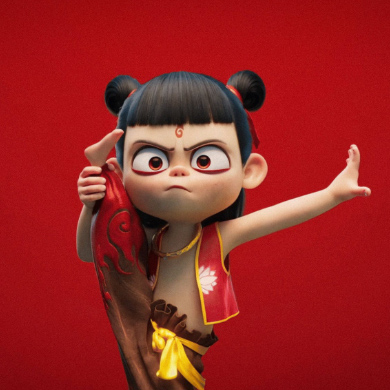
FIG. 33
In Ne Zha (2019) and Ne Zha 2 (2025), Nezha underwent a transformation from traditional two-dimensional animation to highly detailed three-dimensional representation. Featuring dark circles under the eyes, uneven teeth, a hairstyle inspired by Nezha Conquers the Dragon King (1979), and upgraded costume design, he was reimagined as a mischievous, rebellious, dark-toned child. This interpretation presents a psychologically complex character—both defiant and kind-hearted—whose strong sense of justice and destiny aligns with the “demon child” concept while subverting traditional portrayals.
Related Subjects
Explore the people, weapons, symbols, and stories connected to this page.
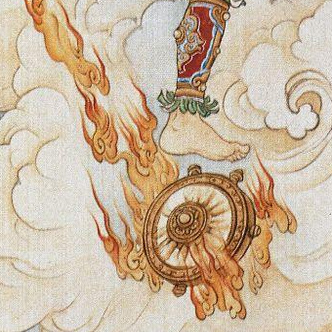
Fire Wheels
One of Nezha’s most iconic divine Transportation.
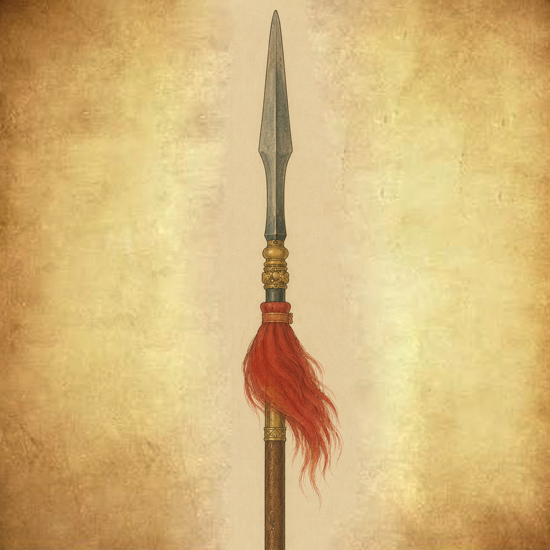
Fire-Tipped Spear
Nezha’s primary weapons on the battlefield
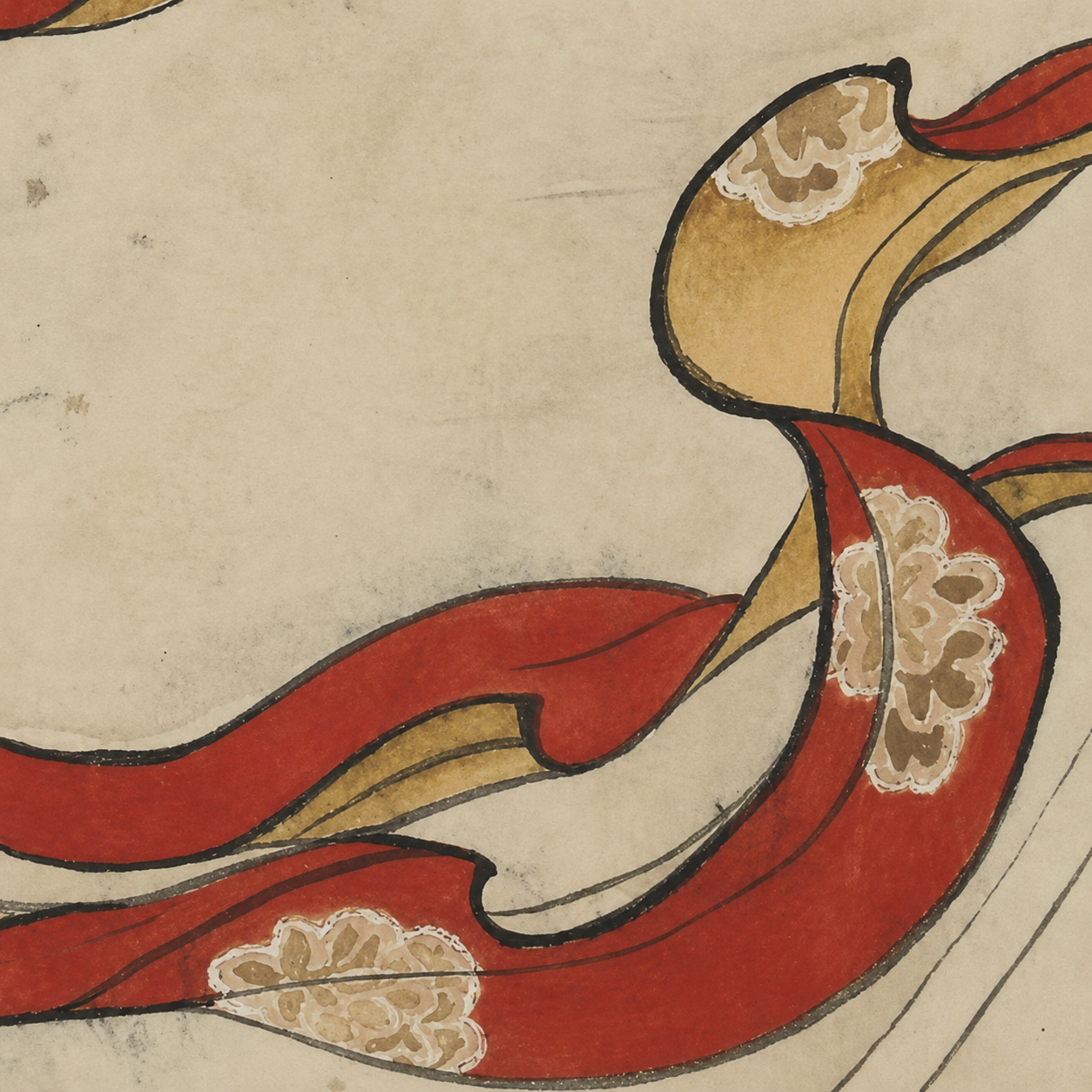
Red Armillary Sash
The treasures Nezha brought with him at birth