Huaguang
The Three-Eyed Lord of Fire
THE GOD WHO DIED THREE TIMES
THE GOD WHO GREW UP
THE GOD WHO LEARNED TO SEE
Chinese – 华光 · 马灵耀 · 马王爷
Titles – Huaguang Dadi · Lord Ma · Three-Eyed Fire Marshal
Tradition – Taoism · Folk Religion · Buddhism
Attributes – Third Eye · Fire Wheels · Golden Spear · Fire Crows
Overview
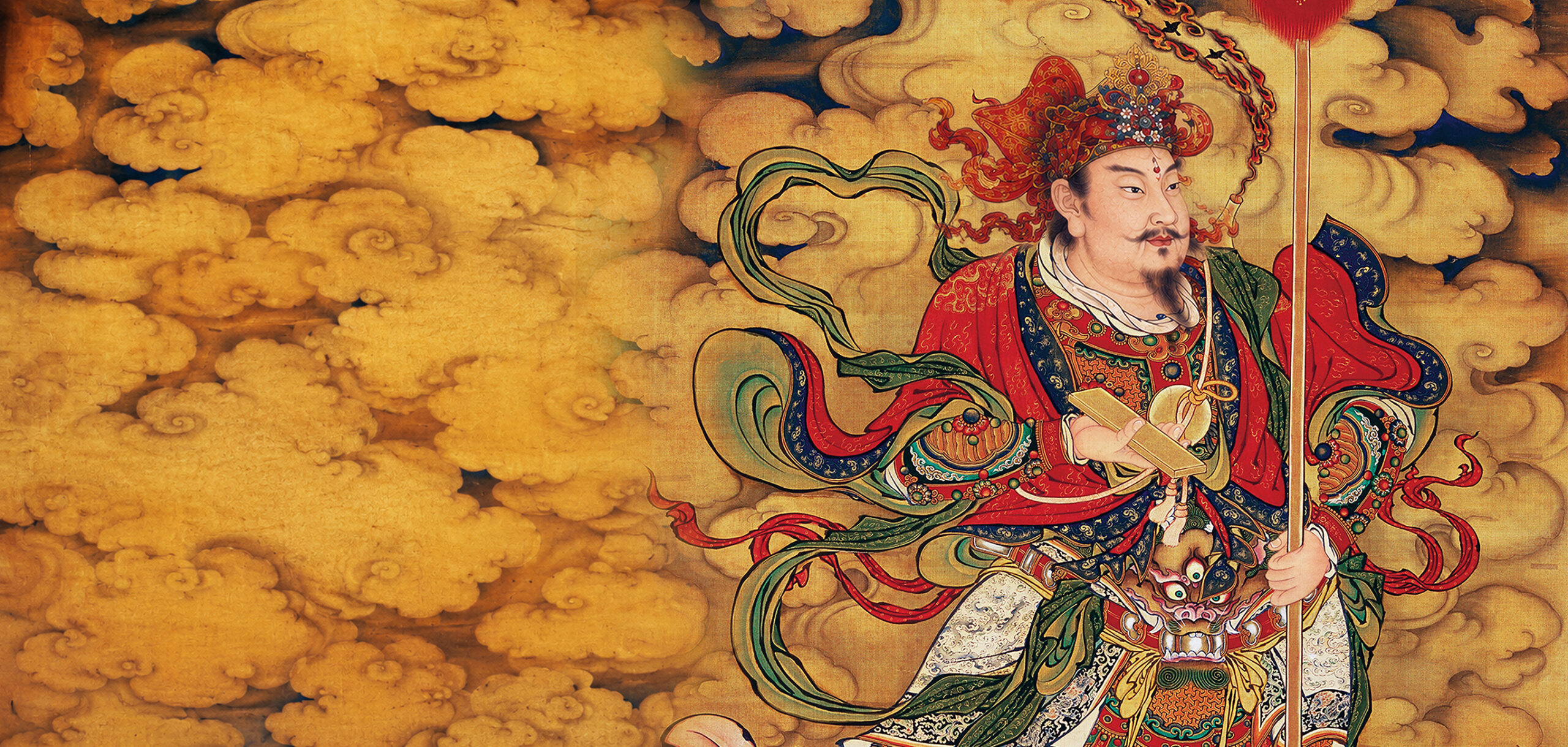
Huaguang (华光), also known as Ma Lingyao (马灵耀) and Lord Ma (马王爷), is one of the most remarkable warrior deities in Chinese religious tradition.
Unlike many heroes of Chinese mythology who remain forever young or eternally unchanged, Huaguang’s story is defined by transformation.
From a rebellious divine youth, he evolved into a protector, a judge, and ultimately one of the greatest martial deities of the Chinese celestial world.
Perhaps no other major warrior deity in Chinese mythology is defined not by perfection, but by growth.
Story
Rebellion • Death • Rebirth • Growth • Apotheosis
It is the story of a god who learned how to grow.
THE ASCENT OF HUAGUANG
Rebellion • Death • Rebirth • Growth • Apotheosis
Huaguang’s story is not the story of a hero who became a god.
It is the story of a god who learned how to grow.
Unlike many heroes of Chinese mythology, Huaguang was not born a god, nor did he remain forever young. He died, returned, matured, and transformed. His story is not merely the rise of a hero, but the ascent of a god.
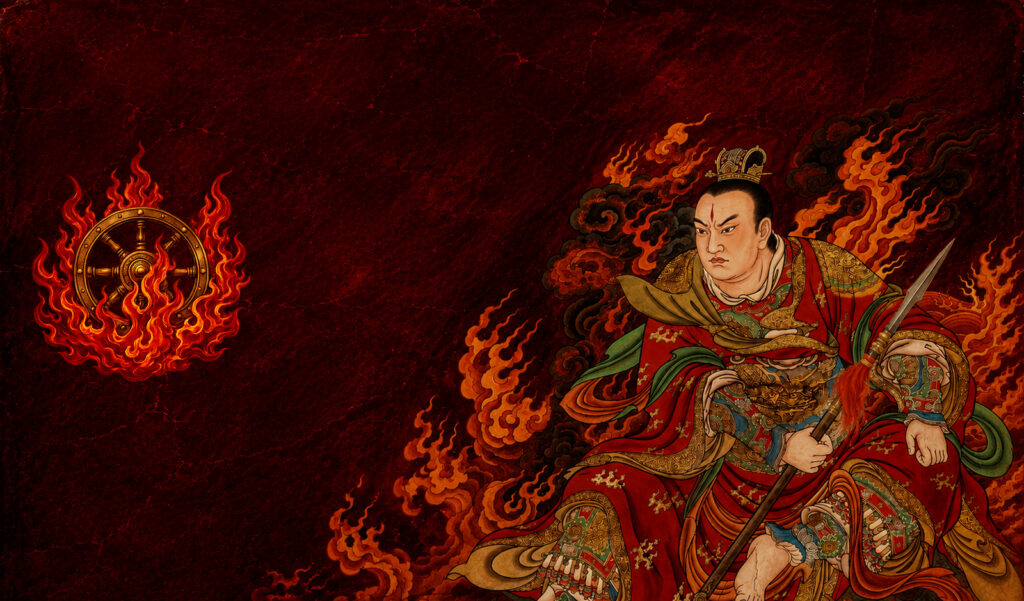

HUAGUANG
THE GOD WHO DIED THREE TIMES,
THE GOD WHO LEARNED TO SEE.
THE FIRST LIFE
THE REBEL
The Boy Who Thought
Power Was Everything
Youth • Fire • Chaos • Rebellion
Before he learned wisdom, he learned fire.
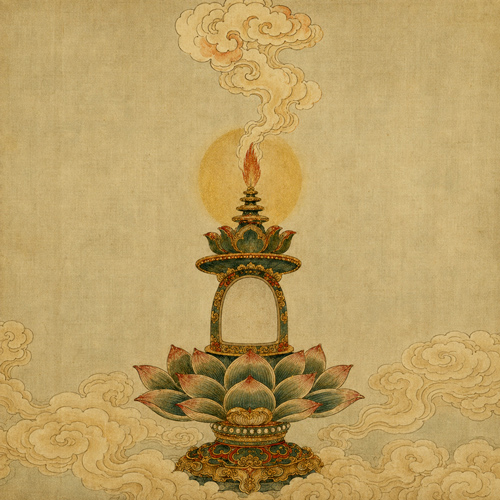
The Flame of Lingshan
Before he was a god,
before he was a warrior,
Huaguang was a flame.
Born from the sacred light of Lingshan,
he possessed power long before he understood its cost.
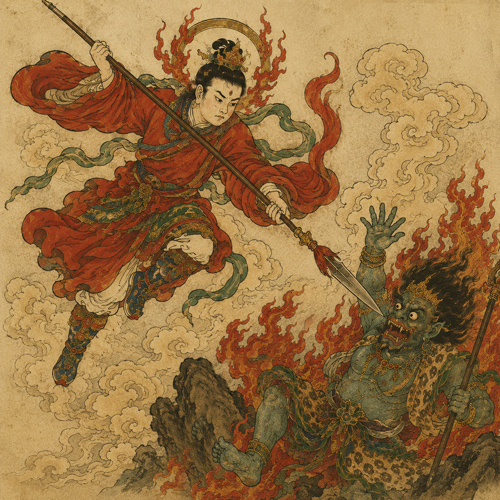
The First Defiance
When chaos threatened heaven,
he chose fire.
He defeated the Demon King of Poison Flame,
but in doing so, he learned his first lesson:
Sometimes, victory itself can be a crime.
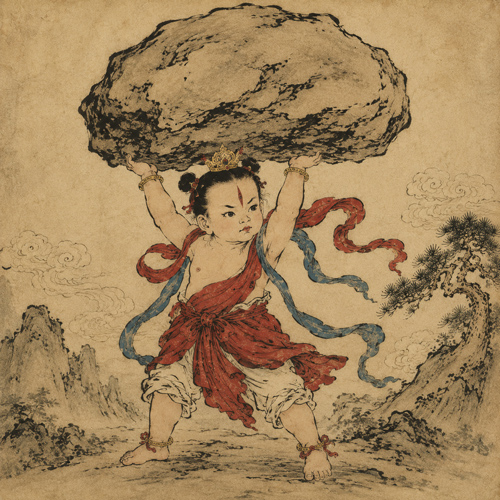
The Boy with Three Eyes
Banished to the mortal world,
he was born again as Lingyao.
Marked by the third eye upon his forehead,
he grew believing that power was destiny.
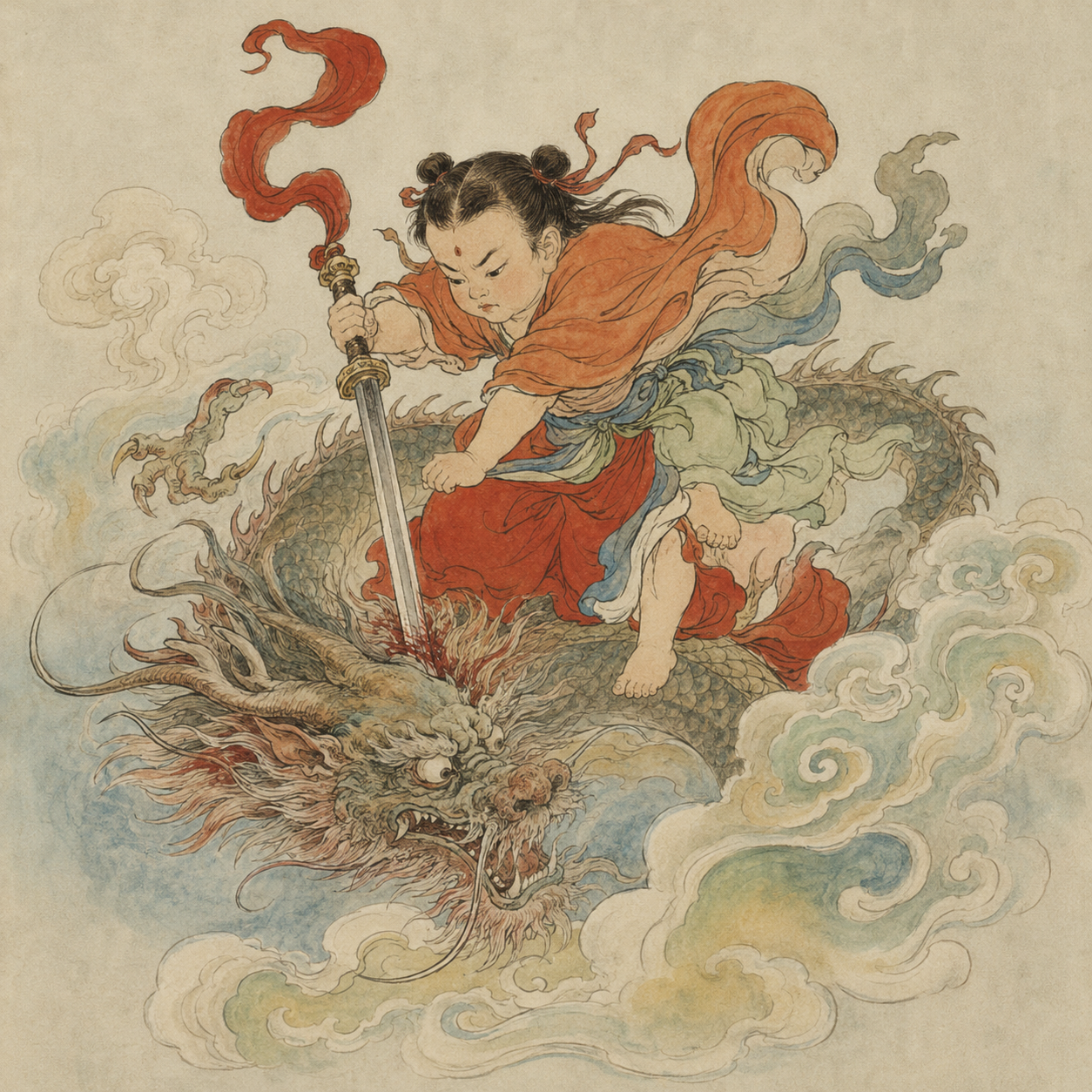
The Dragon Slayer
At the age of three,
he slew a dragon king.
The world called him a hero.
And so he began to believe
that strength could solve everything.
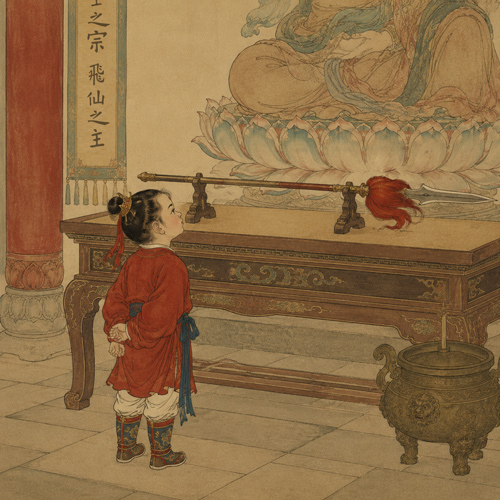
The Stolen Spear
He challenged heaven itself.
He stole the divine spear,
broke sacred laws,
and refused to bow before any authority.
Because he believed:
No power was greater than his own.
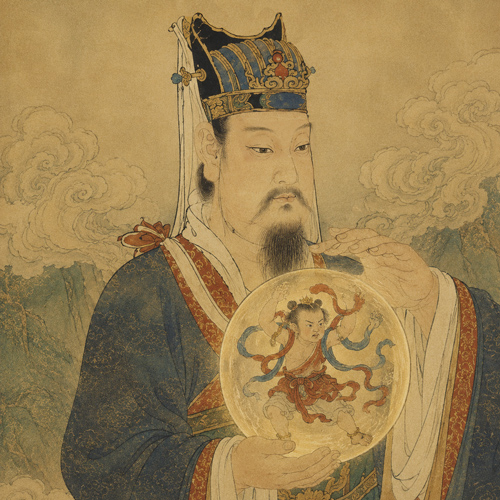
The First Death
For the first time,
he faced a power greater than himself.
The celestial pearl descended.
The boy who thought power was everything
died before he could learn wisdom.
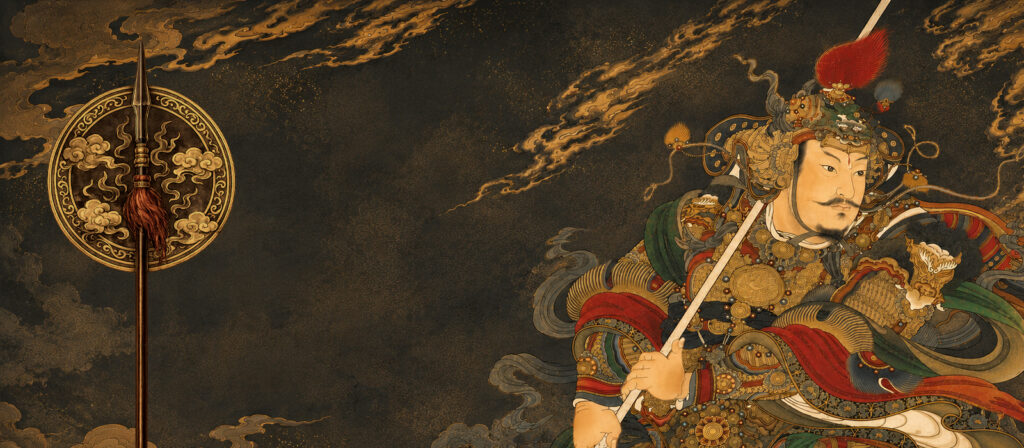
THE SECOND LIFE
THE WARRIOR
The Hero Who Learned
Responsibility
Duty • War • Sacrifice • Protection
Power without responsibility destroys.
Responsibility without power protects no one.
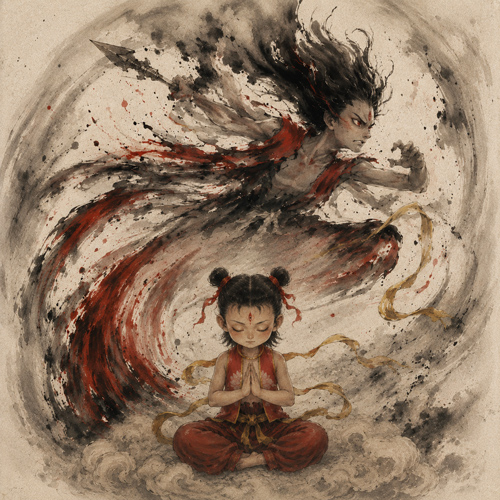
The Dream Returns
Before he understood destiny,
he only remembered fragments.
Night after night,
he dreamed of flames,
and of a fearless child
who challenged heaven itself.
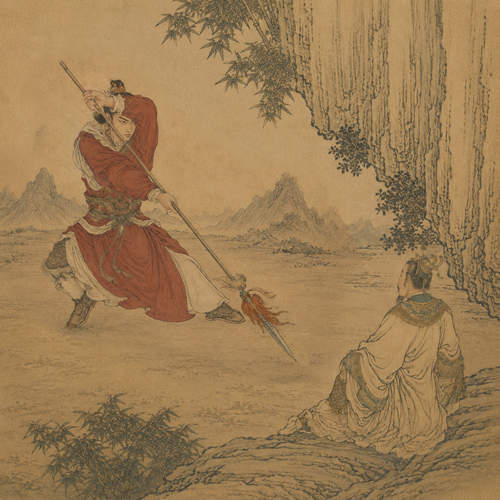
Under the Immortal’s Guidance
A master taught his hands.
Memory taught his heart.
In the quiet mountains,
he learned the spear,
while forgotten echoes
slowly awakened within him.
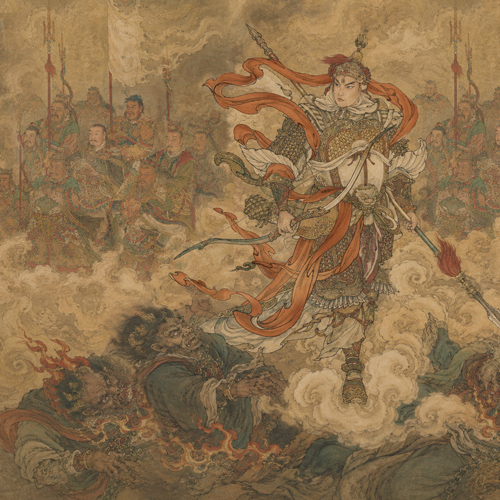
Becoming a Hero
He answered heaven’s call.
He defeated the Lords of Wind and Fire,
ended countless disasters,
and for the first time,
the world knew his name.
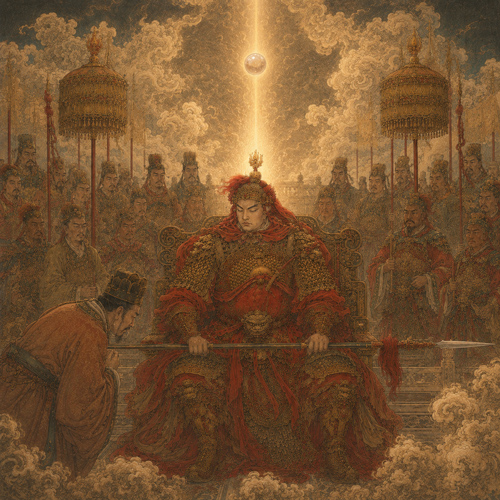
The Fire Marshal
Glory became his reward.
The Heavenly Court named him
Grand Marshal of the Fire Division.
Honor, power, and victory
were finally his.
Yet in every silent night,
a falling pearl still haunted his dreams.
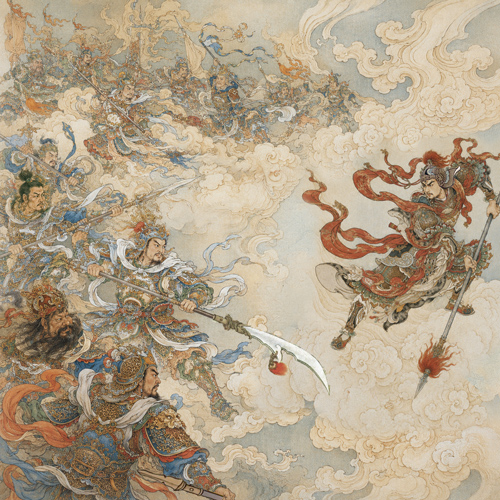
Defying Heaven Again
Some destinies cannot be forgotten.
The dreams became memories.
The memories became truth.
Once again,
Huaguang raised his spear
against Heaven itself.
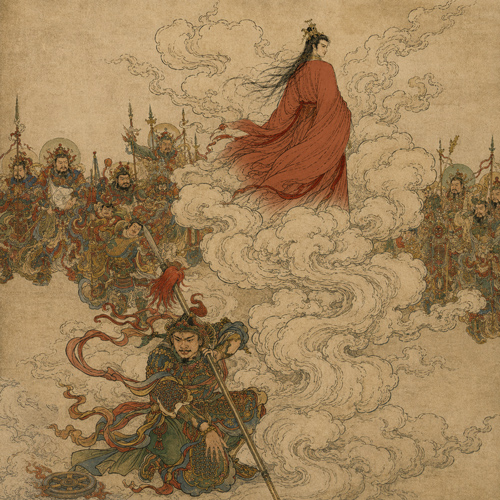
The One Beyond Victory
Only after victory
did he begin to seek wisdom.
The spear was lowered.
The Fire Wheels grew cold.
Following the immortal beyond the clouds,
Huaguang stepped onto
a different path.
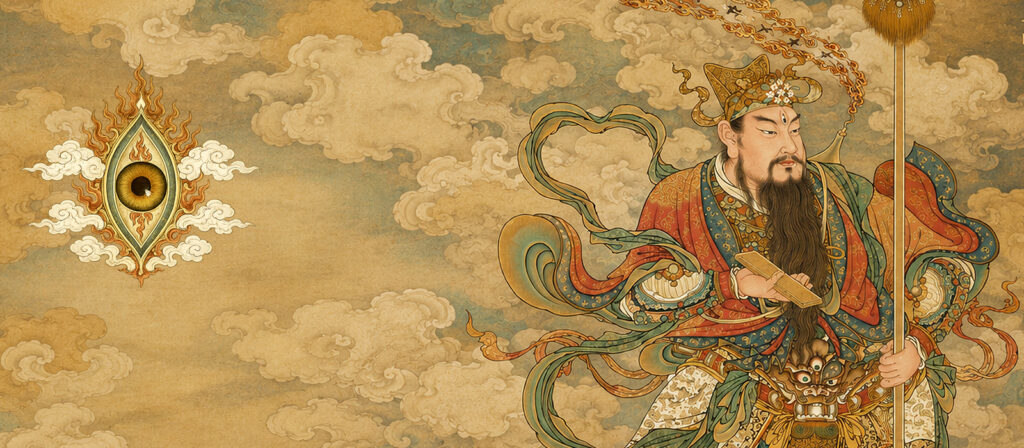
THE THIRD LIFE
THE GOD
The God Who Learned to See
Wisdom • Judgment •
Compassion • Truth
The third eye does not
grant power
It grants understanding.
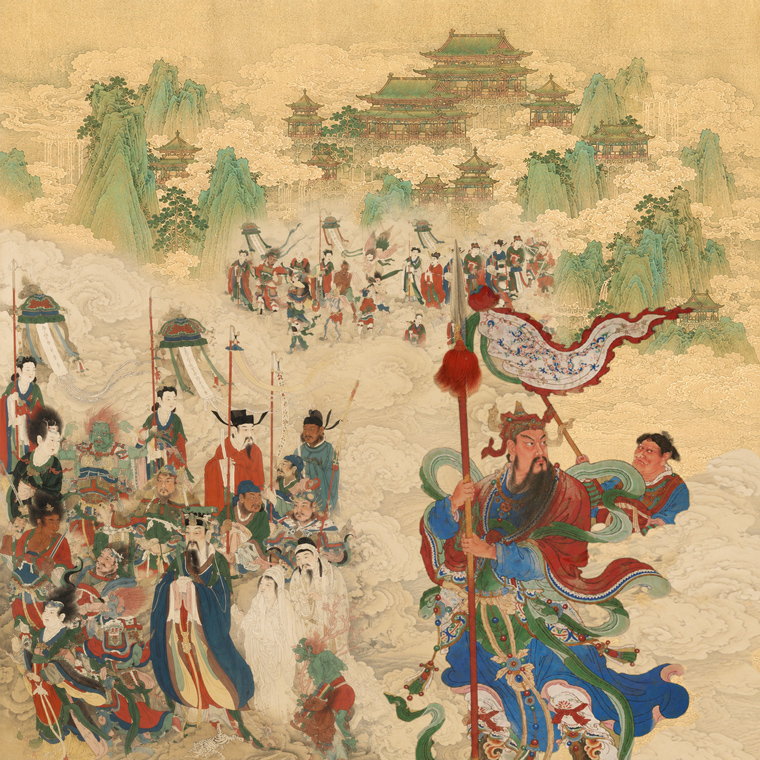
重返天界
经历两世轮回之后,
华光终于回到了天庭。
这一次,
他不再是那个桀骜不驯的少年,
也不是那个渴望功名的英雄。
他终于明白,
真正需要战胜的,
始终都是自己。
关键词:归来、成熟、封神
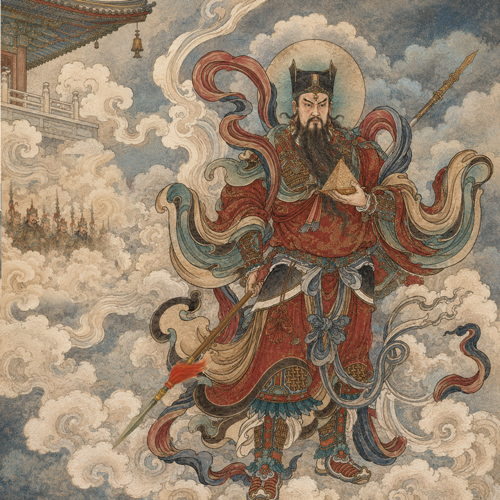
火部天王
天庭正式册封华光,
统领火部神兵,
巡视三界,
镇守人间。
火焰,
不再意味着毁灭。
而成为守护众生的力量。
关键词:神位、责任、守护
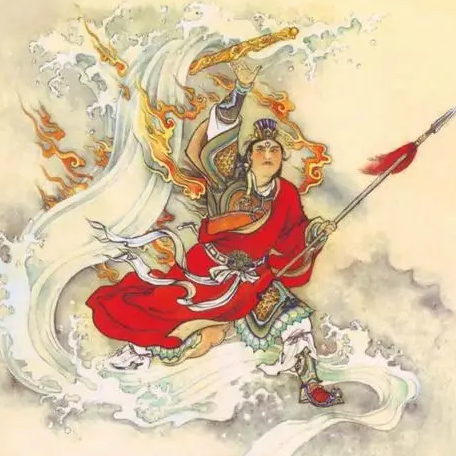
降妖救世
无论妖魔、
瘟疫、
邪祟,
还是人间灾厄,
只要有人祈求,
华光都会现身。
他不再为了证明自己而战,
而是为了守护别人而战。
关键词:救世、降魔、护法
三教共尊
佛寺里,
他是护法天王。
道观里,
他是真武麾下元帅。
民间,
他又成为百姓供奉的火神。
不同信仰,
赋予了他不同身份。
唯一没有改变的,
是守护众生的誓言。
关键词:佛、道、民间融合
壁画、
水陆画、
年画、
雕塑、
戏曲、
小说……
一千年来,
无数画师、
雕塑家、
艺人,
都在描绘同一位神。
没有一种形象,
是真正唯一的华光。
每一种,
都是华光。
关键词:艺术演变
火焰永存(大结局)
火焰,
并非愤怒。
也并非毁灭。
它象征光明,
也象征希望。
千年过去,
王朝更替,
庙宇兴衰,
无数神像早已残缺,
唯有那团火焰,
仍在人们心中燃烧。
于是,
人们称他为——
华光大帝。

EVERYONE WANTS A SECOND CHANCE.
HUAGUANG NEEDED THREE.

ATTRIBUTES & ICONOGRAPHY
The Symbols That Define the Third Lotus Prince
Over more than a thousand years of artistic evolution, Nezha acquired a rich visual language of weapons, magical objects, and bodily transformations. These attributes became essential to his identity and remain recognizable across paintings, sculptures, theater, and popular culture.