Nezha
The Crown Prince
Overview
Nezha (哪吒), also known as Nezha the Crown Prince (哪吒太子), is one of the most influential warrior deities in Chinese religion and folklore. Revered in Taoism, Buddhism, and popular belief, he is widely known by the title Marshal of the Central Altar (中坛元帅) and honored as the Third Lotus Prince (莲花三太子).
For more than a thousand years, Nezha’s image has been continuously reshaped by religion, literature, theater, visual art, and popular culture. The result is a remarkably rich and enduring figure whose many forms reflect the evolving imagination of Chinese civilization.
Attributes & Iconography
Universe Ring (Qiankun Quan)
(乾坤圈)
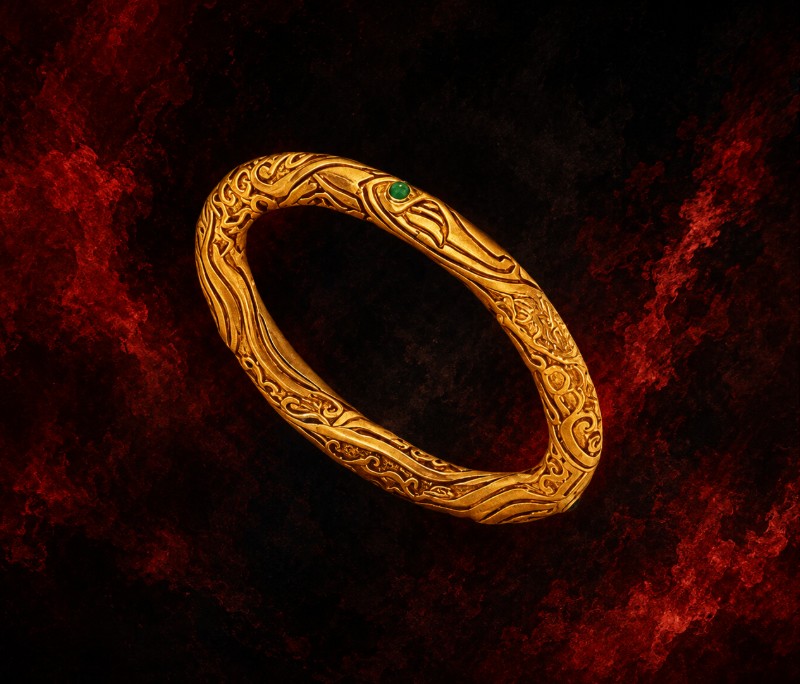
The Qiankun Quan (乾坤圈) is Nezha’s most recognizable magical artifact and one of the defining symbols of his identity. Traditionally associated with the balance of heaven and earth, it represents the cyclical forces of the cosmos and the harmony of yin and yang.
According to Fengshen Yanyi (Investiture of the Gods), the Qiankun Quan was a sacred treasure of Jinguang Cave on Mount Qianyuan and was bestowed upon Nezha by his master, Taiyi Zhenren. In the original novel, it is described as a golden bracelet, while later literary, theatrical, cinematic, and animated interpretations transformed it into a powerful golden ring capable of suppressing demonic forces and shaking heaven and earth.
The Qiankun Quan serves both offensive and defensive purposes. It can be wielded as a close-combat weapon, used as a protective talisman, or thrown as a projectile with devastating accuracy and force.
In religious art and popular imagery, Nezha is often depicted wearing the Qiankun Quan around his arm or slung across his shoulder. Alongside the Wind Fire Wheels and the Fire-Tipped Spear, it has become one of the most enduring visual symbols associated with the deity.
The Wind Fire Wheels (Fenghuo Lun)
(风火轮)
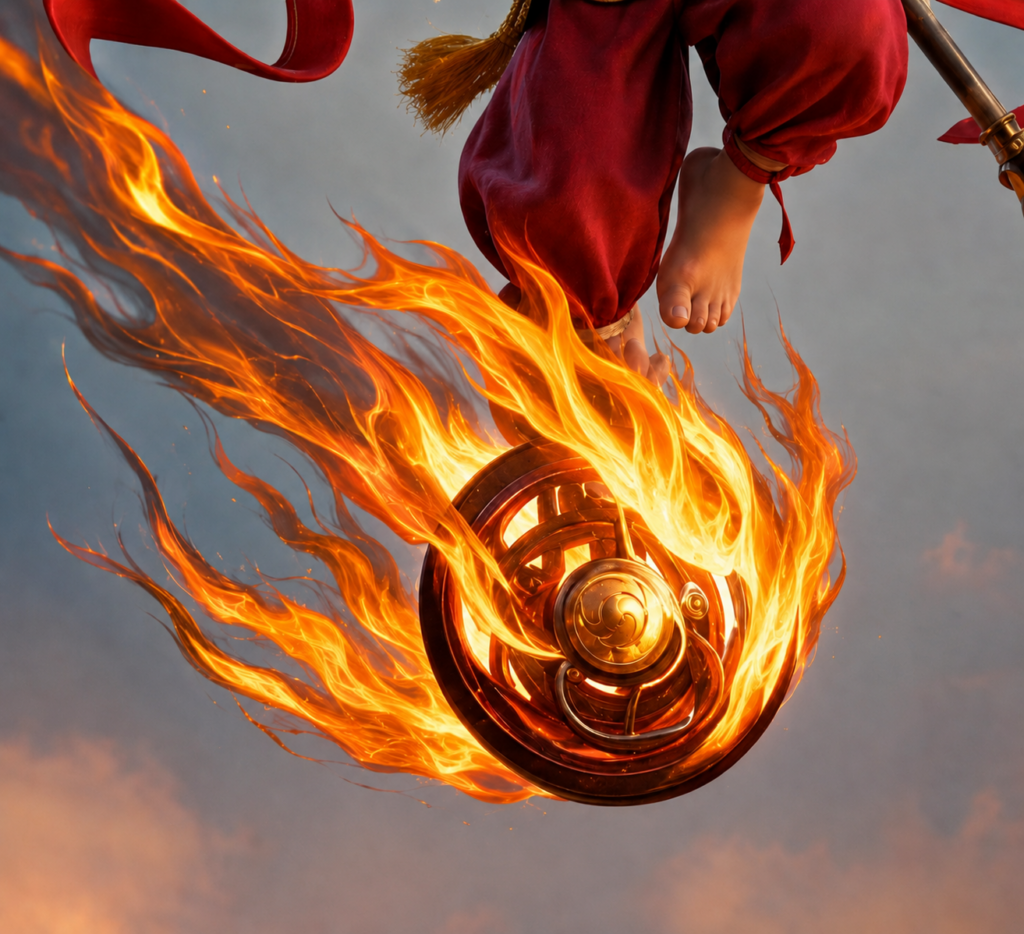
The Wind Fire Wheels (风火轮) are among Nezha’s most iconic magical treasures and one of the defining elements of his visual identity. Described in Fengshen Yanyi (Investiture of the Gods) as a pair of wheels that generate wind and fire when set in motion, they enable Nezha to travel across the heavens at extraordinary speed.
Bestowed upon him by his master, Taiyi Zhenren, the Wind Fire Wheels serve primarily as a means of transportation and aerial maneuverability. By standing upon them and reciting the appropriate incantations, Nezha can fly freely through the sky, rapidly change direction, and move across great distances. In battle, they function much like a celestial mount, providing the mobility that complements his Fire-Tipped Spear (火尖枪) and other weapons.
In religious art, popular illustrations, theater, animation, and film, the Wind Fire Wheels are almost always depicted beneath Nezha’s feet. Together with the Qiankun Quan (乾坤圈), Huntian Ling (混天绫), and Fire-Tipped Spear (火尖枪), they form one of the most recognizable visual symbols associated with the deity.
Modern adaptations have reinterpreted the Wind Fire Wheels in various ways. In Nezha Conquers the Dragon King (1979), they are used in Nezha’s battle against Sun Wukong, while in The Legend of Nezha they become a symbol of his regained power. In the animated film Nezha: Birth of the Demon Child (2019), the Wind Fire Wheels are reimagined as a magical mount transformed into one of Nezha’s signature treasures.
Huntian Ling (混天绫)
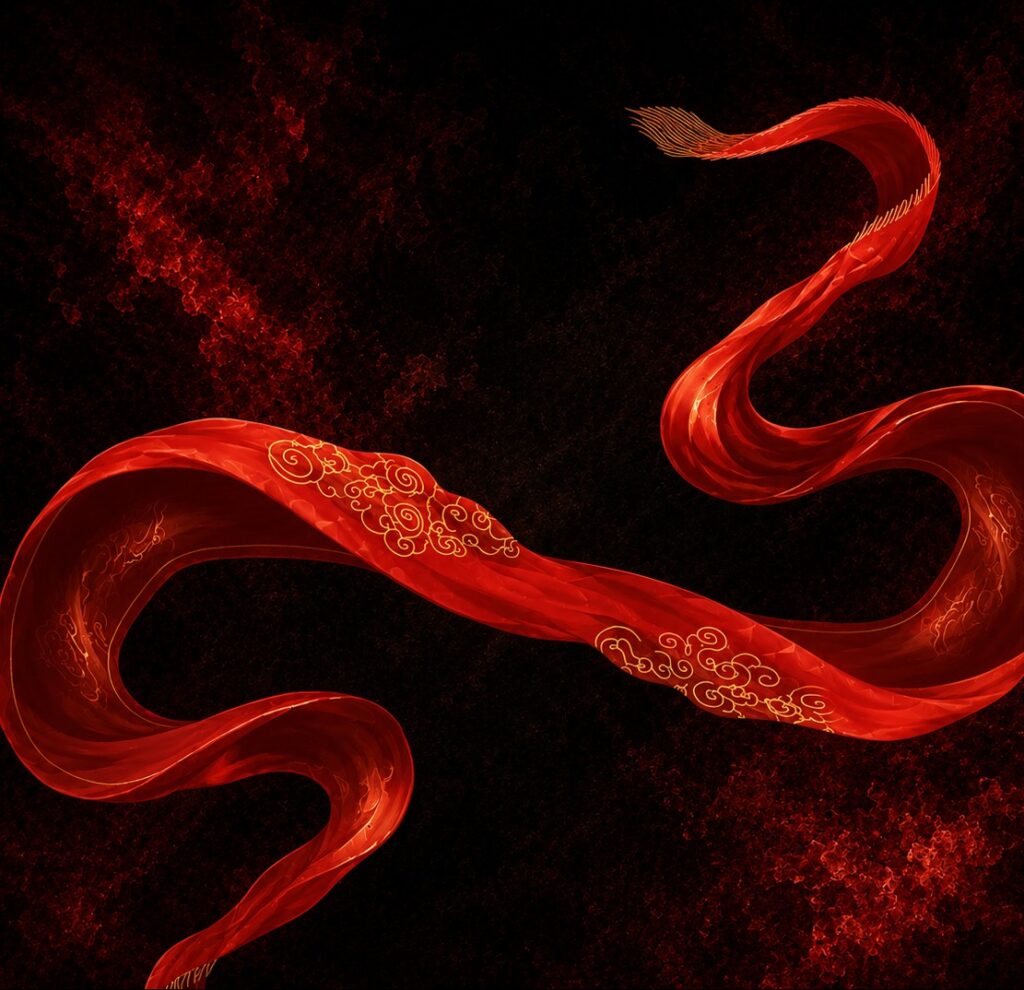
The Huntian Ling (混天绫) is one of Nezha’s most iconic magical treasures. Described as a crimson silk ribbon approximately one chi wide and seven chi long, it was bestowed upon Nezha by his master, Taiyi Zhenren, shortly after his birth. In its resting state, the ribbon appears soft and elegant, often draped around Nezha’s body as both an ornament and a symbol of divine status.
Despite its delicate appearance, the Huntian Ling possesses immense supernatural power. It can extend indefinitely, bind opponents automatically, and withstand tremendous force without breaking. In battle, it functions as both a restraining weapon and a manifestation of Nezha’s divine authority.
Its name literally means “Ribbon that Mixes the Heavens,” reflecting its legendary ability to disturb the natural order of the cosmos. According to Fengshen Yanyi (Investiture of the Gods), Nezha once used the Huntian Ling while bathing in the Jiuwan Stream, causing violent disturbances that shook the underwater palace of the Dragon King of the East Sea. The resulting turmoil set in motion the famous conflict between Nezha and Ao Bing (敖丙), the Dragon King’s third son.
In art, literature, and popular culture, the flowing red Huntian Ling is often depicted swirling around Nezha’s body. Together with the Qiankun Quan (乾坤圈), Wind Fire Wheels (风火轮), and Fire-Tipped Spear (火尖枪), it has become one of the most recognizable visual symbols associated with the deity.
Fire-Tipped Spear (Huojian Qiang)
(火尖枪)
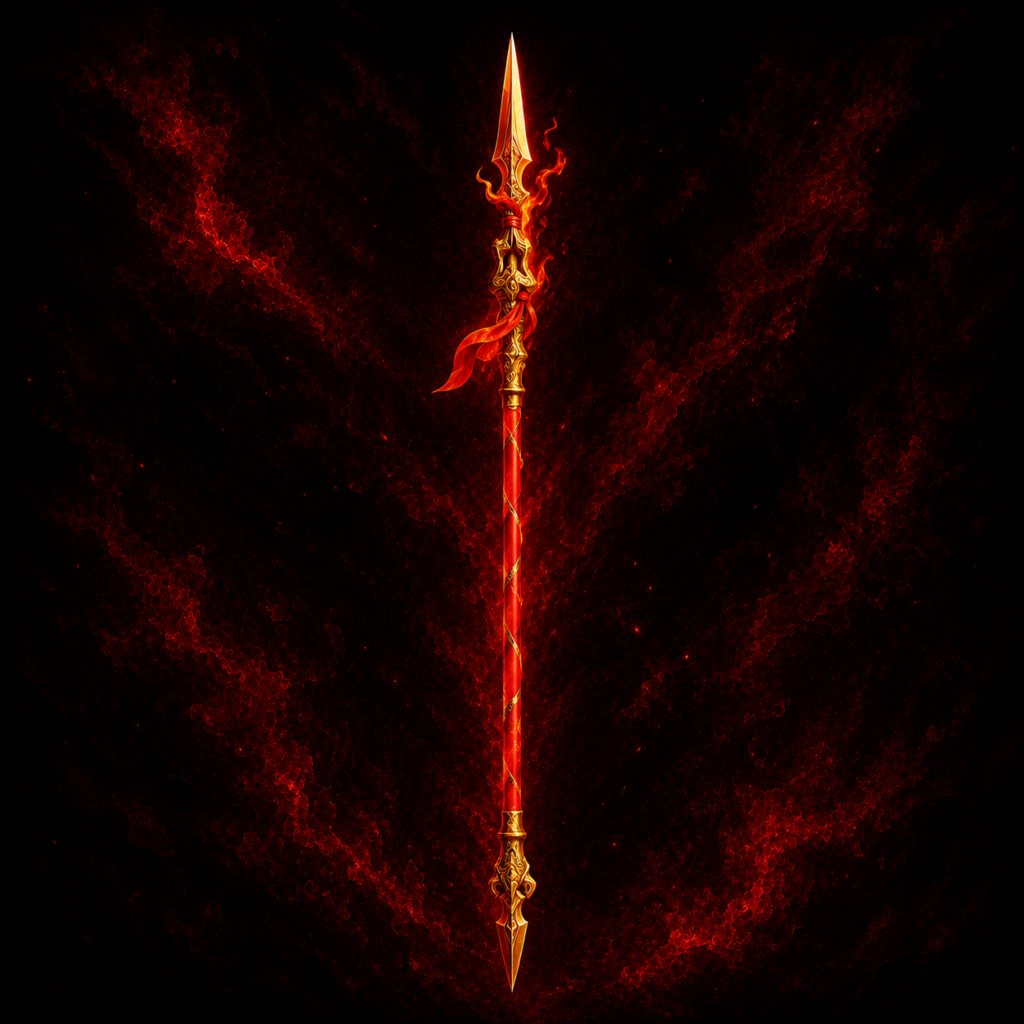
The Fire-Tipped Spear (火尖枪) is Nezha’s primary weapon in Fengshen Yanyi (Investiture of the Gods). Bestowed upon him by his master, Taiyi Zhenren, it is most often depicted alongside the Wind Fire Wheels (风火轮), forming the core of Nezha’s martial iconography and serving as his principal weapon in battle.
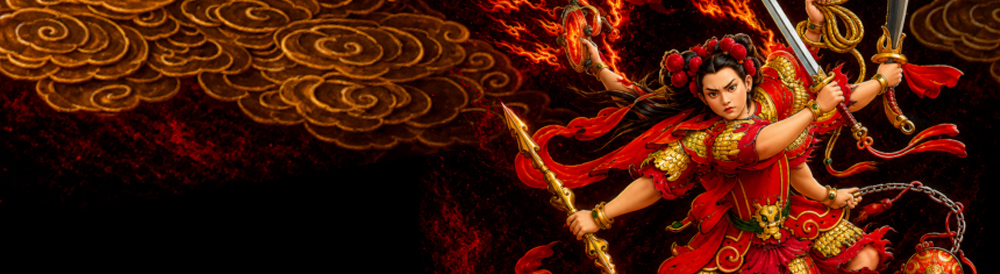
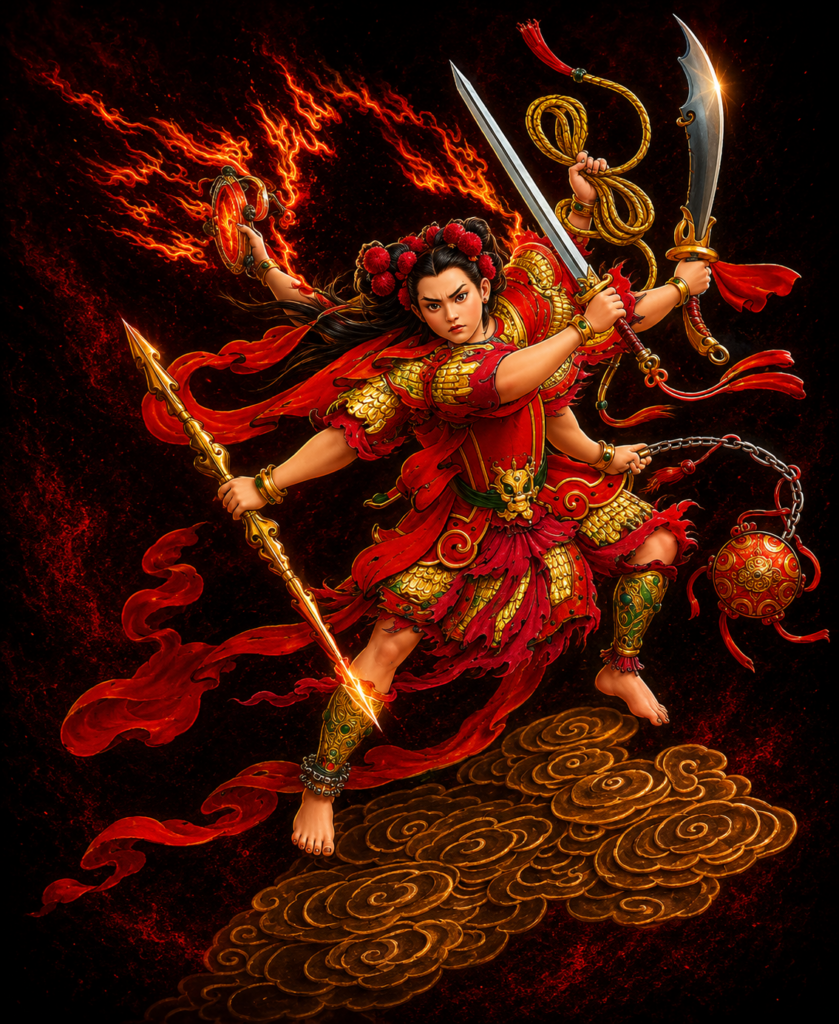
The spear is described as being one zhang and eight chi (approximately six meters) in length, with a blade capable of emitting flames. During the campaign against the Shang dynasty, Nezha wielded the Fire-Tipped Spear in countless battles, defeating numerous enemy generals. In some depictions, he assumes his supernatural form of Three Heads and Six Arms (三头六臂), wielding multiple weapons simultaneously, including twin Fire-Tipped Spears.
The Fire-Tipped Spear also appears in Journey to the West, where it is associated with Red Boy (红孩儿). Although the weapon retains its characteristic length, it is generally not described as possessing the same flame-emitting properties found in Fengshen Yanyi.
In religious art, opera, illustration, and modern popular culture, the Fire-Tipped Spear is almost invariably portrayed in Nezha’s hand, making it one of the most enduring and recognizable symbols of the deity.
Three Heads and Six Arms (三头六臂)
Three Heads and Six Arms (三头六臂) is a supernatural form found in both Buddhist and Chinese religious traditions. Originally associated with divine manifestations in Buddhist iconography, it later became a symbol of extraordinary power, representing the ability to perform multiple actions simultaneously and to overcome seemingly impossible challenges.
Among all figures in Chinese mythology, Nezha is perhaps the character most closely associated with this form. In Fengshen Yanyi (Investiture of the Gods), he assumes the appearance of Three Heads and Six Arms when confronting particularly powerful enemies. In this state, his combat abilities increase dramatically, allowing him to wield multiple magical weapons at the same time and fight on a scale far beyond that of an ordinary warrior.
Different literary traditions describe slightly different combinations of weapons. The form is most commonly associated with Nezha simultaneously wielding treasures such as the Qiankun Quan (乾坤圈), Huntian Ling (混天绫), Fire-Tipped Spear (火尖枪), Wind Fire Wheels (风火轮), Jiulong Shenhuo Zhao (九龙神火罩), Golden Brick (金砖), and the Yin-Yang Swords (阴阳剑).
In Journey to the West, Nezha famously transforms into his Three Heads and Six Arms form during his battle against Sun Wukong. Each of his six hands carries a different weapon, including the Demon-Slaying Sword (斩妖剑), Demon-Cleaving Saber (砍妖刀), Demon-Binding Rope (缚妖索), Demon-Subduing Pestle (降魔杵), Embroidered Ball (绣球儿), and Fire Wheel (火轮儿). Sun Wukong responds by assuming the same form and multiplying his Golden-Hooped Staff into countless copies. Their clash in midair became one of the most celebrated magical duels in Chinese literature.
In religious art, opera, temple sculpture, and modern popular culture, the Three Heads and Six Arms form remains one of the most recognizable visual representations of Nezha, symbolizing his divine power, martial prowess, and supernatural status.
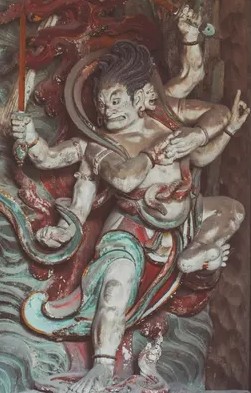
Nezha in the Three Heads and Six Arms form, painted clay sculpture from Fusheng Temple, Shanxi Province. Originally founded in the Tang dynasty and restored during the Jin, Song, Yuan, and Ming dynasties.
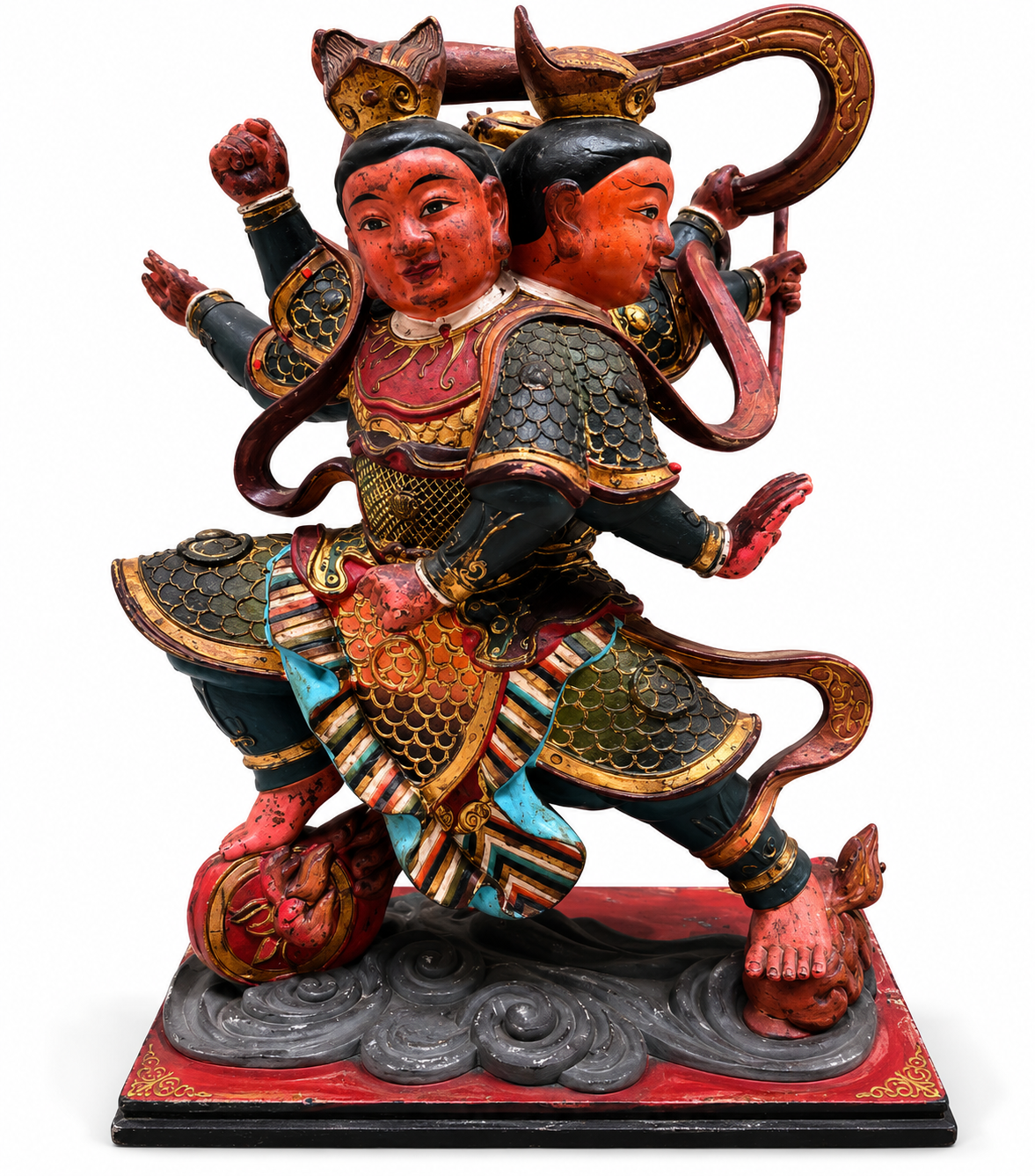
Folk clay sculpture of Nezha in the Three Heads and Six Arms form.
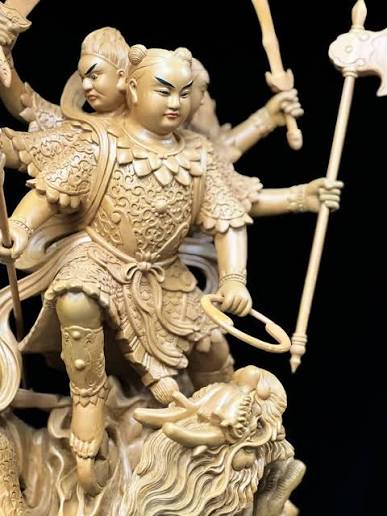
Modern sculpture depicting Nezha in the Three Heads and Six Arms form.
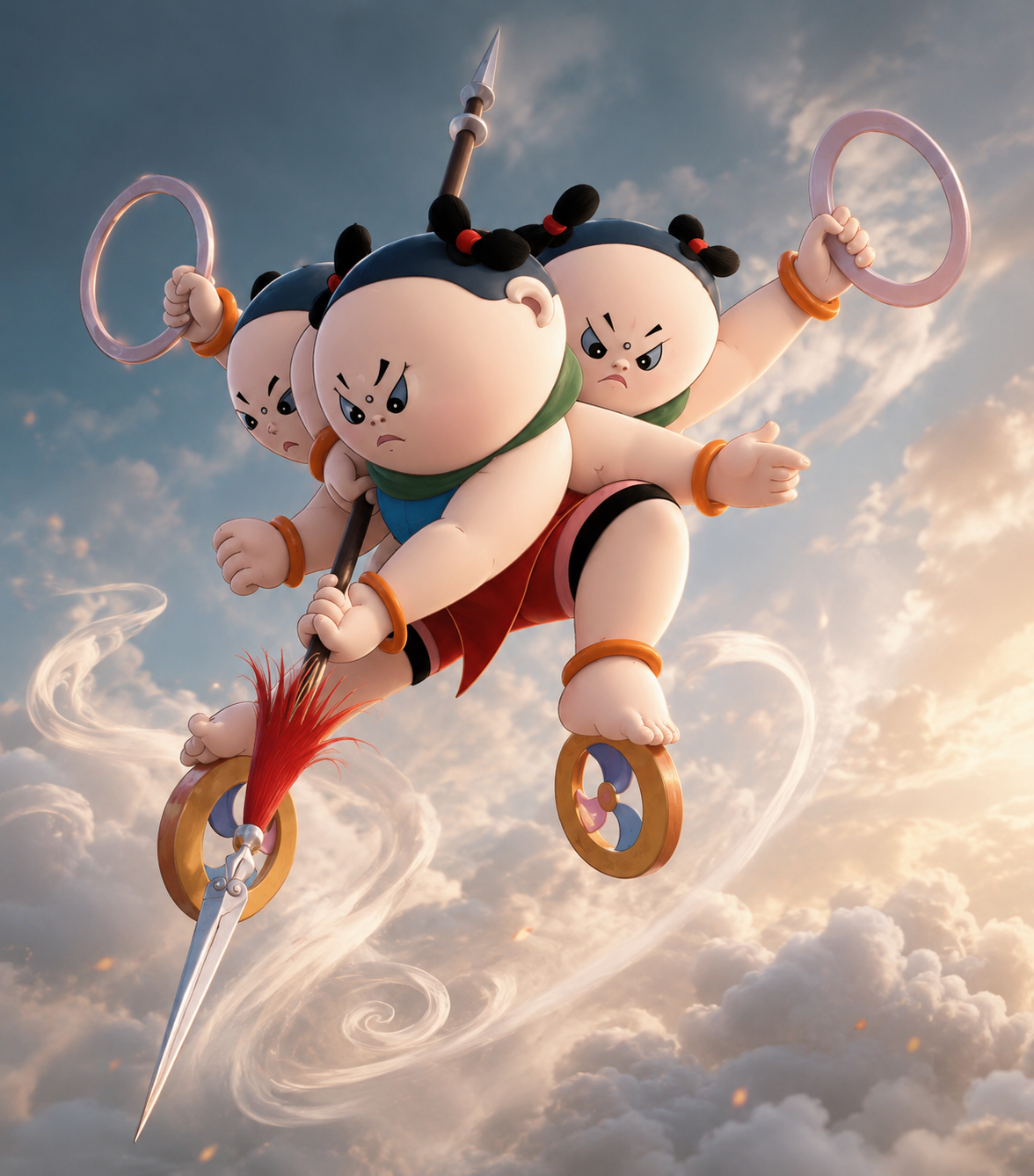
Nezha in the Three Heads and Six Arms form from The Monkey King: Uproar in Heaven (1961–1964), produced by Shanghai Animation Film Studio.
Stories & Sources
According to the Ming dynasty novel Fengshen Yanyi, Nezha was born at Chentang Pass during the Shang dynasty as the earthly incarnation of Lingzhu Zi (灵珠子). After Lady Yin carried him for three years and six months, she gave birth not to a child but to a ball of flesh. When Li Jing struck it with his sword, a fully formed boy emerged. Nezha was soon accepted as a disciple of Taiyi Zhenren and grew up alongside his elder brothers, Jinzha and Muzha.
At the age of seven, Nezha traveled to the Jiuwan Stream, where his magical sash, the Huntian Ling (混天绫), disturbed the palace of the Dragon King of the East Sea, Ao Guang. A confrontation followed in which Nezha killed the Yaksha Li Gen and later slew Ao Bing, the Dragon King’s third son. The conflict escalated when the Dragon Kings sought justice from the Jade Emperor, bringing disaster upon the Li family.
Further trouble followed when Nezha accidentally killed Biyun Tongzi (碧云童子), a disciple of Shiji Niangniang (石矶娘娘). Although Taiyi Zhenren ultimately defeated Shiji, the growing grievances of the Dragon Kings placed Nezha’s parents in grave danger. To save his family, Nezha sacrificed himself, cutting away his own flesh and bones and returning them to Li Jing and Lady Yin as repayment for the gift of life.
After his death, Nezha appeared in Lady Yin’s dreams and asked for a temple where his spirit could rest. The temple soon became famous, but Li Jing, still angered by his son’s actions, destroyed it. The resentment between father and son deepened until Taiyi Zhenren restored Nezha to life using lotus roots to create a new body. He was reborn with new divine weapons, including the Wind Fire Wheels (风火轮) and the Fire-Tipped Spear (火尖枪).
Many later stories focus on the conflict and eventual reconciliation between Nezha and Li Jing. In different traditions, this reconciliation is achieved through the intervention of powerful immortals or the Buddha, who grants Li Jing a sacred pagoda. From that point forward, Li Jing became known as the Pagoda-Bearing Heavenly King, while Nezha emerged as one of the most celebrated warrior deities in Chinese religion and folklore.
Evolution of the Image
Nezha originated as a deity in Indian Buddhism and was regarded as the third son of Vaisravana (the Heavenly King of the North, also known as the Guardian King of Wealth and War). His name derives from the Sanskrit Nalakūvara. Early Tang-dynasty Buddhist scriptures describe Nezha as accompanying his father in protecting the Buddhist faith and defending the realm, carrying weapons and leading heavenly forces. These brief accounts formed the foundation of the later Nezha legends.
As Buddhism flourished in China, stories of Nezha gradually entered popular literature and folklore. Many of the best-known episodes associated with him—such as battling the Dragon King’s son, returning his flesh and bones to his parents, and being reborn from a lotus—can be traced to earlier Buddhist texts and related traditions. Through centuries of adaptation and reinterpretation, Nezha evolved from a Buddhist guardian deity into one of the most iconic heroic figures in Chinese mythology.
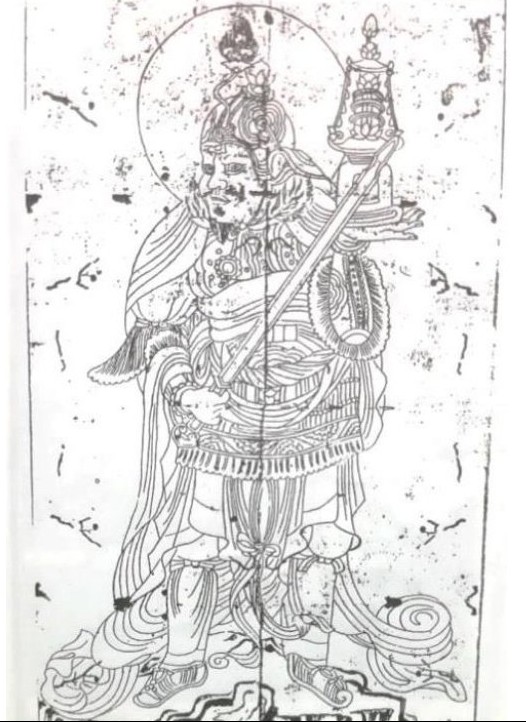
This image depicts Prince Nezha during the Tang Dynasty. At that time, Nezha was portrayed not as a child, but as a fully armed, armor-clad warrior of imposing stature.
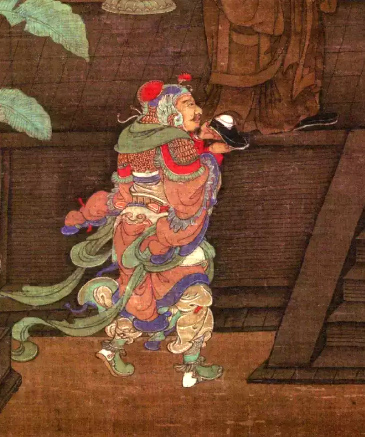
This painting is a detail from The Five Hundred Arhats: Veneration at the Buddha Hall by Lin Tinggui of the Southern Song Dynasty. It illustrates a famous story about the eminent Tang monk Daoxuan. The figure supporting the monk’s feet with both hands is Nezha.
As seen in Lin Tinggui’s Buddhist painting, Nezha is still depicted as an adult rather than a child. This suggests that, in the minds of people during the Tang and Song dynasties, Nezha—as a powerful Buddhist guardian deity endowed with great supernatural abilities—was not envisioned as a youthful boy. The familiar image of Nezha as a child attendant would emerge from other, earlier traditions.
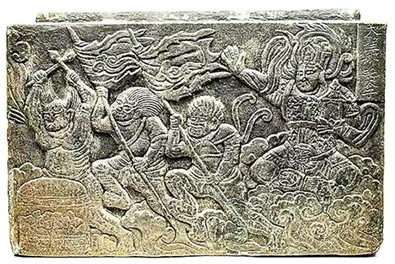
Image of Nezha: A stone reliquary casket unearthed from the underground crypt of the North Pagoda in Chaoyang, Liaoning Province, and now housed in the Chaoyang North Pagoda Museum, is carved on its four sides with a series of scenes depicting the story of “Nezha as a Dharma Protector.” The carvings portray Nezha commanding yakshas and other divine attendants in pursuit of the rebellious Dragon King Xiuji, who was causing storms and disturbances.
During the Song dynasty, Nezha’s identity became further Sinicized. He was reimagined as the third son of Li Jing, completely severing his Indian Buddhist origins and becoming fully integrated into the Chinese pantheon.
It was also during the Song period that the image of Nezha as a “Prince” (Taizi) and a youthful hero began to emerge. This development may have been influenced by the widespread circulation of Buddhist stories depicting Nezha in his younger years. As a result, Nezha gradually evolved into the archetype of a heroic youth.
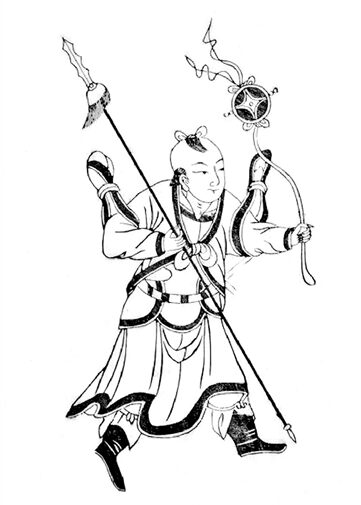
The Yuan dynasty marked a crucial transitional stage in Nezha’s evolution—from a powerful armored warrior deity to the miraculous child-god figure familiar in later Chinese mythology.
The image depicts Nezha as portrayed in The Origins and Lineages of the Three Teachings and the Search for the Divine (Sanjiao Soushen Yuanliu), a text compiled during the Yuan–Ming period.
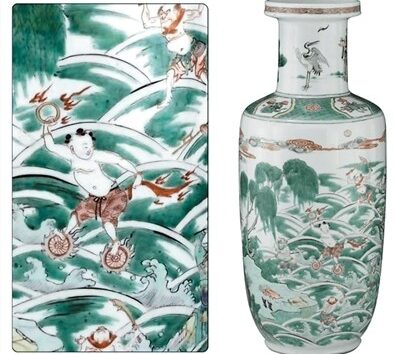
The Yuan dynasty marked a crucial transitional stage in Nezha’s evolution—from a powerful armored warrior deity to the miraculous child-god figure familiar in later Chinese mythology.