
Bodhisattva Skanda
Gallery
Description
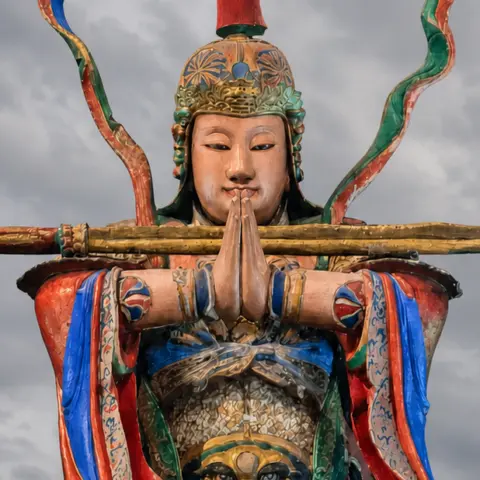
Bodhisattva Skanda. Figure; Ming dynasty (1368–1644), 16th–17th century; Lacquered and gilded wood.
Skanda, known as Weituo in Chinese, is a Buddhist guardian deity. He is always depicted as a young and robust warrior in full armor.
Related Deities
Armor Analysis
This wooden sculpture of Skanda (Weituo Bodhisattva) depicts a complete-body armor configuration without an outer robe, consisting of a standard helmet, chest armor, body armor, paired skirt plates protecting the thighs, front and rear apron guards, leg armor, and armored footwear.
A particularly distinctive feature is the extensive use of swallow ornaments. The sculpture incorporates eleven swallow ornaments: paired shoulder swallows, a chest-and-neck swallow, an abdominal swallow, paired knee swallows, paired wrist swallows, paired ankle swallows, and a final swallow ornament at the lower end of the front apron. In contrast, the rear side of the armor is comparatively simple in design.
Iconography & Attributes
The vajra pestle carried by Skanda (Weituo Bodhisattva) symbolizes his role as a guardian of Buddhist teachings. In Han Chinese Buddhist traditions, the vajra pestle serves as a ritual weapon for subduing demons and protecting the Dharma. Sculptural depictions of Weituo commonly show three holding positions: resting the pestle on the shoulder with the tip upward, holding it horizontally across the chest, or placing it upright on the ground. This sculpture follows the third arrangement.