
From Rebellious Child to Celestial Marshal
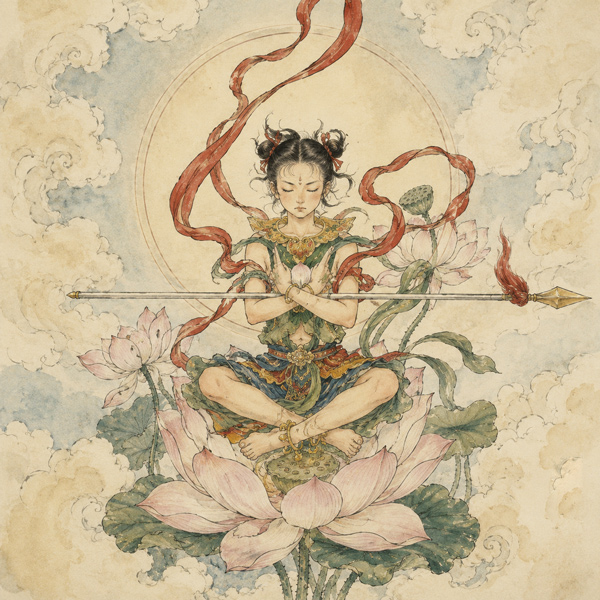
Following his reconciliation with Li Jing, Nezha returned to the campaign against the Shang dynasty under Jiang Ziya. Fighting alongside the immortals of the Chan tradition, he took part in many of the decisive battles that paved the way for the rise of the Zhou dynasty. Wielding the Fire-Tipped Spear and riding upon the Wind-and-Fire Wheels, he became one of the most formidable warriors in the great conflict between the forces of heaven and earth.
Throughout the campaign, Nezha repeatedly confronted demons, immortals, and powerful generals whose abilities rivaled those of the gods themselves. Although still youthful in appearance, he gradually matured from an impulsive child into a disciplined defender of the heavenly order. The trials that had once brought suffering—his miraculous birth, the conflict with the Dragon Kings, his sacrifice, rebirth, and reconciliation with his father—had transformed him into a figure whose loyalty was no longer directed toward personal vengeance, but toward the protection of the cosmic order.
After the Zhou victory and the completion of heaven’s mandate, Jiang Ziya carried out the Investiture of the Gods. In recognition of his extraordinary service, Nezha was granted divine office and formally entered the celestial bureaucracy. Daoist tradition honors him as the Marshal of the Central Altar (中坛元帅), while later religious traditions also venerated him as the Great God of the Three Altars and Seas (三坛海会大神), commander of heavenly armies and protector against demons and calamities.
Unlike many deities whose authority derives from birth or inheritance, Nezha earned his place through hardship and transformation. Every stage of his legend reshaped his identity: his miraculous birth revealed his divine origin; his rebellion tested his character; his sacrifice demonstrated his moral courage; his lotus rebirth granted him an immortal body; and his reconciliation with Li Jing restored harmony between family and heaven. Together, these episodes forged the image of the celestial marshal worshipped across China today.
Over the centuries, Nezha’s story continued to evolve far beyond Investiture of the Gods. Temple sculptures, religious paintings, popular opera, vernacular novels, animation, comics, and modern cinema have all reimagined his character while preserving the essential symbols that define him—the youthful appearance, the sacred treasures, and the fearless spirit that refuses to submit to injustice.
Today, Nezha stands as one of the most recognizable warrior deities in Chinese religion and one of the most enduring heroes in Chinese mythology. His legend is no longer simply the story of a rebellious child, but the story of how suffering, sacrifice, and transformation can ultimately give rise to divine purpose.