
What Baodu Is
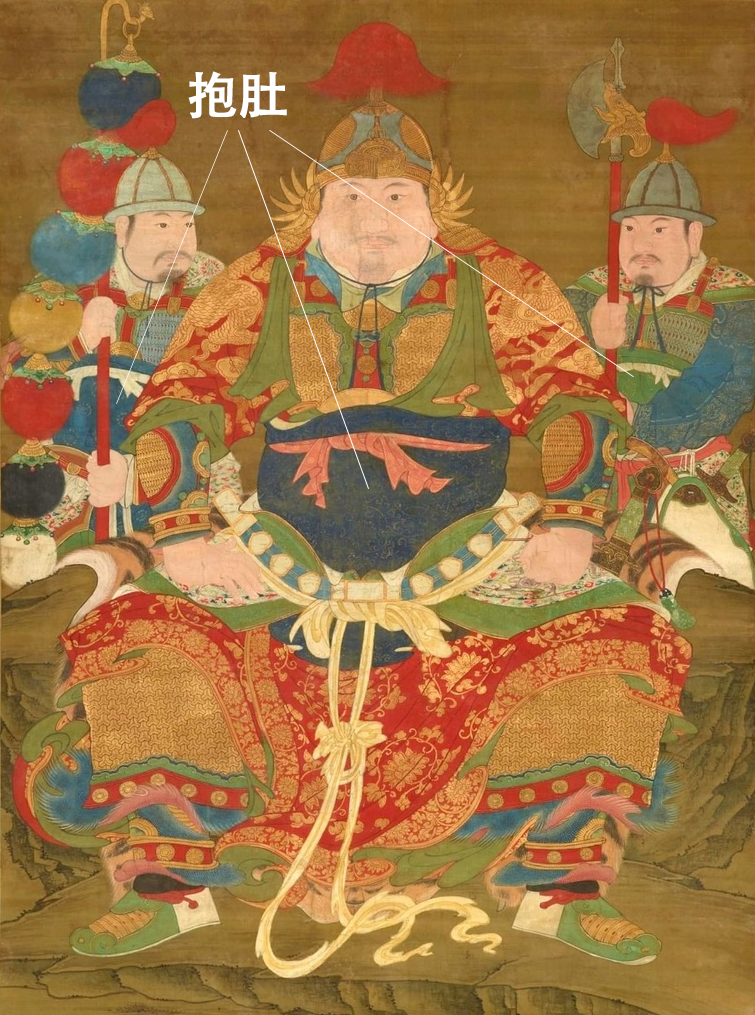
Baodu (抱肚), literally an “abdominal wrap,” is a flexible garment-like armor accessory worn across the front and sides of the abdomen. It is not a hard armor plate. Depending on the example, it may be made from leather, thick cloth, patterned silk or brocade, padded textile, or layered fabric, sometimes with decorated edging, studs, metal fittings, or reinforced borders.
In an armor system, Baodu commonly appears outside the abdominal or torso armor but inside the broader Armor Belt and Waist Support arrangement. It may extend forward from the sides or rear to form a broad, rounded covering over the abdomen. Its precise fastening and material are not universal.
Historical Position
Baodu becomes visible as a military and armor-associated accessory from around the late Tang onward and continues in later traditions of military dress. The surviving visual record supports continuity and variation more clearly than one exact date of origin, so CG does not assign every form to a single moment or construction standard.
A Flexible Buffer
A sword, saber, scabbard, or other belt-hung equipment moves with the body during walking, riding, and combat. Without an intervening layer, hard fittings can strike, scrape, and rub directly against armor. Baodu creates a flexible buffer between those hanging objects and the hard surface beneath them.
This layer can reduce scratching, impact, direct hard-surface contact, and wear on both weapon fittings and armor. It may also add soft protection, padding, thermal insulation, and comfort around the waist and abdomen, although warmth should not be treated as its single or primary purpose.
How It May Have Been Stabilized
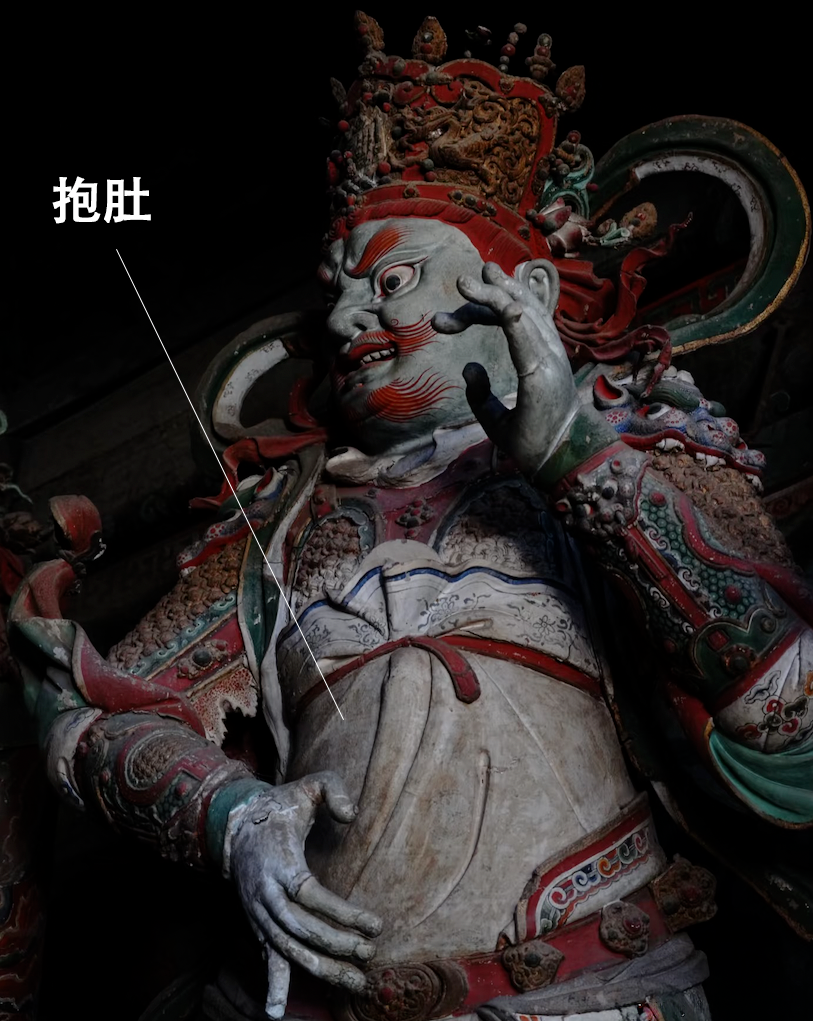
The exact upper fastening system is not yet fully established. Some images make it possible to imagine Baodu tied around the chest or waist, but a large and thick flexible abdominal piece may be difficult to stabilize through simple horizontal tightening alone.
As a CG reconstruction hypothesis, the upper edge may in some systems have been assisted by attachment points on the chest armor, cords, rings, ties, or other upper anchors. The lower edge may have been stabilized by the Armor Belt, the Waist Support, or the broader waist assembly. This is a practical working reconstruction, not a claim that every historical Baodu used the same hidden attachments.
Different from Waist Support
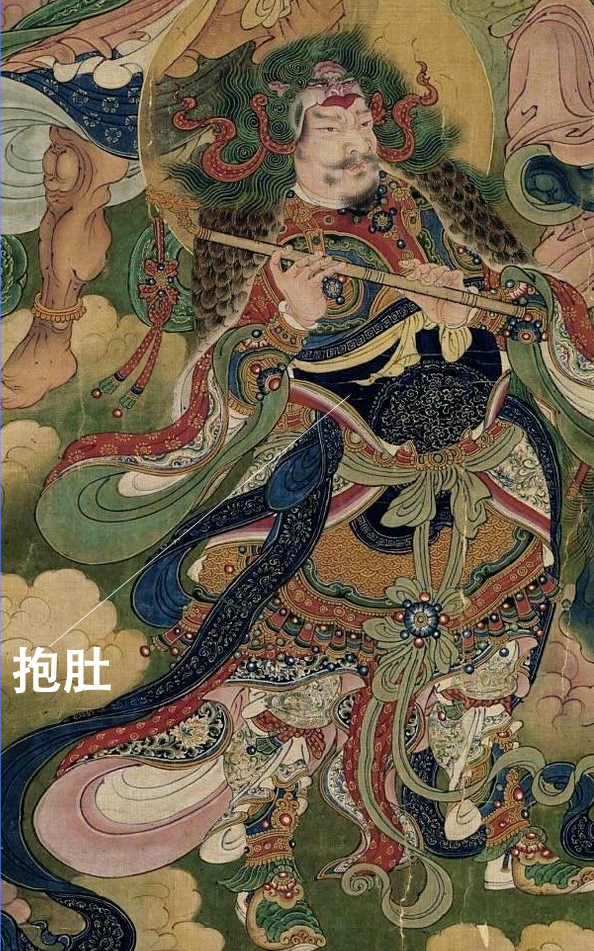
Baodu and Waist Support (捍腰) are separate components. Waist Support belongs to the rear waist module and participates in the support and stabilization of the rear belt system. Baodu is a broad front-facing abdominal covering: a flexible buffer and garment-like armor accessory that may sit inside the belt and waist-support system.
Baodu must also remain distinct from Belly Swallow (腹吞), the beast-head component at the lower front of the torso armor. One is a flexible abdominal layer; the other is a shaped armor fitting with its own protective, structural, and visual role.
The Rounded Belly
Baodu often creates or emphasizes a full, rounded, and projecting abdominal silhouette. In some images the belly becomes almost spherical. Chest and abdomen remain visibly divided, while belt placement and the broad abdominal layer give the body a strong outward volume.
Historical images can preserve a similar rounded silhouette even when an individual Baodu is not clearly visible. Layered torso armor, belt structure, padding, attached equipment, and deliberate shaping may all contribute. CG therefore treats the rounded belly as part of the broader visual language of the armored warrior rather than as automatic evidence of the wearer’s body shape.
Structure, Function, and Presence
Baodu should be understood on three levels. Its structure is a broad flexible layer placed within the abdominal and waist assembly. Its function is to buffer armor and belt-hung equipment while adding padding and comfort. Its presence is the weighty bodily silhouette that it helps create.
CG considers it possible that this full abdominal form also carried aesthetic and status associations: substantial, settled, dignified, and authoritative. That does not mean that a round belly was a universal code for wealth or rank. It means that armor could shape an ideal martial body as well as protect a physical one.
Baodu may have protected more than the abdomen; it also helped give the warrior visual weight and presence.