What Futou Is
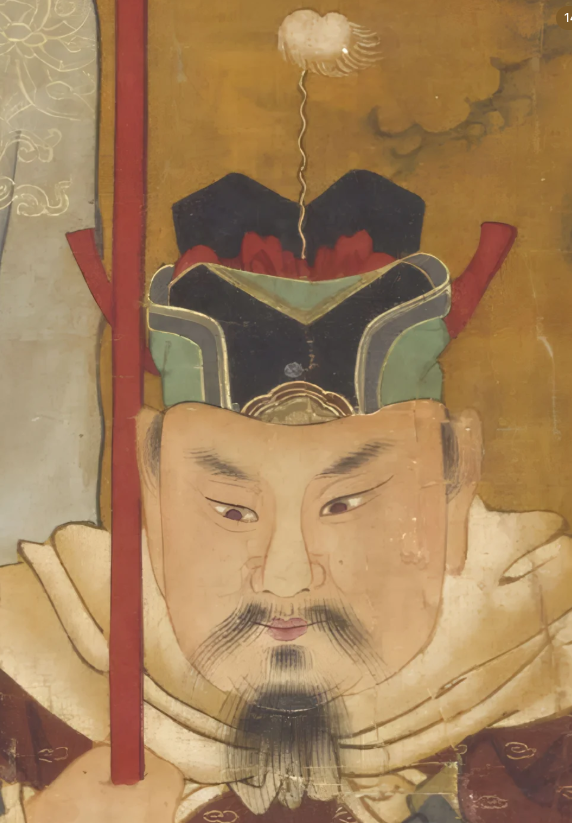
Futou (幞头) is a Chinese headwear tradition that developed from wrapping and binding the hair. Its structure remained closely related to the topknot: the crown enclosed, accommodated, or was shaped around tied hair rather than treating the head as a smooth modern hat form.
Futou is broader than any one military version. It includes softer wrapped forms as well as later pre-shaped and hardened forms. “Iron Futou” (铁幞头) is therefore treated here as a major military variant and literary martial term, not as the canonical identity of every Futou.
From a Soft Headwrap to a Shaped Hat
The early logic of Futou was flexible: cloth was wrapped, hair was bound, and the form adapted to the wearer’s topknot. From the later Tang onward, some versions became increasingly pre-shaped. A rigid inner structure, lacquered gauze or fabric, copper or iron wire, and reinforced wings or feet could hold a stable silhouette before the headwear was put on.
This change allowed Futou to work more like a ready-made hat. A shaped crown reduced the need to construct the form from scratch each time, while fixed wings or feet preserved a recognizable outline. The resulting headwear could be put on more quickly and retain its form more reliably.
Why It Worked in Military Dress
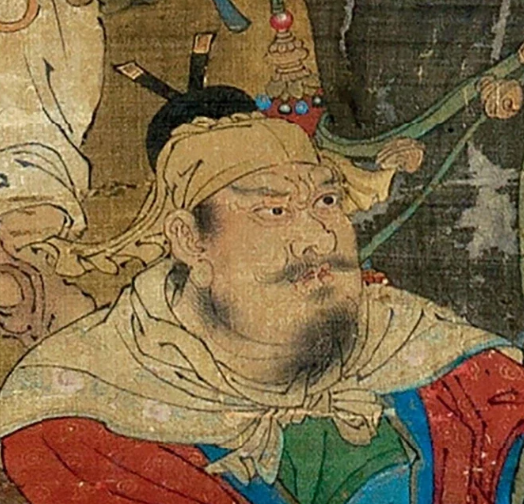
Military use benefited from rapid dressing, a stable shape, compatibility with tied hair, and a strong visual identity. A hardened Futou could remain distinct and orderly during ceremonial, guard, attendant, or semi-formal military wear without becoming the same thing as a helmet.
Warriors and generals may therefore appear in Futou when they are not shown in full battlefield armor: in military undress, ceremonial dress, guard roles, deity and warrior imagery, or as high-ranking martial figures. Such an image does not simply mean that a warrior forgot his helmet. It joins a civilian and official headwear lineage to a militarized visual identity.
What “Iron Futou” Means
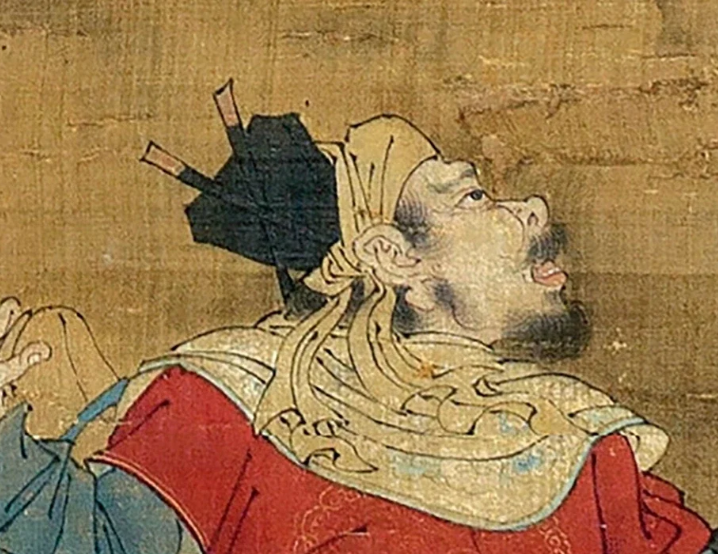
CG does not interpret Iron Futou as necessarily being a one-piece iron helmet. The name is better understood as a hardened military Futou whose shape may be reinforced by iron or copper wire, a rigid internal support, and strengthened crown, wings, or feet. Literary language can emphasize the firmness and martial character of the form without requiring the entire object to be forged as a solid metal shell.
This distinction separates Futou from Helmet (兜鍪). A helmet is protective armor for the head. Futou is a headwear tradition adapted into rigid military use. The two can occupy related parts of military dress, but they do not share one canonical identity.
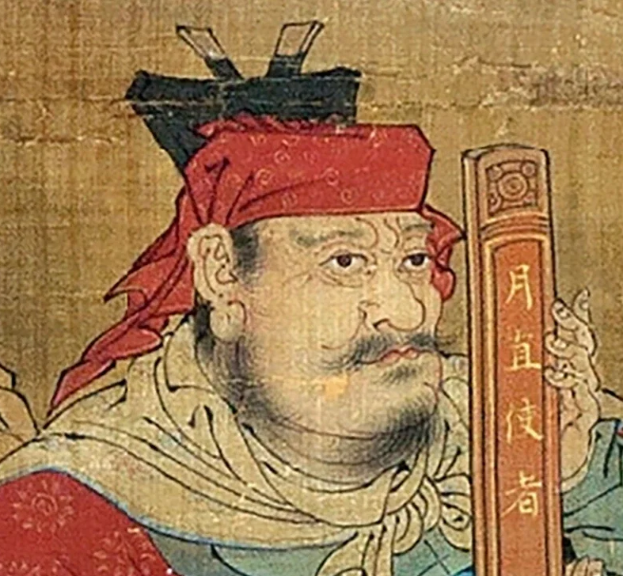
Topknot and Crown Shape
Futou retains the visual logic of traditional hair binding. Its crown may preserve space for a topknot, tied hair, or an internal support arranged around the bun. This helps explain why some examples rise higher or look more sculptural than a modern cap: their form answers both the hairstyle beneath and the structure that fixes the outer silhouette.
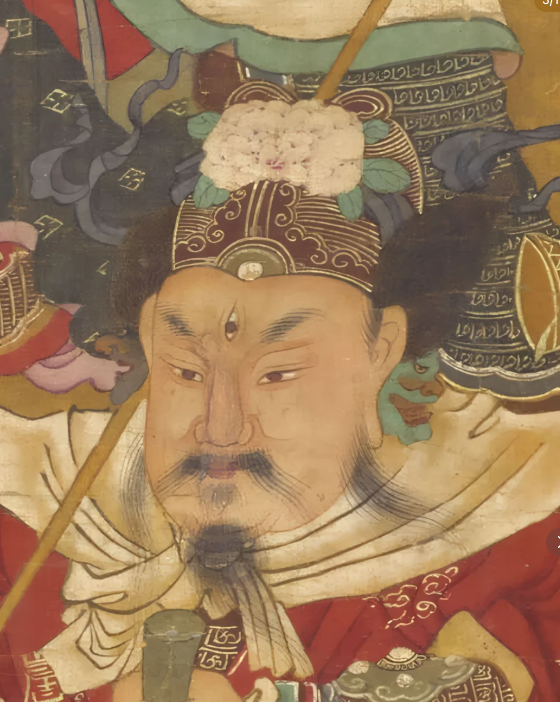
One Tradition, Many Visual Forms
Water-and-land paintings and other historical visual references do not show one standardized military Futou. Crown height varies; wings or feet may cross, angle upward, or extend backward; a forehead cloth or mo’e (抹额) may appear beneath it; flowers, pom-like elements, white ornaments, or colored top decorations may be added; and hardened military forms may be strongly stylized in deity and warrior imagery.
These differences remain within Futou. They are visual variants rather than reasons to create a separate Subject for every crown, wing, wrapping, or ornament.
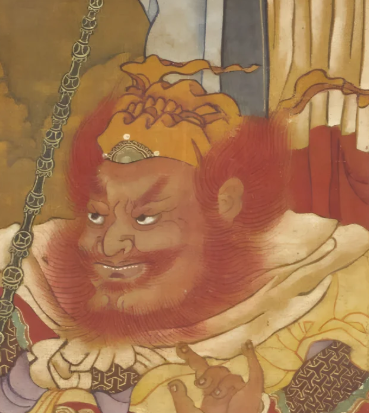
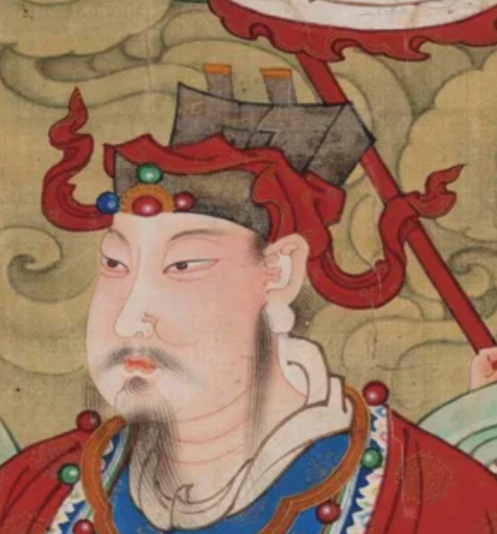
Literary and Cultural Role
Iron Futou became a stable martial symbol in literature, opera, and later traditional imagery. Water Margin figures such as Sun Li can be described wearing it. Such references help explain why the term carries a military charge beyond the construction of any single surviving example.
Later Canon for Three Kingdoms Figures
Ming–Qing and later visual culture often represents figures such as Guan Yu and Zhang Fei in Futou-style military headgear. These images reflect a mature later cultural canon rather than a strict reconstruction of late-Han dress. CG follows this established traditional visual language when presenting those figures.