From Divine Birth to the Disciple of Taiyi Zhenren
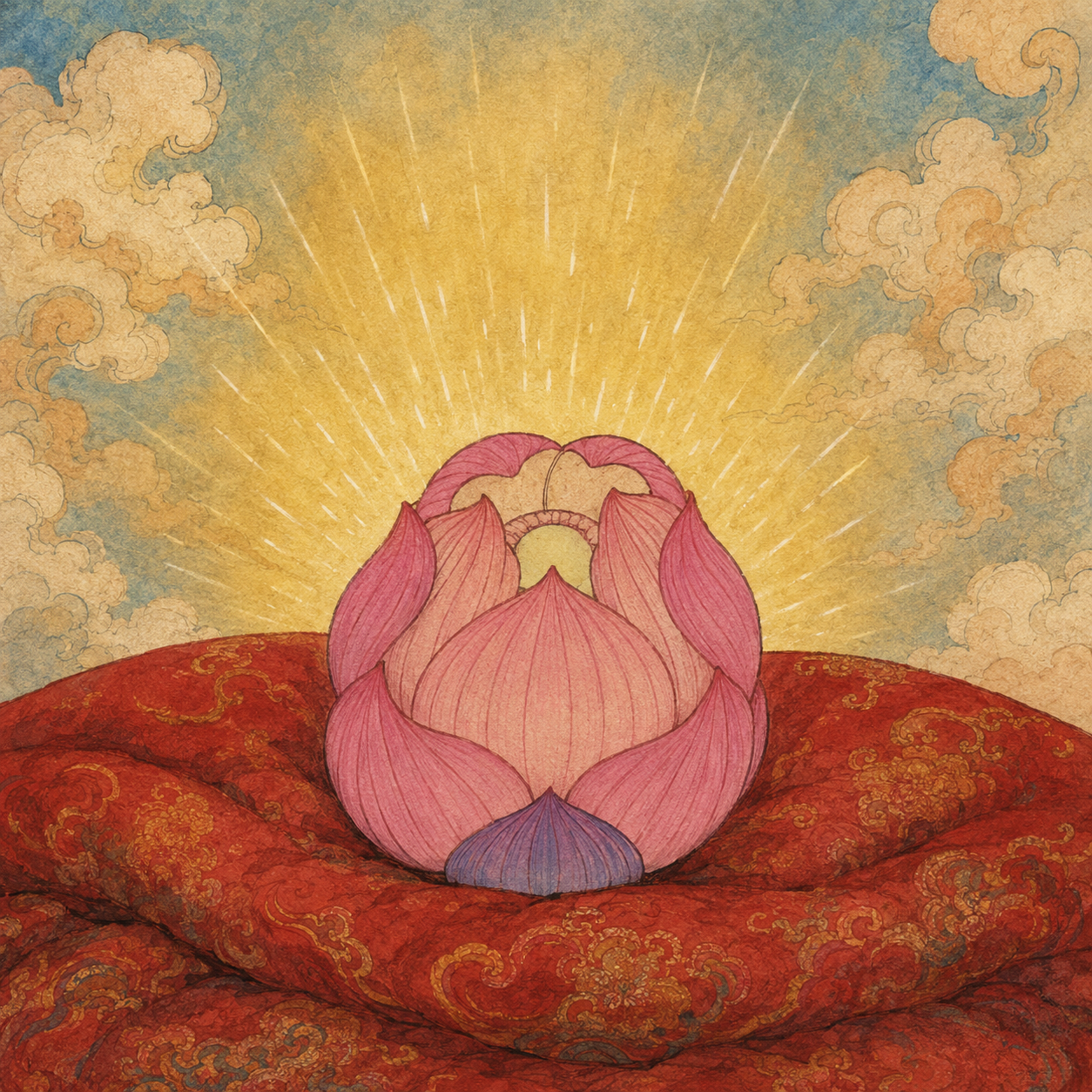
During the final years of the Shang dynasty, Li Jing, the military commander of Chentang Pass, and his wife, Lady Yin, longed for a child. At last, Lady Yin became pregnant, but the pregnancy defied all natural expectations. According to Investiture of the Gods (Fengshen Yanyi), she carried the child for three years and six months before giving birth.
When the time finally came, she did not deliver an infant, but a gigantic ball of flesh. Believing it to be an evil omen, Li Jing drew his sword and split it open. From within emerged a radiant young boy, already able to walk and speak. He was born wearing the Huntian Ribbon (混天绫) around his body and the Qiankun Ring (乾坤圈) upon his arm, while auspicious light surrounded him, revealing that he was no ordinary child.
Far away on Mount Qianyuan, Taiyi Zhenren of Jinguang Cave had already foreseen this miraculous birth. Knowing that the celestial spirit Lingzhuzi (灵珠子) had descended into the mortal world, he traveled to Chentang Pass and explained that the child was not a demon but one chosen by heaven, destined to assist the future Zhou dynasty in overthrowing the corrupt Shang regime.
Though still uncertain, Li Jing accepted Taiyi Zhenren’s judgment and allowed the immortal master to take the boy as his disciple. Nezha thus entered the Chan (阐教) tradition under Taiyi Zhenren, becoming one of his youngest and most gifted students.
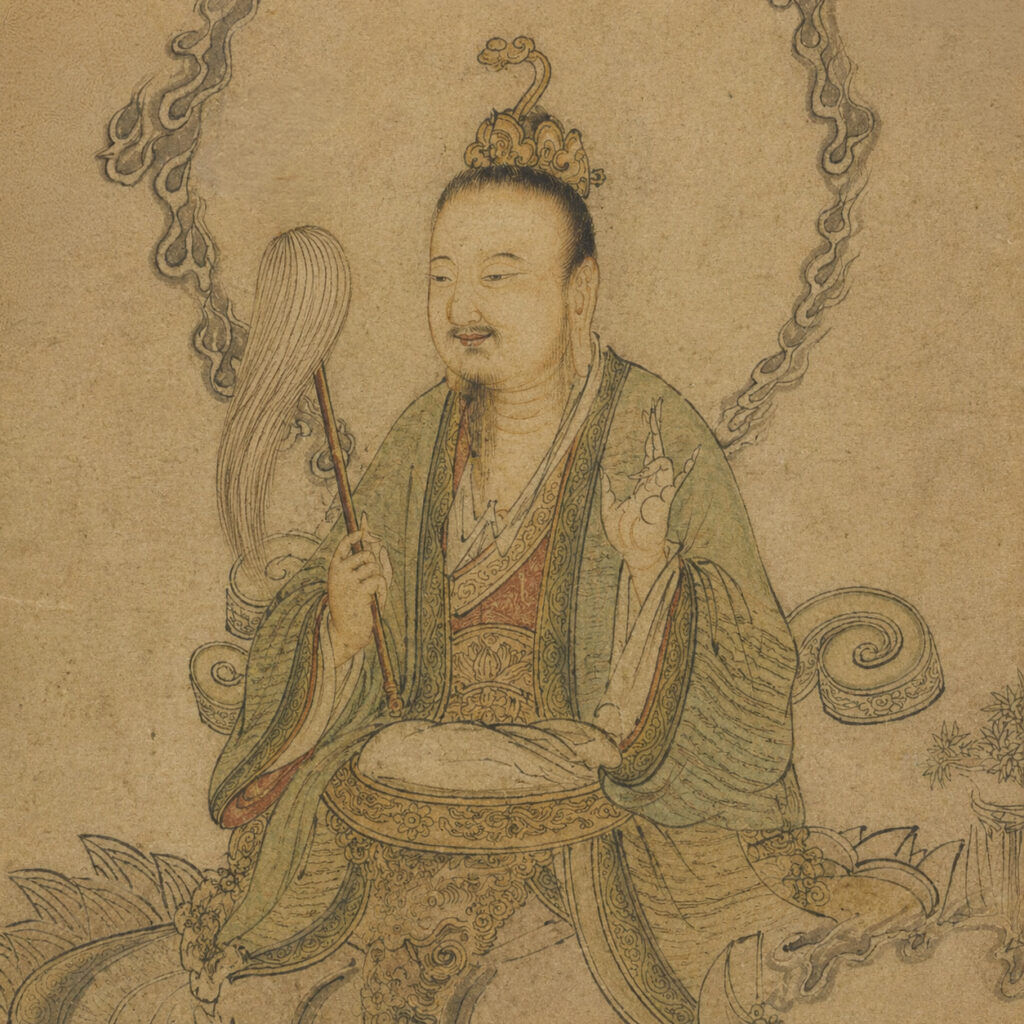
Taiyi Zhenren
Nezha’s immortal master and unwavering protector. From bestowing divine treasures to restoring Nezha’s life with a lotus body, Taiyi Zhenren shaped every stage of his disciple’s legendary journey.
On Mount Qianyuan, Taiyi Zhenren instructed Nezha in Daoist cultivation, martial arts, magical transformations, and the use of divine weapons. He formally entrusted his disciple with several sacred treasures. The Huntian Ribbon could bind demons and stir rivers and seas. The Qiankun Ring was an indestructible divine weapon capable of striking enemies from great distances. In later episodes, Taiyi would also bestow the Wind-and-Fire Wheels and the Fire-Tipped Spear, completing the iconic arsenal that would define Nezha throughout Chinese mythology.
These treasures were far more than weapons. They symbolized Nezha’s heavenly origin and divine mission, while establishing the visual language by which he would be recognized for centuries. Whether in temple sculptures, religious paintings, traditional opera, popular novels, or modern films, Nezha almost always appears accompanied by these sacred objects, making them some of the most enduring symbols in Chinese religious art.
Yet extraordinary gifts also carried extraordinary consequences. Blessed with immense power but still possessing the impulsiveness of a child, Nezha had not yet learned restraint. Before long, an encounter on the shores of the Eastern Sea would ignite a conflict with the Dragon Kings, setting in motion the chain of events that would forever transform both his destiny and his relationship with his family.