
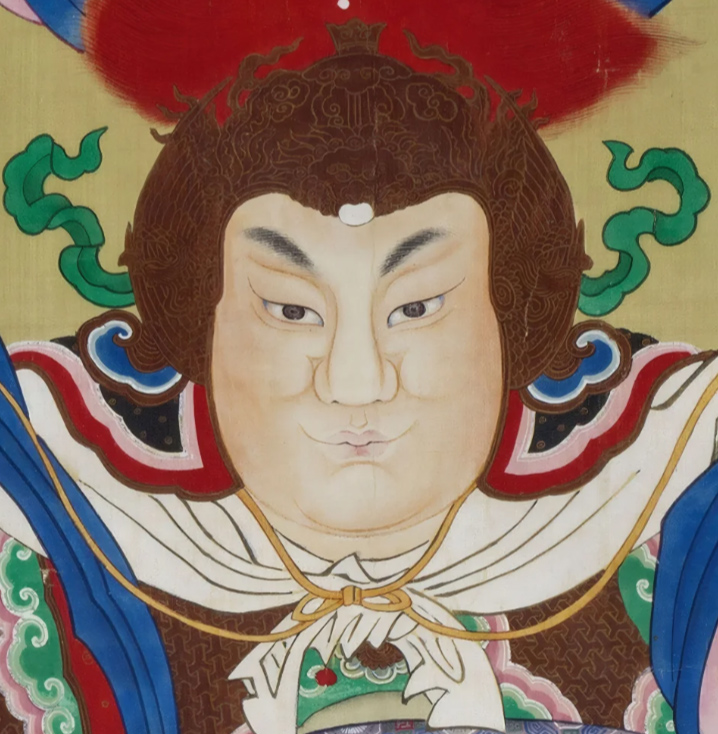
A Shoulder Scarf is a small neck-and-shoulder cloth accessory tied around the neck and spread across the shoulders. It appears with increasing frequency in martial and military imagery from around the Five Dynasties through the Song, and remains common in later depictions of generals, divine warriors, and guardian figures from the Yuan and Ming periods.
It is usually tied beneath the chin or at the front of the neck, with the cloth spreading to either side over the neck and shoulders. The section at the back is short. It does not fall broadly down the back like a cloak, so its structure is distinct from both a cape and a cloak.
Its most recognizable visual role is to place a small layer of soft fabric between the head and neck and the main body of the armor. Repeated use in Water-and-Land paintings, martial portraiture, and divine-warrior imagery gradually made it a distinctive part of the visual language of the warrior.
Reducing Friction Between Armor Components
One practical role of the Shoulder Scarf is to serve as a soft layer between neck protection, the helmet curtain, shoulder defenses, and armor over the upper back.
The neck and shoulders move constantly when armor is worn. Turning the head, raising the shoulders, and swinging the arms all cause the edges of helmet defenses, shoulder armor, and back armor to shift against one another. Direct contact between these hard components can create friction and restrict movement.
Placed between them, the scarf can help separate hard armor surfaces and allow the neck and shoulders to move more freely.
It is therefore more than decoration. It can participate directly in the armor-wearing system as a flexible accessory.
Reducing Neck Abrasion
CG Functional Interpretation
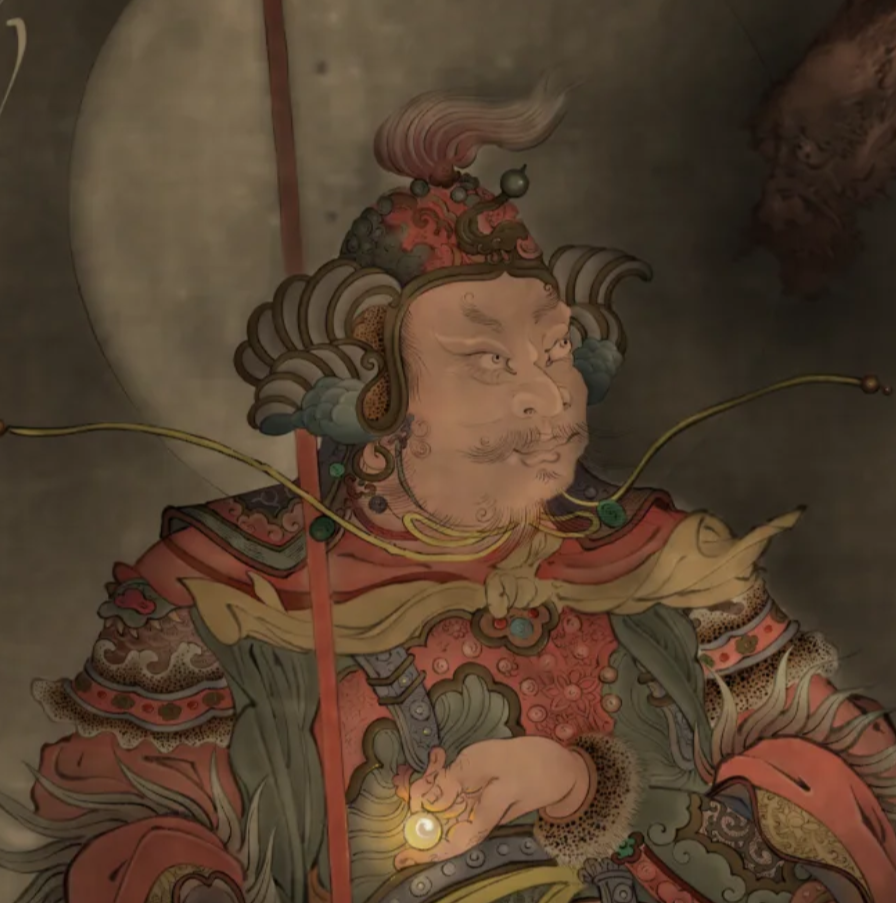
CG interprets the Shoulder Scarf as having another practical role: forming a soft buffer between the neck, the garment collar, and the edges of the armor.
During prolonged wear and repeated movement, armor collars, shoulder defenses, and other hard components may rub against the neck. Without a soft intervening layer, that friction can cause discomfort or abrasion.
Because the scarf covers this exact area, it can reduce direct contact between the neck and hard armor edges.
This function is not always described explicitly in written sources. It is presented here as a CG Functional Interpretation based on the scarf’s position and the practical logic of wearing armor, rather than as a universally documented historical rule.
Dust Protection, Sweat Absorption, and Warmth
As a piece of cloth, the Shoulder Scarf also offers several straightforward secondary benefits.
It can absorb sweat around the neck and shoulders, reducing the amount that reaches the armor lining. In dusty or sandy conditions, it can also help keep some debris from entering the collar and the interior of the armor.
In cold weather it adds warmth around the neck and shoulders. In hot conditions, the cloth can separate skin from metal or leather heated by the sun.
These may not have been its primary purpose, but they fit the practical needs of military dress and prolonged wear.
From Armor Accessory to Martial Dress
The Shoulder Scarf did not remain limited to fully armored figures.
Some paintings show warriors or divine figures wearing it around the neck and shoulders even without a complete suit of armor. This suggests that over time it moved beyond a strictly functional armor accessory and became part of martial dress and visual identity.
A feature that may have begun with practical value could therefore acquire both a clothing role and a recognizable symbolic presence.
At this stage, the scarf no longer existed only for wearing armor. It could stand as an independent element within the appearance of a warrior.
Color and Military Identification
CG Hypothesis
The Shoulder Scarf occupies a highly visible position around the head, neck, and shoulders.
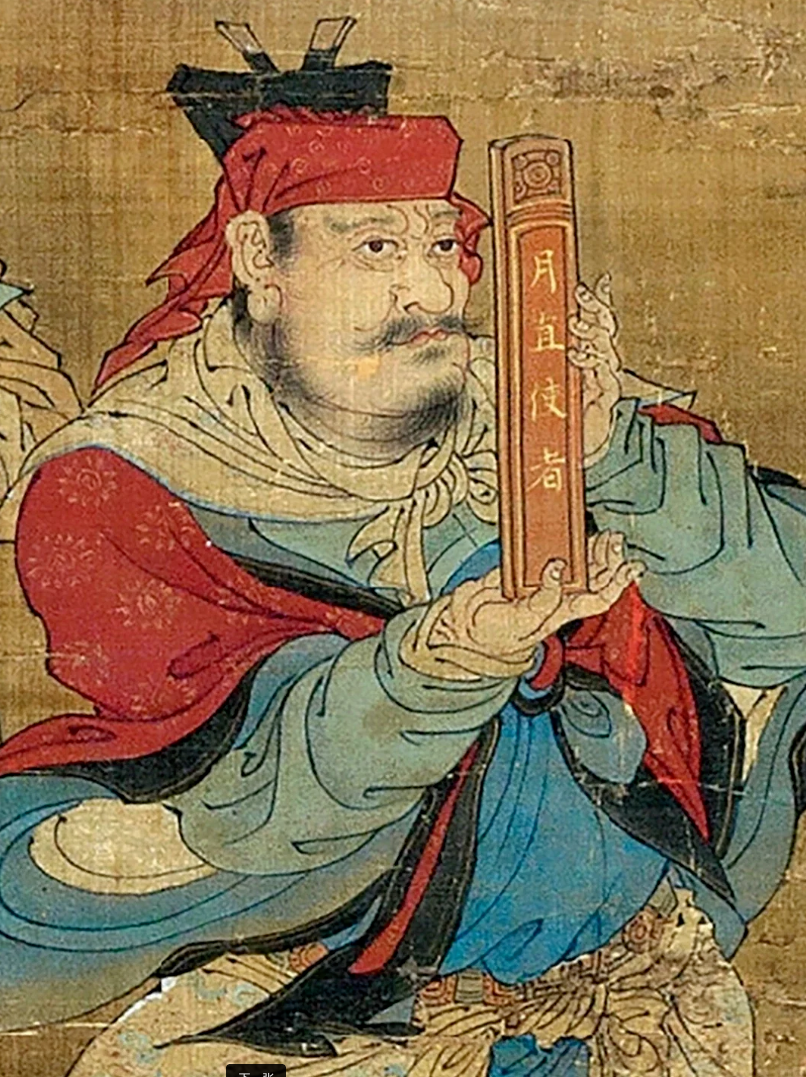
In a crowded military formation, a brightly colored accessory in such a prominent position could naturally function as a quick visual marker. Historical armies also used colors, banners, clothing, and other visible features to distinguish identities, units, and sides.
CG therefore proposes that scarf color may sometimes have contributed to recognition of units, roles, rank, or affiliation.
Direct institutional evidence is not sufficient to establish that a fixed scarf color always corresponded to a particular branch or formation. This remains a CG Hypothesis, not a confirmed historical system.
A Shoulder Scarf Is Not a Cloak
Because it covers the shoulders, the Shoulder Scarf can be mistaken for a small cloak, but the two structures are very different.
The scarf is compact. It is centered on the neck and shoulders, with a short rear section and little coverage of the back.
A cloak or cape spreads primarily behind the wearer and covers the back, sometimes extending to the waist or legs. Its function and visual effect are fundamentally different.
Within the CG Armor & Attire system, the Shoulder Scarf should therefore be treated as an independent neck-and-shoulder accessory rather than part of the cloak system.
CG Visual Language
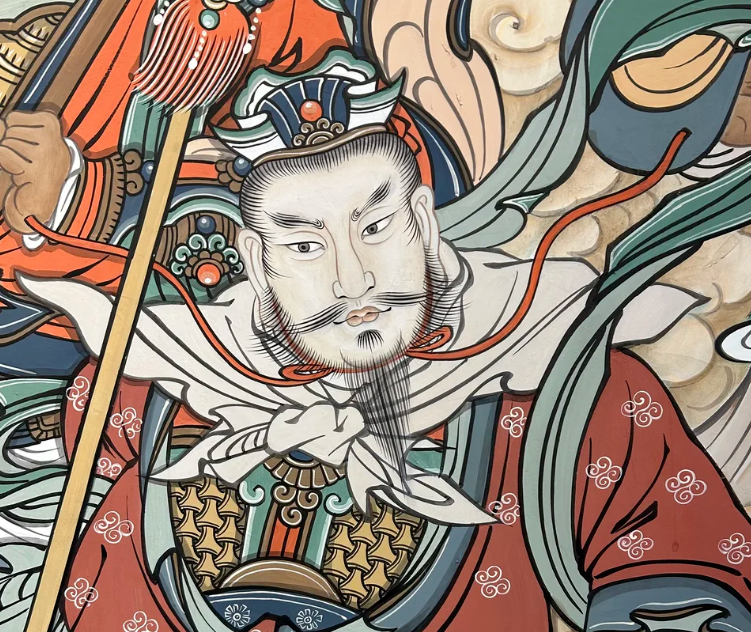
Although the Shoulder Scarf is a small component, it can make a clear difference to a figure’s silhouette.
It can:
- separate the head from the breastplate
- strengthen the layered structure around the neck and shoulders
- create a color focal point
- add period character and martial identity
- introduce a soft, flowing material within the weight of the armor
For these reasons, it is not a minor ornament that can always be omitted without consequence.
In post-Song depictions of generals, divine warriors in Water-and-Land paintings, and traditional guardian figures, it often serves as an effective layer of visual identity.
CG principle: the Shoulder Scarf is first a flexible neck-and-shoulder accessory. It can support friction separation, wearing comfort, environmental adaptation, and visual recognition; it is not a cloak.