Helmet Tassel is the conspicuous fiber, hair, feather, or related ornament mounted on a helmet. Its central visual logic is upward visibility: it raises and enlarges the silhouette so troops can recognize a commander. A long horse-tail-like streamer flowing backward, familiar from modern screen costume, should not be treated as the default traditional form.
Upward-Spreading and Rounded Forms
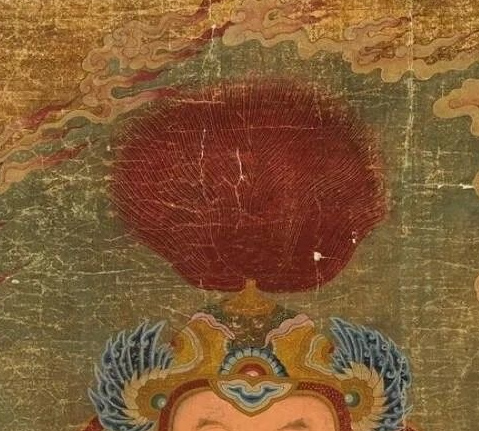
A common form uses red fibers or hair spreading upward and outward. Another forms a dense rounded red pom or fluffy ball. Both create a vertically prominent marker above the helmet rather than trailing backward like long hair.
Pheasant Feathers
Pheasant feathers can replace or supplement the tassel. Their height and movement similarly increase vertical visibility and recognition. They remain helmet ornament, not part of the protective shell.
Marshal Helmet Exception
The Marshal Helmet is the main CG exception in which red hair points downward. A tall spike or spear-like finial rises from the helmet; the tassel first blooms outward and then falls around the spike. The form remains organized around a vertical silhouette and is not a long backward streamer.
Small Trembling Forehead Ornament
Smaller ornaments may appear at the forehead on thin wire, a spring-like rigid support, or a projecting metal stem, visibly trembling as the wearer moves. The exact historical name and function are not locked, so CG describes only a small trembling helmet ornament or forehead ornament without inventing a term or purpose.
Visual Evidence and Opera Note
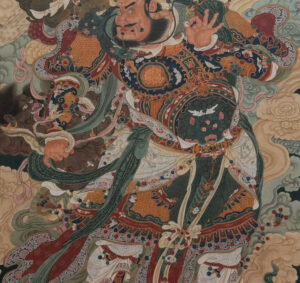
Traditional images and Chinese opera preserve upward tassels, rounded red forms, pheasant feathers, Marshal Helmet vertical structures, and trembling forehead ornaments. Opera may preserve this visual memory more closely than modern long backward-streaming screen tassels, but remains comparative evidence rather than proof of one universal arrangement.