Source Work: Romance of the Three Kingdoms

  • 方悦

    Fang Yue

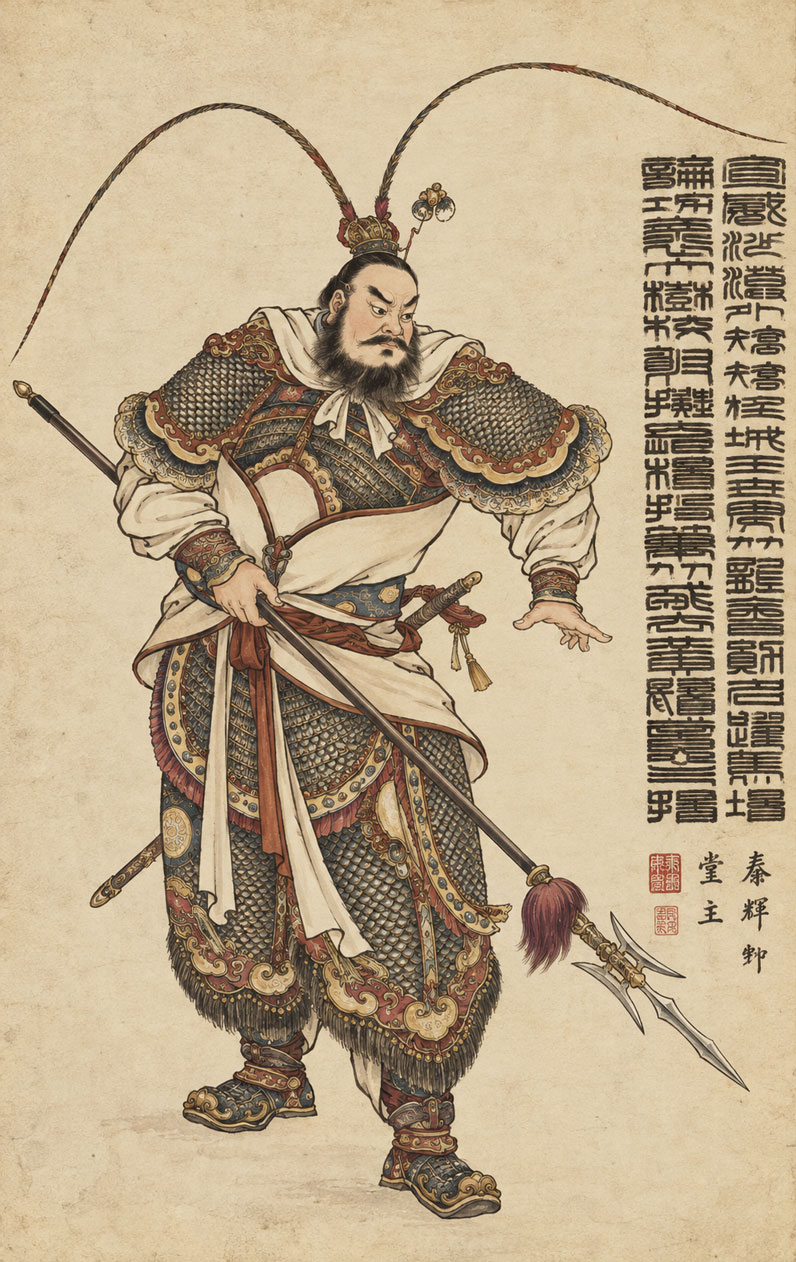
    Fang Yue is a general under Wang Kuang, the governor of Henei, during the coalition campaign against Dong Zhuo in Romance of the Three Kingdoms. The novel introduces him at Hulao Pass as a noted warrior from Henei, placing him among the officers whom the allied lords are willing to send against Dong Zhuo’s most dangerous champion. He carries a spear and rides out when Lü Bu advances before the pass.

    The contest is brutally short. Fang Yue meets Lü Bu head-on but cannot last five bouts before Lü Bu kills him with a thrust of the halberd. No earlier career or later family history is supplied for him; his entire surviving role is concentrated in this one encounter. That brevity is part of the scene’s effect. Fang Yue is not presented as an unnamed soldier, but as a recognized general, and Lü Bu destroys him almost immediately.

    Fang Yue’s death begins the sequence that establishes Lü Bu’s overwhelming presence on the battlefield. Mu Shun falls next, Wu Anguo is maimed, and Gongsun Zan is driven into flight before Zhang Fei finally checks the pursuit. Fang Yue therefore occupies a small but durable place in the Hulao Pass story: he is the first allied officer whose defeat turns Lü Bu’s arrival from a threat into a demonstration of terrifying martial superiority.
  • Yuan Shu

    Yuan Shu

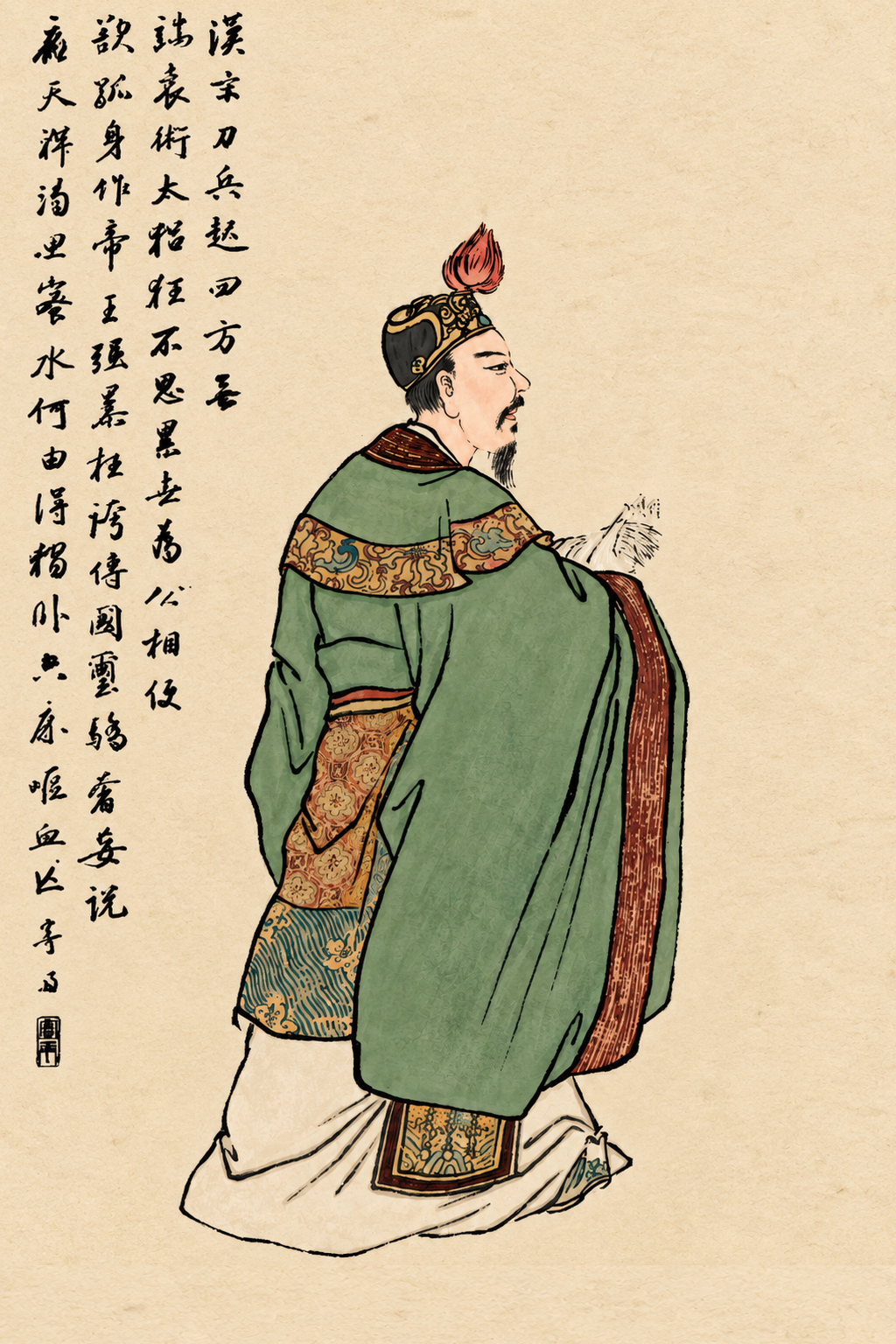
    Yuan Shu, courtesy name Gonglu, comes from the same eminent Runan Yuan clan as Yuan Shao and appears in the novel as Yuan Shao’s younger kinsman and eventual rival. When the regional lords form their coalition against Dong Zhuo, Yuan Shu is placed in charge of the army’s grain and supplies. The office gives him an important responsibility, but it also reveals the mistrust already dividing the alliance.

    Sun Jian wins the vanguard command and presses the fighting at Sishui Pass. After hearing that the formidable ‘Tiger of Jiangdong’ might become a danger if he defeated Dong Zhuo, Yuan Shu accepts malicious advice and withholds the grain Sun Jian requests. Hunger throws Sun Jian’s camp into disorder, allowing Hua Xiong and Li Su to launch a night attack. Sun Jian escapes, but Zu Mao dies while drawing pursuit away from him. When Sun Jian later confronts Yuan Shu, Yuan Shu has the adviser executed, yet the damage has already exposed the coalition’s internal rivalry. Yuan Shu also reacts angrily when Guan Yu’s victory over Hua Xiong brings honor to men of humble rank, deepening the break between appearance, status, and merit within the allied camp.

    After the coalition dissolves, Yuan Shu and Yuan Shao openly divide, each building a separate network of allies. Yuan Shu later acquires the Imperial Seal through Sun Ce and proclaims himself emperor, a decision that isolates him and brings repeated military defeats. His followers desert, his territory collapses, and an attempted retreat toward Yuan Shao is blocked by Liu Bei. Reduced to a small, starving remnant, Yuan Shu asks for honeyed water and is told that only blood-water remains. He falls to the floor, vomits blood, and dies—the heir of a great clan ruined not by a single defeat, but by ambition, suspicion, and the consequences of his own rule.

  • Gongsun Zan

    Gongsun Zan

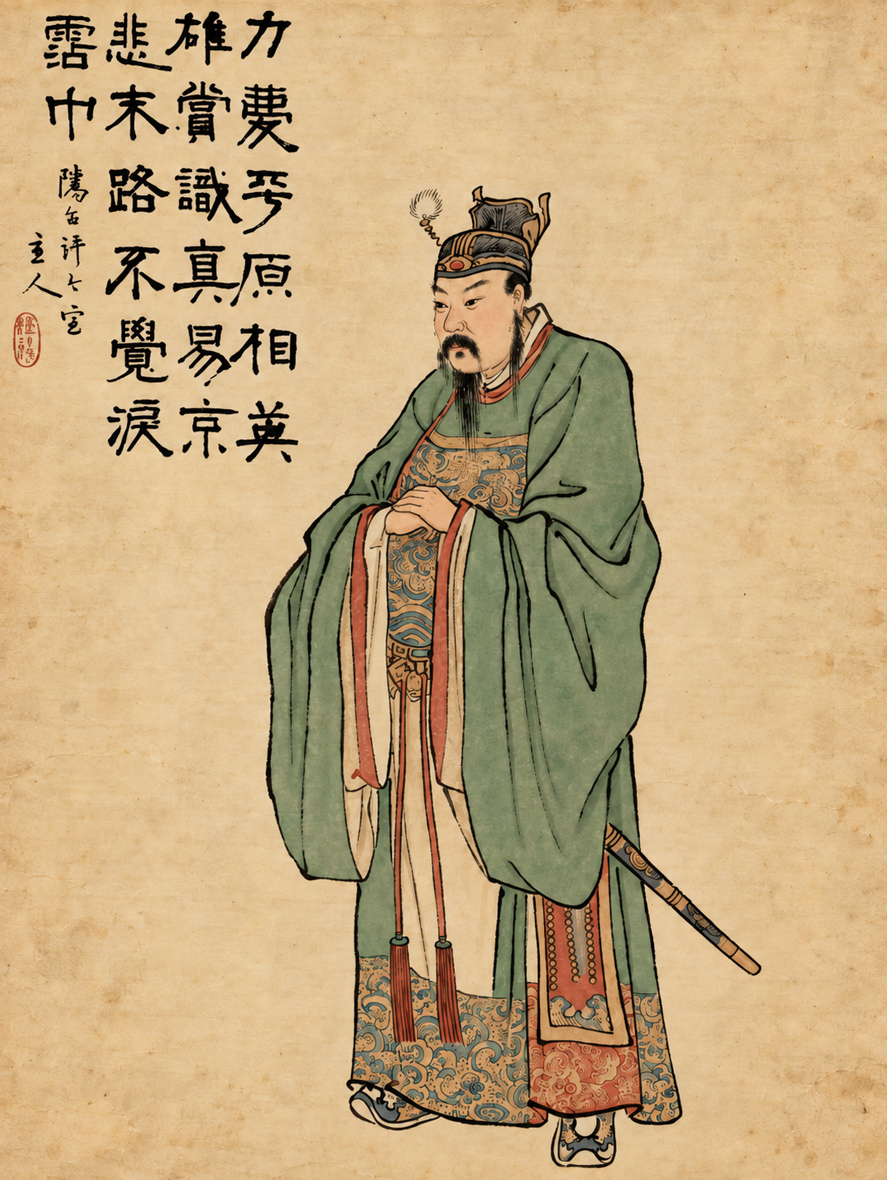
    Gongsun Zan, courtesy name Bogui, is the governor of Beiping and one of the northern warlords who answer the call to oppose Dong Zhuo in Romance of the Three Kingdoms. He has an older personal connection with Liu Bei: the two once studied under Lu Zhi, and Gongsun Zan later gives Liu Bei opportunities and protection when Liu has little standing of his own. During the coalition, Liu Bei, Guan Yu, and Zhang Fei serve in Gongsun Zan’s contingent, which places him close to several of the campaign’s most famous actions.

    At Hulao Pass, Gongsun Zan rides out against Lü Bu after Fang Yue, Mu Shun, and Wu Anguo have already been defeated. He fights Lü Bu for only a few bouts before turning his horse and fleeing. Lü Bu pursues him with the halberd raised, and the chase is broken when Zhang Fei bursts from behind Liu Bei and challenges Lü Bu. Gongsun Zan’s defeat therefore forms the immediate transition into the celebrated battle in which Zhang Fei, Guan Yu, and Liu Bei fight Lü Bu together.

    After the coalition fragments, Gongsun Zan becomes a major rival of Yuan Shao in the struggle for northern China. Their conflict brings Zhao Yun into the story and also shows the limits of Gongsun Zan’s judgment: although he commands formidable frontier forces, he repeatedly fails to retain the confidence of talented followers. The war eventually turns against him at Yijing. Isolated inside his fortified towers and unable to secure relief, he kills his family and hangs himself as Yuan Shao’s forces burn through the stronghold. His story moves from protector of Liu Bei and prominent coalition lord to a defeated ruler consumed by the northern civil war.

  • 潘璋

    Pan Zhang

    Pan Zhang is an Eastern Wu general in Romance of the Three Kingdoms whose name becomes inseparable from Guan Yu’s fall. When Guan Yu is trapped in Maicheng, Lü Meng predicts that he will flee along the narrow road toward Linju. Pan Zhang receives five hundred picked soldiers and is ordered to wait there while Zhu Ran drives the exhausted fugitives into the trap. The assignment places him at the decisive point of Wu’s plan rather than in the more visible siege lines.

    The ambush succeeds. Guan Yu and Guan Ping break through one obstruction after another, but Pan Zhang’s subordinate Ma Zhong uses a tripping rope to bring down the Red Hare and seize Guan Yu. Sun Quan later rewards Pan Zhang with Guan Yu’s Green Dragon Crescent Blade. The novel therefore gives him a major result without presenting him as Guan Yu’s equal in single combat: his weight lies in disciplined pursuit, terrain, and the command of the men who complete Lü Meng’s design.

    That victory also determines his death. During Liu Bei’s punitive invasion of Wu, Pan Zhang again enters the fighting and becomes separated from his troops. He seeks shelter in a country house, where Guan Xing is already resting. As Pan Zhang turns to flee, an apparition of Guan Yu appears at the door and leaves him stunned; Guan Xing cuts him down, offers his heart before his father’s image, and recovers the Green Dragon blade. Pan Zhang’s arc is thus deliberately closed by revenge: the spoil gained at Maicheng returns to Guan Yu’s house with the life of the man rewarded for his capture.

  • 纪灵

    Ji Ling

    Ji Ling is Yuan Shu’s most prominent field general in Romance of the Three Kingdoms. He carries a three-pointed, two-edged saber said to weigh fifty jin, a weapon suited to the physical authority he displays in his first major action. During Yuan Shu’s campaign against Liu Bei, Ji Ling meets Guan Yu and fights him for thirty bouts without a decision. The result gives him real martial standing even though the novel never raises him to Guan Yu’s highest tier.

    His best-known episode comes at Xiaopei. Yuan Shu sends him with a large army to destroy Liu Bei, while Lü Bu fears that Liu’s fall will leave him isolated. Lü Bu invites both sides to a banquet, plants his halberd far outside the gate, and promises to settle the dispute by shooting its small branch with an arrow. Ji Ling objects that he has orders and superior numbers, but Lü Bu’s extraordinary shot binds him to withdraw. The scene makes Ji Ling the unwilling military pressure against which Lü Bu performs one of the novel’s most famous feats.

    Ji Ling remains loyal as Yuan Shu’s fortunes collapse after the failed imperial pretension. When the starving ruler tries to travel north and join Yuan Shao, Liu Bei blocks the road. Ji Ling rides out once more, now facing Zhang Fei rather than commanding an overwhelming advance. After about ten bouts Zhang Fei kills him. His career traces Yuan Shu’s decline in miniature: a heavy-armed general capable of holding Guan Yu at bay ends as the last shield of a ruler whose army, supplies, and political claims have all disintegrated.

  • 陈到

    Chen Dao

    Chen Dao, courtesy name Shuzhi, is a Shu officer remembered by the historical tradition surrounding the Three Kingdoms, although the received Romance of the Three Kingdoms does not give him an active scene. A native of Runan, he follows Liu Bei from the period when Liu is established in Yu Province and becomes known for loyalty and courage. His long service places him among the trusted military men formed before the conquest of Shu.

    Chen Dao’s most important command is the White Feather guard, an elite body associated with Liu Bei’s own household troops. Later testimony praises the soldiers under him as among the finest in the west, and a Shu appraisal places his loyal valor beside the steadiness of Zhao Yun. The sparse record does not preserve a named duel or a catalogue of campaigns, so his military weight comes instead from the quality of the force entrusted to him and the duration of that trust.

    After Liu Bei’s death, Chen Dao continues to serve the Shu state. He rises to General Who Conquers the West, receives a marquisate, and is stationed at Yong’an, the strategic eastern gate facing the Yangtze approaches. When Li Yan moves his headquarters to Jiangzhou, Chen Dao remains at Yong’an under his authority and carries the actual frontier responsibility. He dies in office. The surviving story is restrained but substantial: an early follower of Liu Bei, commander of elite guards, and dependable keeper of Shu’s exposed eastern boundary.

  • Cao Zhang

    Cao Zhang

    Cao Zhang is a son of Cao Cao in Romance of the Three Kingdoms, nicknamed the Yellow-Bearded Boy. Unlike brothers drawn to scholarship or court politics, he prefers archery, horsemanship, and command. He tells his father that a general should wear armor, face danger first, reward reliably, and enforce discipline.

    When the Wuhuan of Dai Commandery rebel, Cao Cao gives him fifty thousand troops. Cao Zhang leads from the front, advances to Sanggan, and pacifies the northern region. He then hurries to aid his father at Hanzhong, defeats Liu Feng in three bouts, and kills Wu Lan with his halberd before Cao’s army withdraws. Cao Cao praises his son’s northern achievement when the two meet. His yellow beard, martial ambition, northern victory, and direct battlefield strength distinguish him within Cao Cao’s family.

  • Meteor Hammer

    Meteor Hammer

    The Meteor Hammer is a concealed striking weapon used by Wang Shuang in Romance of the Three Kingdoms. In this Subject, the name refers first to the weapon as the novel presents it, without importing a later standardized construction.

    A Concealed Set of Three

    Chapter 97 says that Wang Shuang conceals three meteor hammers and uses them with great accuracy. The number and concealed carry are explicit parts of his literary weapon identity.

    The Strike against Zhang Yi

    During combat, Wang Shuang feigns retreat and then strikes Zhang Yi in the back with a meteor hammer. The episode presents the weapon as a surprise projectile or thrown hammer used alongside Wang Shuang’s heavy saber and bow.

    Construction Remains Open

    The novel does not say that these hammers are attached to ropes or chains, and it does not define them as the flexible meteor-hammer form familiar from some later martial arts traditions. CG therefore leaves the connection mechanism and exact shape unresolved.

    CG Visual Language

    • Wang Shuang’s concealed projectile weapon
    • a set of three in the novel
    • surprise attack during mounted combat
    • paired with saber and bow
    • no assumed rope or chain construction
  • 丁奉

    Ding Feng

    Ding Feng is a long-serving general of Eastern Wu in Romance of the Three Kingdoms. His most celebrated action comes at Dongxing, where he recognizes that the river position will decide the campaign. He leads three thousand marines aboard thirty ships through falling snow, orders them to cast aside heavy armor and helmets, and keeps only short blades. The Wei soldiers laugh at the lightly equipped attackers, but Ding Feng closes before they can form ranks, kills Han Zong and Huan Jia, and helps shatter the floating bridge and enemy camp.

    Years later, under Sun Xiu, Ding Feng is trusted in the secret plan against the overmighty regent Sun Chen. While Sun Chen is drawn to a banquet and killed, Ding Feng works with the loyal officers who seize the regent’s brothers and prevent the clan from rallying armed resistance. The emperor rewards him heavily. This episode places his courage in a different setting: not a sudden river charge, but a carefully timed action inside a court threatened by its own minister.

    Ding Feng remains in command into old age. Near the fall of Shu, Eastern Wu sends him west with a large force, though the kingdom collapses before aid can change the outcome. The novel leaves his death offstage and instead closes his career with continued service. Across these episodes, his strength is practical decisiveness. He reads weather and terrain, strips away anything that slows an assault, and acts at the instant when hesitation would allow a stronger enemy to recover.