Source Work: Romance of the Three Kingdoms

  • 独目

    One-Eyed Visage

    The One-Eyed Visage is Xiahou Dun’s enduring bodily distinction in Romance of the Three Kingdoms. It is a visible consequence of injury, not a supernatural organ or a power gained through losing an eye.

    In chapter 18, an arrow strikes his left eye during the fighting against Lü Bu’s forces. The novel heightens the scene with his fierce response and immediate counterattack. His side nevertheless loses the encounter, keeping his personal ferocity separate from victory.

    The altered face carries the memory of that ordeal into later recognition of the warrior. A particular eyepatch design is unnecessary to establish the identity: the missing sight and the story behind it are the essential features.
  • 铜铃

    Copper Bells

    Copper Bells are the conspicuous waist ornaments associated with Gan Ning’s earlier life in Romance of the Three Kingdoms. Their sound announces him before he comes into view, giving a small object unusual power as a personal signature.

    Chapter 38 recalls how he gathered desperate followers and roamed the waterways wearing bells. People heard their ringing and kept away. The same introduction places the bells beside the rich display associated with his brocade-sail reputation.

    The bells express swagger and the fear his name inspires. They preserve a trace of the river adventurer in the later military commander, without functioning as a magical instrument or requiring an invented arrangement of bells.

  • Great Battle Axe

    Great Battle Axe

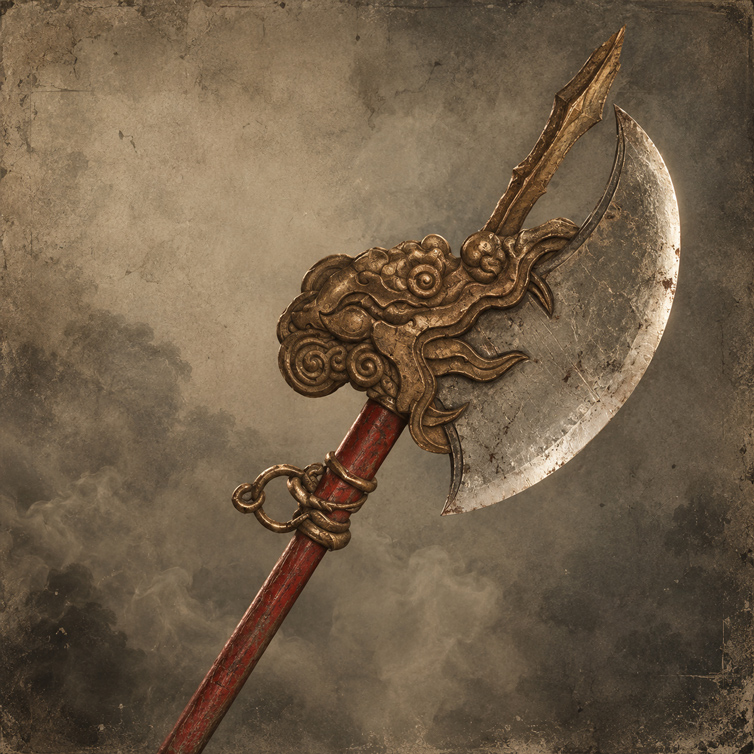
    The Great Battle Axe is the weapon that marks Xu Huang’s martial presence in Romance of the Three Kingdoms. Its broad cutting head gives him a different outline from the many spear and sword bearers around him.

    Chapter 14 shows Xu Huang killing Li Yue with an axe while protecting the emperor’s flight. Later he exchanges blows with Xu Chu for more than fifty bouts without a decision. Cao Cao’s admiration for this performance leads to an attempt to recruit him.

    The axe therefore introduces both fighting ability and a change of allegiance. Great Battle Axe is a descriptive English title, not a secret personal name or an excavated historical identification; the novel makes the warrior’s skill, rather than magic in the weapon, decisive.

  • Feather Fan

    Feather Fan

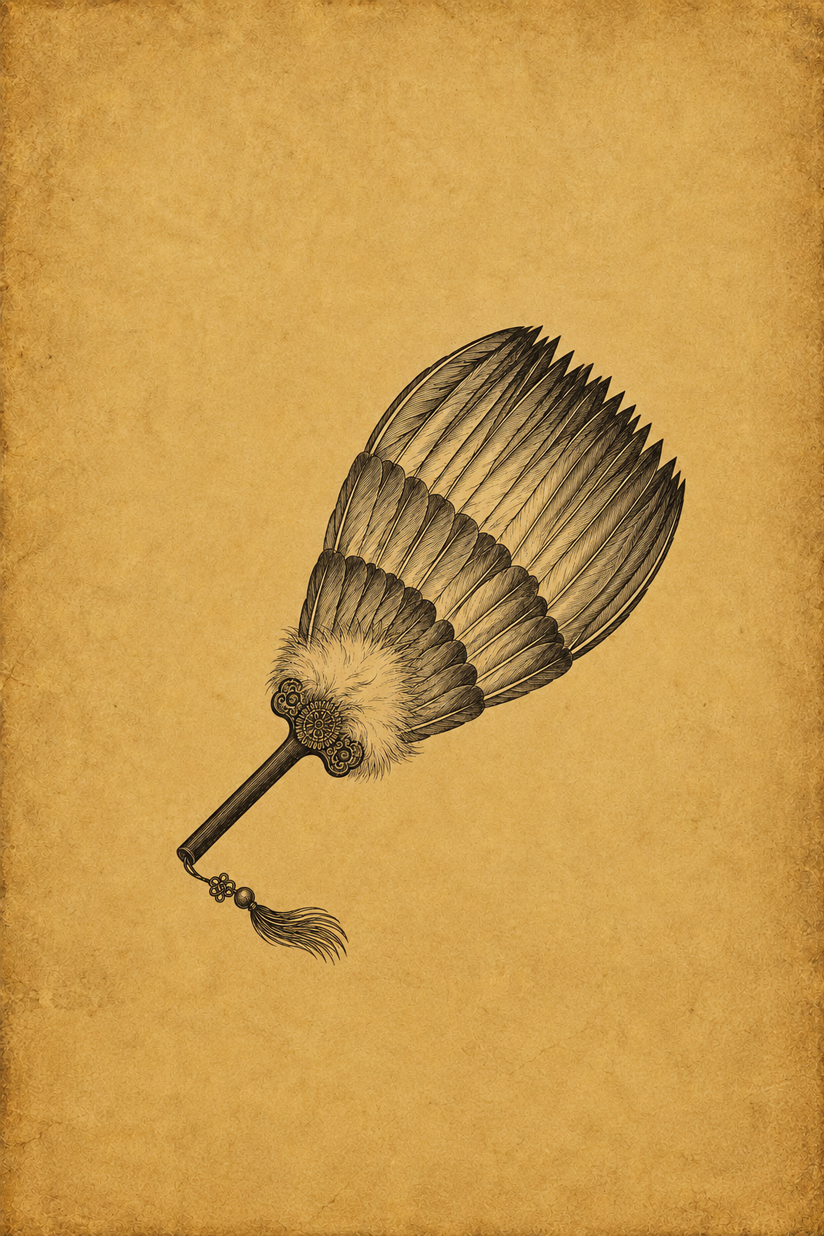
    The Feather Fan is a defining accessory of Zhuge Liang in Romance of the Three Kingdoms. Held by a scholar commanding armies, it gives visible form to composure, judgement, and authority exercised through planning.

    Chapter 104 makes that recognition dramatically useful. After Zhuge Liang’s death, the Shu army presents his wooden likeness in a four-wheeled carriage with the familiar headwear, feather fan, and crane cloak. Sima Yi takes the figure for the living strategist and retreats in alarm.

    The fan’s force in this scene comes from recognition and reputation. A modest handheld object helps sustain the image of a commander whom his enemy still fears. It need not generate wind or wield supernatural power to carry extraordinary meaning within the story.

  • Twin Swords

    Twin Swords

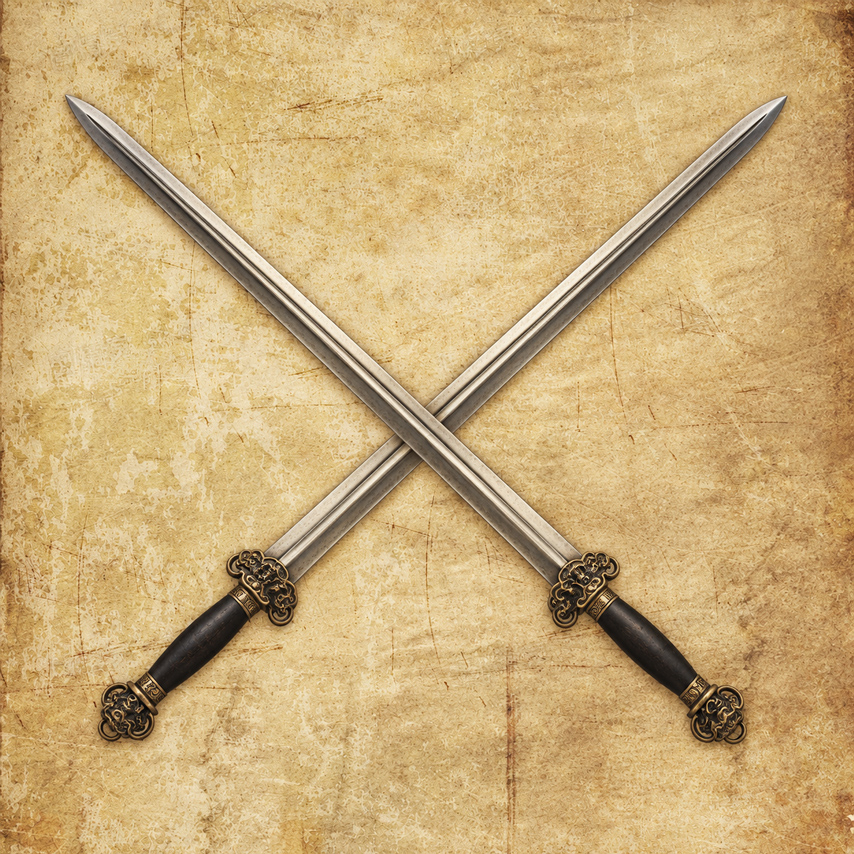
    The Twin Swords are Liu Bei’s characteristic weapons in Romance of the Three Kingdoms. As a paired sword set, they give the future ruler a martial identity distinct from Guan Yu’s great blade and Zhang Fei’s long spear.

    Chapter 1 places their making at the beginning of the three brothers’ military career. After receiving horses, money, and iron from merchants, Liu Bei has craftsmen forge the swords while his companions obtain their own signature arms. The weapons belong to the founding moment of their shared undertaking.

    In the confrontation with Lü Bu in chapter 5, Liu Bei joins his brothers with the twin swords. Their importance is literary and visual: they identify a leader who enters the struggle alongside his companions. The novel’s weapon should not be presented as a securely documented possession of the historical Liu Bei.

  • Twin Iron Ji

    Twin Iron Ji

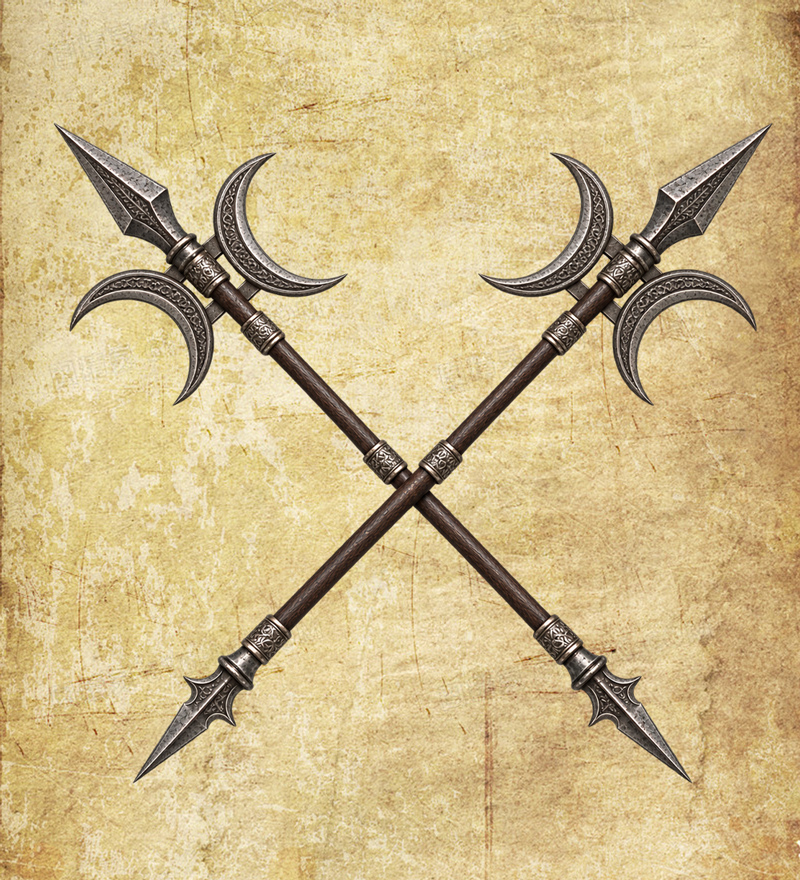
    The Twin Iron Ji are Dian Wei’s identifying weapons in Romance of the Three Kingdoms. A ji belongs to the Chinese weapon tradition, combining a thrusting point with a lateral blade. Keeping the word ji preserves that identity, while the paired use distinguishes Dian Wei’s weapon set.

    In chapter 16, during the Wancheng episode, his opponents treat the two iron ji as a particular danger and arrange to steal them before the attack. The weapons thus take an active part in the story’s portrayal of his strength and fearsome presence.

    Their force is inseparable from Dian Wei’s ability to wield them. They express strength and ferocity in close combat; the passage does not require an independent magical power or establish a single definitive blade pattern or shaft length.

  • Sky-Piercing Halberd

    Sky-Piercing Halberd

    Lü Bu’s Signature Polearm

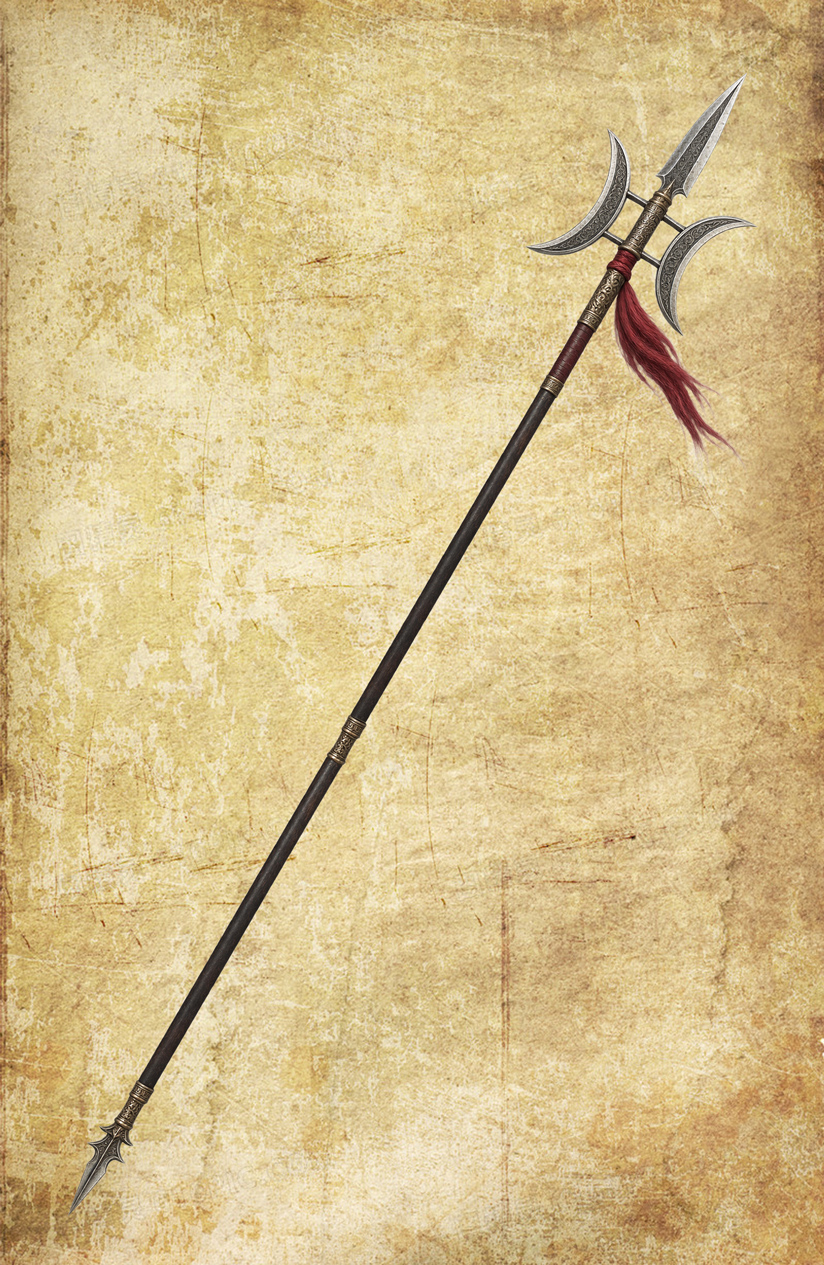
    The Sky-Piercing Halberd is the principal weapon attribute of Lü Bu. It belongs to the visual language of the Chinese ji, using a long shaft and a distinctive head with lateral blades to create a commanding silhouette. In the Three Kingdoms heroic tradition, the weapon is inseparable from Lü Bu’s exceptional martial reputation. When it appears together with Red Hare, the rider becomes much easier to identify.

    Not a Generic Western Halberd

    The weapon should retain the Chinese fangtian huaji tradition rather than being reduced to a conventional Western halberd or poleaxe. Its design should make the relationship among the long shaft, central point, and side blades clear, supporting thrusting, sweeping, and hooking martial actions. This staging does not lock the exact number of blades, decoration, metal color, tassels, or shaft material, and it assigns no independent magical power.

    Recognizing Lü Bu

    The weapon supplies the polearm silhouette, while Red Hare supplies the mount and color cue. Together they form one of the strongest visual combinations for Lü Bu. A warrior with a ji is not automatically Lü Bu, and a rider on a red horse may still require supporting evidence. Identification becomes reliable when weapon, horse, pose, face, and attire reinforce one another. Text establishes the weapon’s meaning; a future CG illustration will define its precise form.

  • Red Hare

    Red Hare

    A Famous Horse Shared by Two Heroes

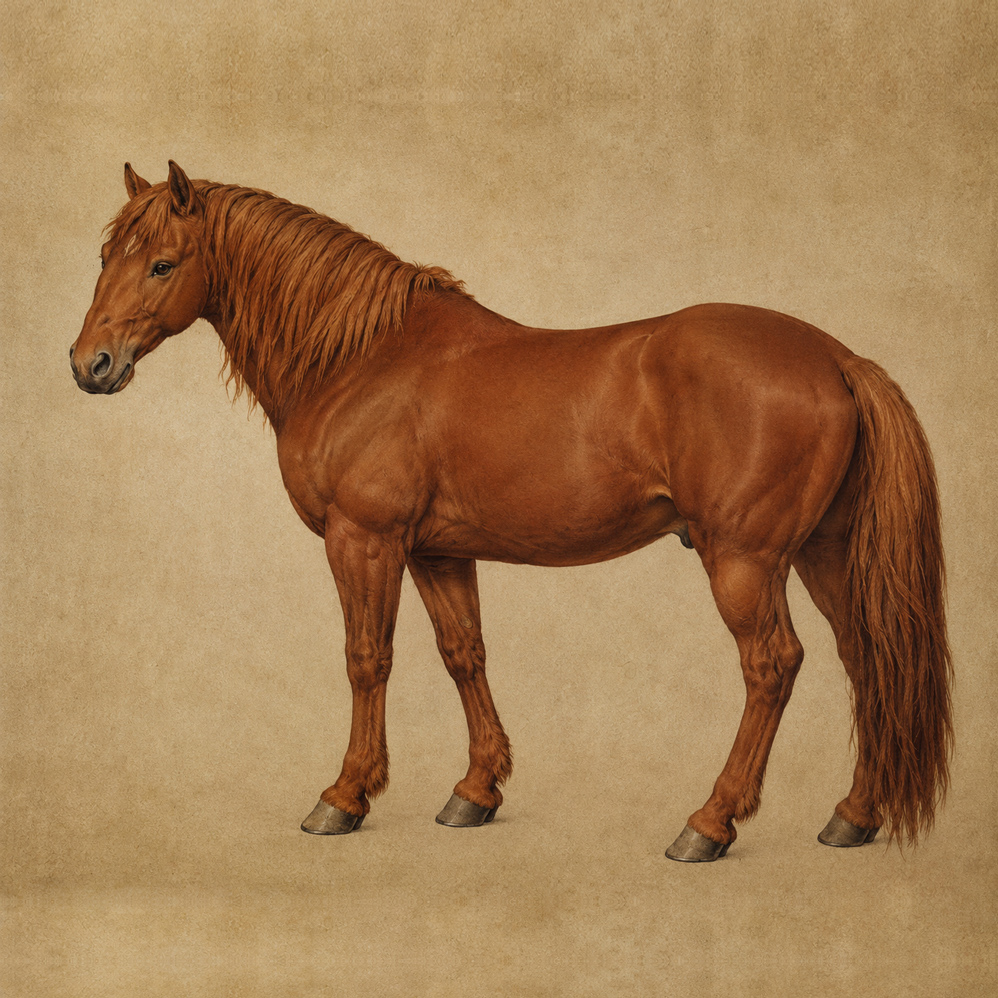
    Red Hare is one of the best-known warhorses in the Three Kingdoms heroic tradition. It is associated first and most strongly with Lü Bu, and later becomes part of the visual identity of Guan Yu. The name therefore signifies more than an ordinary mount: it creates a recognizable link between two major warriors. For a non-expert viewer, a prominent red horse can immediately suggest the world of Three Kingdoms martial imagery. The rider’s weapon, clothing, and bearing then help determine whether the figure is Lü Bu or Guan Yu.

    What to Recognize

    The essential idea is a red warhorse of exceptional quality. Narrative tradition emphasizes its speed, endurance, and excellence in battle, but these qualities do not require supernatural anatomy or an invented breed. Its precise tack, markings, mane, proportions, and equipment are not fixed at this stage. A future CG illustration should preserve the unmistakable identity of an outstanding red warhorse while defining those details consistently.

    In Character Imagery

    Beside Lü Bu’s Sky-Piercing Halberd, Red Hare reinforces the image of a swift and formidable mounted warrior. With Guan Yu, the horse contributes to a more solemn and authoritative martial presence. Red Hare alone does not identify the rider, so viewers should also examine the weapon, face, attire, and pose. Its value lies in being a powerful shared clue rather than a complete identification by itself.

  • Zhangba Serpent Spear

    Zhangba Serpent Spear

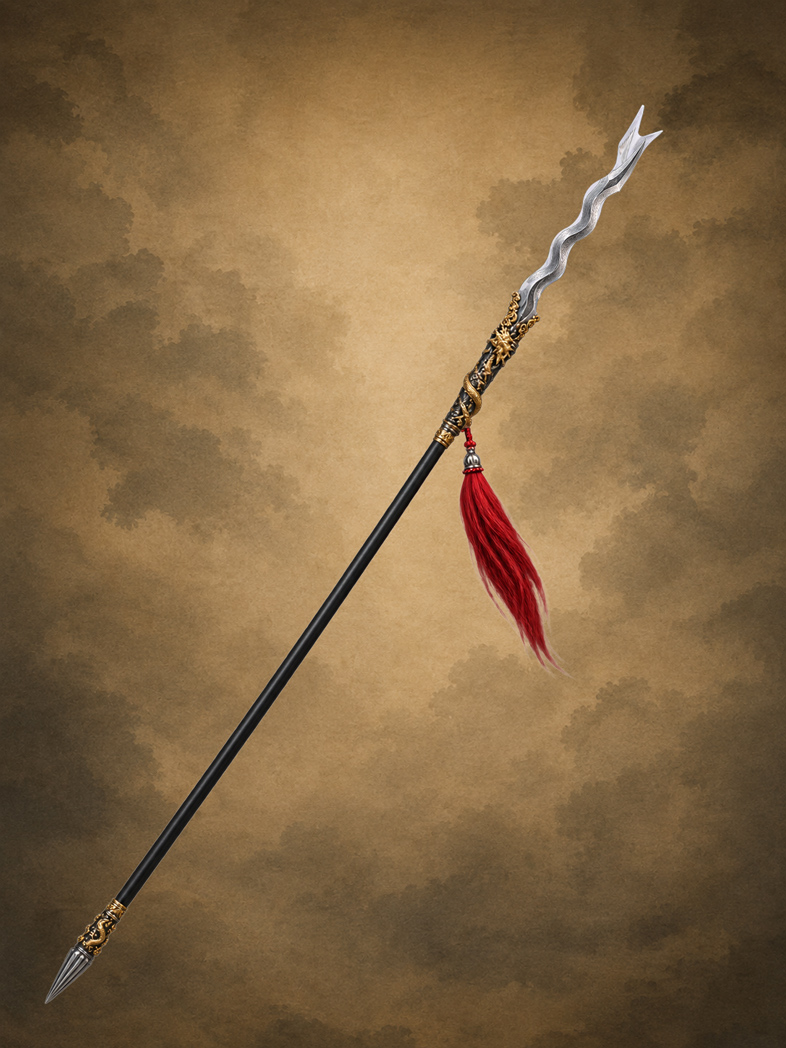
    The Zhangba Serpent Spear is Zhang Fei’s best-known legendary weapon and an important weapon of Lin Chong in Water Margin. “Zhangba” is first of all part of the traditional name. It conveys exceptional length and martial presence, but narrative and later visual conventions do not support forcing it into one exact modern measurement. “Serpent Spear” points to a blade profile with a sinuous, moving quality rather than the straight point of an ordinary spear.

    How to Recognize It

    Look first at the silhouette: a long dark shaft and an elongated blade that rises and falls in one continuous serpentine wave. Most importantly, the front divides into two distinct points. Together they form the outline of a snake raising its head and opening its mouth. This is not merely an ordinary spearhead made wavy, nor is it a Western fork, trident, or exaggerated multi-pronged fantasy weapon. Socket, tassel, and ornament may vary. See the CG illustration for the selected treatment.

    Zhang Fei, Lin Chong, and the Spear

    In the visual tradition of Romance of the Three Kingdoms, the Zhangba Serpent Spear belongs to Zhang Fei’s fierce charge and explosive martial presence. Its long shaft and distinctive head give him an aggressive outline that contrasts strongly with Guan Yu’s great blade. In Water Margin, Lin Chong is also known for wielding a Zhangba Serpent Spear. With him, the weapon emphasizes the controlled skill of an imperial arms instructor.

    Visual Significance

    The spear does not need an added magical system. Its identifying force comes from length, blade shape, and the legendary reputations of its bearers. In most contexts it should point first to Zhang Fei; within a clear Water Margin setting it can also help identify Lin Chong. See the illustration for the CG visual interpretation.