I. A Letter from Peach Blossom Mountain
The messenger entered the hall on Erlong Mountain with a letter raised above his head. Li Zhong and Zhou Tong at Peach Blossom Mountain needed help. Huyan Zhuo‘s army had pressed them back toward their stronghold.
Lu Zhishen read the plea and set it on the table. “When I knew those two, they had no army at their gates. I’ll go and see what those twin whips can do.”
Yang Zhi read the letter again. Huyan was an imperial commander. After his chain-armored cavalry had failed against Liangshan, he had come to Qingzhou and turned his forces toward the nearby mountain strongholds. If he took Peach Blossom Mountain, Erlong might be next. Yang had served as a commandant at Daming; he knew an army did not lose its momentum merely because one small fort had fallen.
“They are asking for men,” he said. “If we arrive too late, we will only be gathering what is left of their gate.”
Lu rose. “Then we go now.”
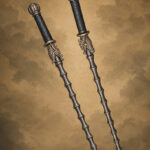
Cao Zheng and others stayed to guard Erlong. Yang, Lu, and Wu Song took five hundred followers and more than sixty horsemen toward Peach Blossom Mountain. Dust still hung above the road when they reached the opposing army. Huyan sat mounted at its front, a short iron whip in either hand. He held his horse still and let the newcomers look at him.
Lu rode out first. From his own ranks Yang watched the monk’s iron staff rise and fall. It reminded him of the force he had felt from that same weapon among the pines below Erlong. Huyan met a staff stroke with one whip and brought the other across its line. For forty or fifty exchanges the two fought without a winner. The gongs called them back to their own sides.
Huyan had expected a mountain fighter. He had found a monk who could handle a heavy staff from the saddle without losing his balance. He took a moment’s rest, then rode out again and called for Lu.
Wu Song watched him. “After that many strokes, does he still want another bout?”
“We shall see,” Yang said.
II. The Blue-Faced Rider
Lu reached for his staff. Yang put a hand against his horse’s bridle.
“You have fought him once. Let me take this turn.”
Lu considered him, then nodded. “Those whips reach from both sides. Watch the left hand.”
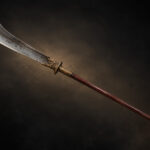
Yang rode out with a saber. It was not the iron-shafted spear he had used against Suo Chao at Daming, nor is this encounter identified in the source as a fight with the Po Dao he had carried on foot below Erlong. Huyan saw the blue mark on Yang’s face and spread his weapons apart.
“Your monk has had his chance,” he called. “How many more have you brought?”
“You will see what is in front of you,” Yang answered.
Their horses closed. Huyan’s right whip drove toward the back of Yang’s blade, while his left waited below to catch the withdrawal. The first blow made Yang’s shoulder sink. If he held the saber there and tried to force the whip away, the second weapon would shut off his path. He drew his elbow in, let the first blow pass with his horse’s movement, and took his blade out of reach of the second.
Huyan wheeled back. One whip rose high enough to draw Yang’s guard; the other covered Huyan’s nearer side. Yang did not strike at the raised hand. He kept the edge before him until the horses crossed. Blade scraped whip for an instant. Then they were past, turning to meet again.
The men in the Qingzhou ranks still shouted for their commander. On the mountain side, people watched more quietly now. Lu’s staff had shown them that Huyan could withstand a heavy assault. Yang’s saber was forcing him to solve another problem: when two riders met at speed, which weapon would occupy the narrow opening first?
III. Between Two Whips
Huyan sent his right whip toward Yang’s upper guard. Yang met it with the saber. At once he felt his left side threatened. He lowered his body and let the saber’s hilt move with the force of the first strike; his horse carried him past the second. A slower rider would have taken that blow on the shoulder armor.
On the next approach Yang pressed to his left. Huyan brought his left whip back to protect the horse’s front, and Yang turned his saber toward the exposed side. Huyan caught it with his right. The edge came near his arm guard but did not land.
The monk had surprised Huyan with the staff. Now this blue-faced rider had found a path between weapons that should have kept him away. Huyan had expected men defending a hill. He was meeting men trained to read a mounted fight.
More than forty exchanges passed without a winner. Huyan had already endured a long contest with Lu, yet his horse ran evenly and the two whips continued to protect each other. Yang refused to be pressed from both sides. He gave ground when the blows were heavy, changed the angle of his blade, and kept enough space to answer.
Yang glanced toward his own line. Peach Blossom Mountain had little open ground. Another long duel might gain their allies nothing. He could not know how much fight Huyan had left, but he could decide not to spend the day on a contest without a clear purpose.
As the horses met again, Yang let his guard appear a fraction late. Huyan saw the opening but did not commit both whips to it. Yang turned his horse and rode back to his ranks, saber still in hand. Huyan reined in and did not pursue. He watched the blue-faced man go, still wondering how two such fighters had come from these mountain bands. Their skill was no ordinary bandit’s work.
Lu met Yang at the line. “He did not get the better of you.”
“He did not follow,” Yang replied, looking back at the two whips. “There is no need to find out how long we could keep this up.”
The forces disengaged. Yang and Lu moved their men twenty li back to make camp. The struggle for Qingzhou was far from finished; help from Liangshan would be needed if the three mountains were to face the city and Huyan’s army.
IV. The Road Beyond the Field
Huyan sat troubled in his camp. He had expected Peach Blossom Mountain to fall quickly, yet the monk and the blue-faced rider had both held him. Qingzhou soon summoned him back to guard the city, and he took his troops away.
Later, Huyan captured Kong Ming of White Tiger Mountain. Kong Liang came to the other strongholds seeking help. Lu wanted their men to attack together. Yang asked about the food, the walls, and the commander they would find behind them.
“We can reach Qingzhou,” he said. “That does not mean we can break its gate. If Huyan holds the city, we may lose the men we have just brought through today.”
“What of my brother?” Kong Liang demanded.
“Go to Liangshan. Ask Song Jiang to bring the main force.”
Lu looked at Yang. “Once, you would not join Liangshan yourself.”
“Today we are trying to save a man.”
They followed Yang’s counsel and sent for help. In time Qingzhou fell, Huyan joined Liangshan, and the fighters of the three mountains went there too. When Yang and Huyan met again, they stood beneath the same banner. Neither needed to pretend that their contest at Peach Blossom Mountain had been settled.
V. On Their Fighting Skill
The source places this fight after Huyan’s mounted contest of roughly forty or fifty exchanges with Lu. Yang then meets him with a saber for more than forty exchanges. Neither bout produces a recorded winner. Yang offers an opening and rides back to his lines; Huyan does not pursue. That is a tactical withdrawal in the narrative, neither a defeat that the text declares nor proof that Yang held the upper hand.
Huyan’s ability to keep both whips coordinated after an earlier long contest shows stamina and control in the saddle. Yang protects his line against two weapons and knows when to end a contest whose value has diminished. The detailed movements in this telling make those choices visible; they do not turn an approximate count into an exact one or establish who must have won had the fight continued.
Explore the Knowledge Graph
Related Figures
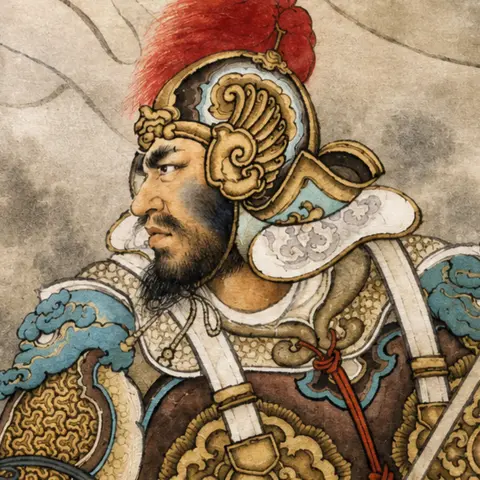 Yang Zhi
楊志
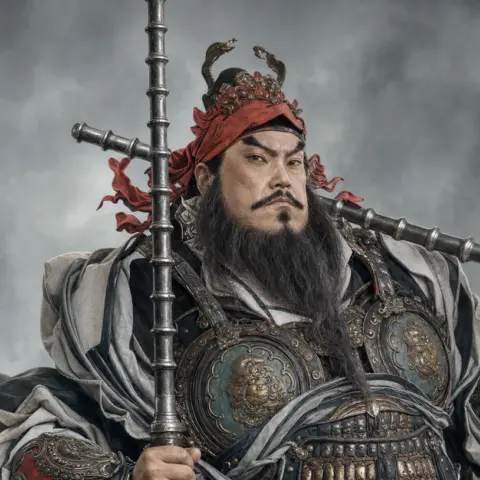 Huyan Zhuo
呼延灼
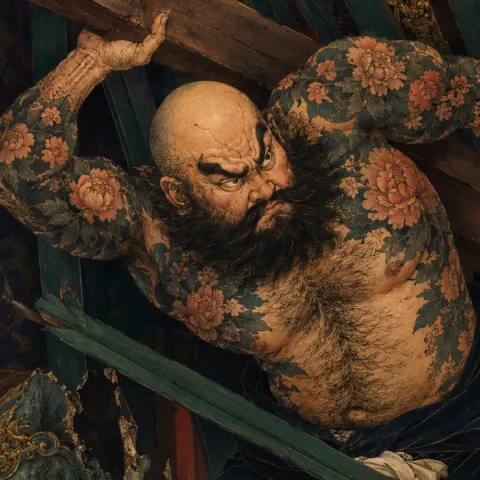 Lu Zhishen
魯智深
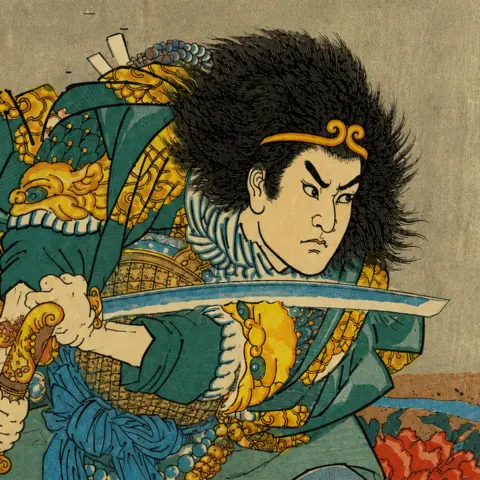 Wu Song
武松
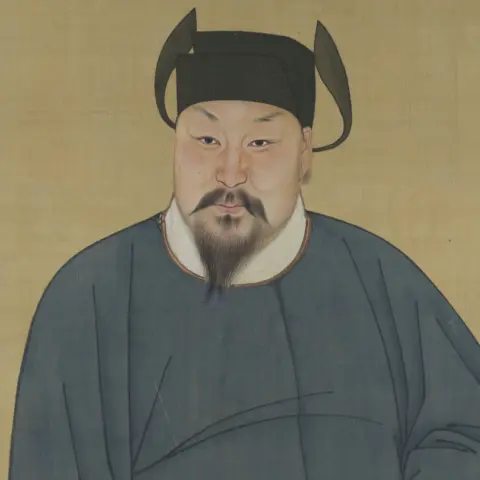 Song Jiang
宋江
曹正
Cao Zheng
曹正
李忠
Li Zhong
李忠
周通
Zhou Tong
周通