Source Work: Romance of the Three Kingdoms

  • 袁绍

    Yuan Shao

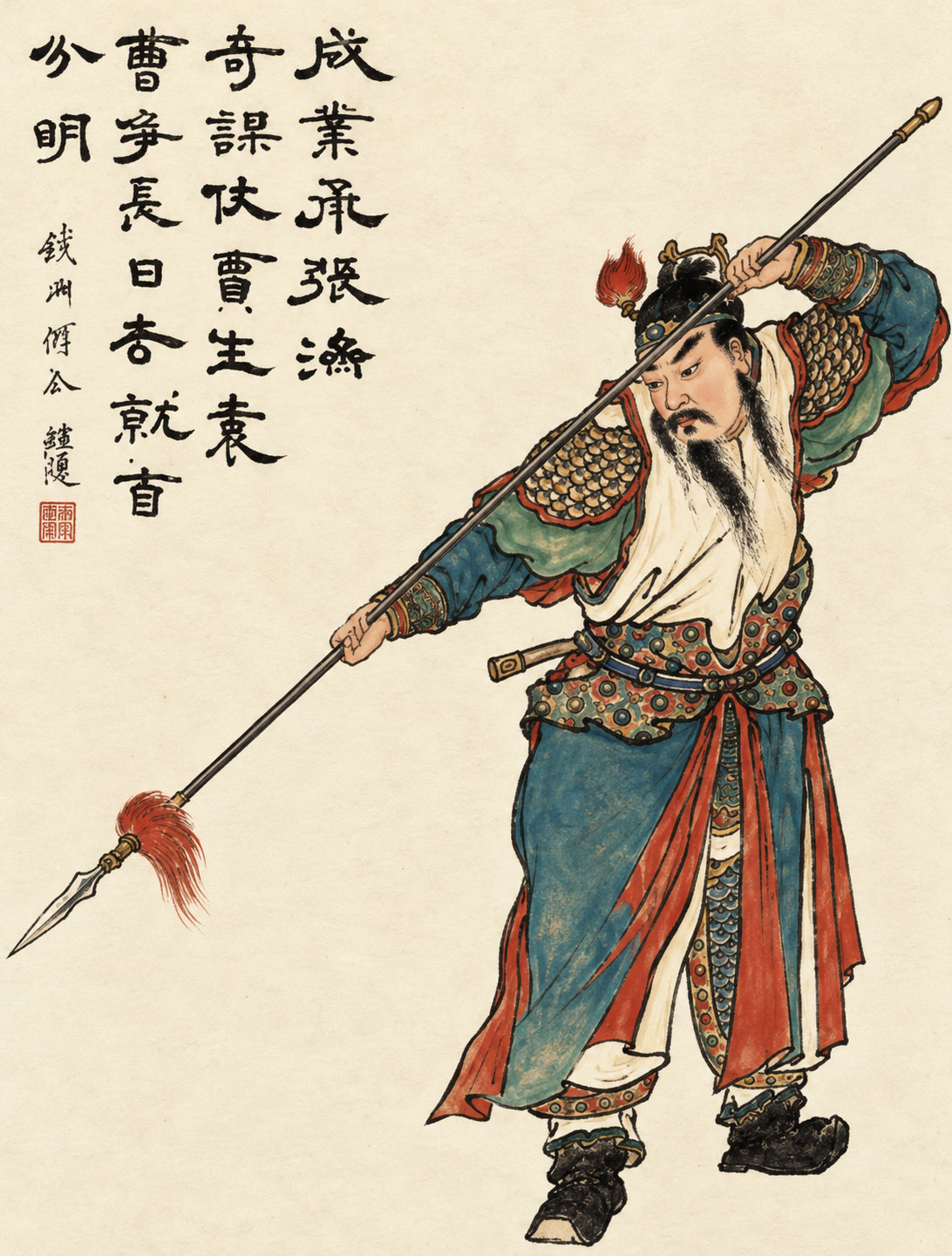
    Yuan Shao is one of the greatest rival lords in Romance of the Three Kingdoms, with one of the finest pedigrees in the realm and descent from a clan famed for generations of high ministers. The coalition against Dong Zhuo chooses him as its leader, and he later takes Ji Province from Han Fu, defeats Gongsun Zan, and extends his authority across much of the north. By the time he confronts Cao Cao, his territory, cavalry, officers, and supplies appear overwhelmingly superior.

    Guandu reveals why material advantage is not enough. Yuan Shao can be generous and commanding, but he delays difficult choices and allows advisers to form hostile factions. He rejects Tian Feng’s warnings, mistrusts Ju Shou, and fails to act decisively when Cao Cao is vulnerable. After Xu You’s counsel is dismissed and his loyalty questioned, the offended adviser defects and reveals the weakly guarded granary at Wuchao. Cao Cao burns the supplies, and the larger Yuan army collapses through panic and division.

    Yuan Shao survives the battlefield but never recovers his former authority. Defeat deepens suspicion inside his household, and illness kills him before he can repair the north. He has favored the younger Yuan Shang without establishing a stable succession; Yuan Tan, Yuan Xi, and Yuan Shang then quarrel over the inheritance. Cao Cao defeats them separately and absorbs the provinces that once seemed capable of unifying China under Yuan rule. Yuan Shao is thus a major tragic rival: not a weak lord, but a powerful one whose indecision wastes advantages few others ever possess.
  • 貂蝉

    Diao Chan

    Diao Chan is Wang Yun’s adopted daughter and a skilled singer and dancer in Romance of the Three Kingdoms. Seeing her grieve over the disorder caused by Dong Zhuo, Wang Yun makes her the center of the linked-rings plot. Diao Chan agrees to risk herself: Wang Yun privately promises her to Lü Bu, then presents her to Dong Zhuo, ensuring that both men believe she belongs with him.

    Inside Dong Zhuo’s residence she alternates fear, affection, and appeals for rescue according to the man before her. At Phoenix Pavilion she meets Lü Bu and laments her captivity; when Dong Zhuo suddenly returns, the confrontation exposes their jealousy, and Dong hurls Lü Bu’s halberd after him. Diao Chan’s performance gives Wang Yun the emotional fracture he needs to persuade Lü Bu that killing his adoptive father is both revenge and rescue.

    Lü Bu joins the court conspirators and strikes Dong Zhuo down at the palace gate. Diao Chan thereafter remains with Lü Bu and accompanies his household through his changing fortunes, but the novel does not provide a clear final account of her after his defeat at Xiapi. Her expressive face, formal dress, hair ornaments, music, and carefully staged meetings matter more than weapons: she changes the balance of the capital by controlling what two armed men believe they see and possess.

  • Zhang Xiu

    Zhang Xiu

    Zhang Xiu was a regional military leader in the late Eastern Han dynasty, from Zuli in Wuwei, and a nephew of the Liangzhou warlord Zhang Ji. After Zhang Ji’s death, Zhang Xiu took command of his forces, stationed them at Wancheng, and allied with Liu Biao of Jingzhou. When Cao Cao campaigned south, Zhang Xiu initially surrendered. Soon afterward, however, he felt deeply insulted when Cao Cao took Zhang Ji’s widow as a consort. Following the plan of his adviser Jia Xu, Zhang Xiu abruptly rebelled and launched a night attack on Cao Cao’s army at Wancheng. Cao Cao suffered heavy losses: his eldest son Cao Ang, his nephew Cao Anmin, and the formidable general Dian Wei were all killed. Dian Wei died fighting to cover Cao Cao’s retreat. Zhang Xiu continued to oppose Cao Cao while relying on Liu Biao and holding the northern approaches to Jingzhou. On the eve of the Battle of Guandu, as Yuan Shao and Cao Cao competed for control of the Central Plains, Zhang Xiu followed Jia Xu’s advice and surrendered to Cao Cao again. Cao Cao set aside the old grievance over Wancheng and treated him generously. Zhang Xiu thereafter campaigned under Cao Cao and became part of the Cao Wei camp. His life is closely associated with the Battle of Wancheng, and his connection with Dian Wei became an important point of intersection in Three Kingdoms storytelling because that battle led to Dian Wei’s death.

  • 刘表

    Liu Biao

    Liu Biao is a member of the Han imperial clan who builds a durable base in Jingzhou during the disorder of Romance of the Three Kingdoms. With the counsel of Kuai Liang and Kuai Yue, he enters the province with limited forces, wins over local families, and turns a difficult appointment into control of one of the realm’s richest regions. His armies and river routes make Jingzhou a prize that every larger contender must eventually consider.

    His political skill is clearest in preserving Jingzhou through years of disorder. During the struggle over the imperial seal, Liu Biao blocks Sun Jian’s return and the feud eventually draws Sun Jian into the ambush where he dies. Later Liu Biao gives Liu Bei refuge, recognizing both his Han lineage and military value. Yet caution repeatedly becomes indecision. He neither destroys Liu Bei at the urging of Cai Mao nor fully entrusts him with Jingzhou’s defense, and he cannot settle the rivalry between his elder son Liu Qi and the Cai family’s favored Liu Cong.

    Illness leaves the succession to courtiers already committed to Liu Cong. Liu Biao dies just as Cao Cao’s southern army approaches; Liu Cong inherits, then surrenders the province almost at once. The contrast defines Liu Biao’s narrative weight. He holds Jingzhou for years while stronger neighbors rise and fall, but fails to convert territory, talent, and imperial pedigree into a clear future. His death releases the resources he preserved and opens the road toward Changban and Red Cliffs.

  • 董卓

    Dong Zhuo

    Dong Zhuo is one of the most powerful political strongmen of the late Eastern Han in Romance of the Three Kingdoms. As the empire falls into disorder, he leads his Liangzhou army into Luoyang, takes control of the court, and gradually dominates the central government.

    Dong Zhuo deposes the young emperor and installs Emperor Xian, provoking intense opposition from regional lords. A coalition forms against him, bringing figures such as Cao Cao and Yuan Shao into a major political and military confrontation.

    In episodes associated with Hulao Pass, Lü Bu serves as Dong Zhuo’s most formidable warrior and fights the champions of the coalition. The relationship between Dong Zhuo and Lü Bu becomes one of the central military pillars of Dong Zhuo’s power.

    Wang Yun later uses Diao Chan to create conflict between Dong Zhuo and Lü Bu. Lü Bu ultimately turns against Dong Zhuo and kills him. Dong Zhuo is not primarily remembered for personal martial prowess, but he is a major narrative hub connecting Lü Bu, Diao Chan, Cao Cao, Yuan Shao, and the opening struggle among the warlords.

  • 孙权

    Sun Quan

    Sun Quan inherits control of Jiangdong after the death of his elder brother Sun Ce in Romance of the Three Kingdoms. Young but politically alert, he retains experienced civil and military officers and judges between competing advice. His blue eyes and purple beard are repeatedly used as distinguishing features, while his strength lies in choosing and sustaining commanders rather than seeking personal duels.

    When Cao Cao advances south, many advisers urge surrender. Lu Su and Zhou Yu persuade Sun Quan to resist; he cuts the corner from his desk as a warning against further capitulation talk and authorizes the alliance with Liu Bei that wins at Red Cliffs. He later moves his seat to Jianye and builds defenses at Ruxu, maintaining an independent southern state through alternating war and diplomacy.

    The alliance with Liu Bei deteriorates over Jing Province. Sun Quan supports Lü Meng’s seizure of the region and Guan Yu’s capture, then maneuvers between Wei and Shu as the balance changes. He eventually takes the imperial title of Eastern Wu. Sun Ce, Zhou Yu, Lu Su, Lü Meng, Gan Ning, and the rivalry with Cao Cao and Liu Bei define a ruler whose principal weapon is the ability to employ very different talents.

  • 马腾

    Ma Teng

    Ma Teng is a northwestern lord in Romance of the Three Kingdoms, rooted in the hard cavalry country of Xiliang and already commanding substantial troops when the Han court begins to fracture. He joins the coalition against Dong Zhuo and remains associated with men who claim loyalty to the dynasty rather than submission to whichever minister controls the capital. His name later appears on Emperor Xian’s secret blood-written girdle edict calling for Cao Cao’s removal.

    The first conspiracy fails without immediately consuming him, and Ma Teng returns west. Years later Cao Cao summons him to Xuchang, using imperial authority to draw a dangerous regional power within reach. Ma Teng comes with Ma Xiu, Ma Tie, and Ma Dai, while Ma Chao remains in Xiliang. In the capital he revives the loyalist cause with Huang Kui and prepares an armed strike. The plan is not defeated in open battle: Huang Kui’s private words pass through his concubine to Miao Ze, who betrays the conspirators to Cao Cao.

    Cao Cao arrests Ma Teng and his party. Ma Dai escapes in disguise, but Ma Teng and two sons are executed. The death removes a veteran lord and turns dynastic loyalty into a family vendetta. When Ma Chao later raises Xiliang against Cao Cao, the novel frames the campaign not only as a contest of territory but as vengeance for his father and brothers. Ma Teng’s final political failure therefore produces one of the next phase’s fiercest wars.

  • Cao Cao

    Cao Cao

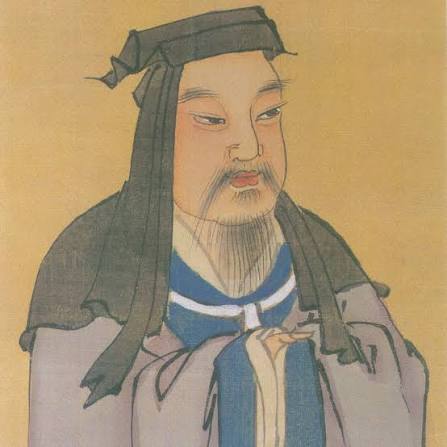
    Cao Cao is the dominant northern warlord of Romance of the Three Kingdoms and the founder of the power that becomes Wei. He first gains fame opposing Dong Zhuo, even attempting assassination with the Seven-Star Precious Saber, then raises troops and builds a base in Yanzhou. His intelligence is paired with suspicion, severity, and a willingness to use both law and deception.

    He defeats Lü Bu, absorbs capable officers such as Zhang Liao and Xu Huang, receives Emperor Xian at Xuchang, and uses the imperial court to command the other lords. At Guandu, despite inferior numbers, he exploits Xu You’s intelligence, burns Yuan Shao’s supplies at Wuchao, and destroys the strongest rival in the north. His court gathers strategists and generals because he recognizes ability even in former enemies.

    Cao Cao’s greatest reversal comes after taking Jing Province and driving south. Zhou Yu’s fire attack destroys the chained fleet at Red Cliffs, and Cao escapes through Huarong Pass, where Guan Yu releases him in repayment of past kindness. He survives to rebuild, fights Liu Bei and Sun Quan for the realm, and dies without becoming emperor himself. The novel’s famous mixture of ambition, wit, cruelty, poetry, and resilience makes him more than a simple villain.

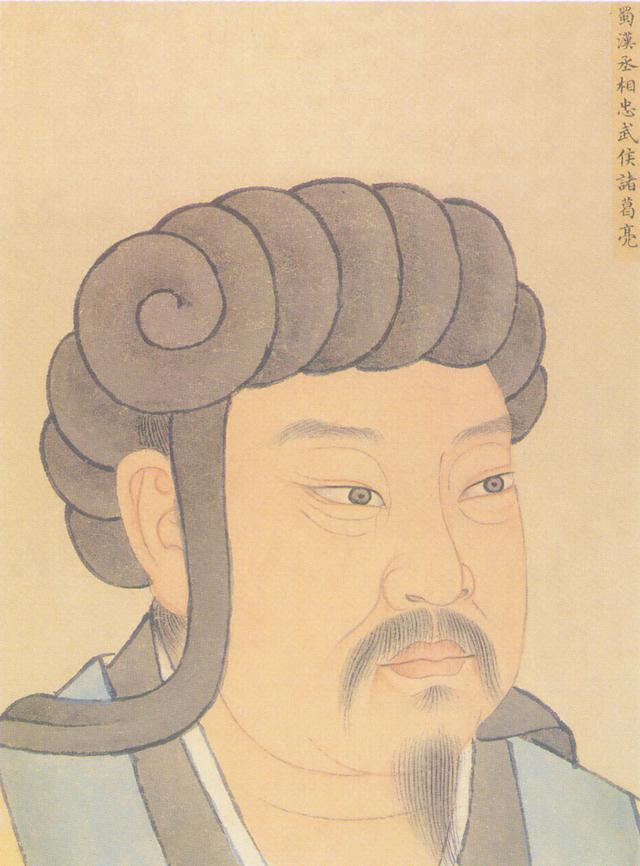
  • Zhuge Liang

    Zhuge Liang

    Zhuge Liang is Liu Bei’s chief strategist and later chancellor of Shu in Romance of the Three Kingdoms. Liu Bei visits his thatched cottage three times before gaining an audience; Zhuge Liang then sets out the Longzhong plan, proposing an alliance with Sun Quan, control of Jing and Yi, and a future contest for the realm. His feather fan and scholar’s robe become the outward signs of command exercised through calculation rather than personal strength.

    At Red Cliffs he debates the southern scholars, helps secure the Sun–Liu alliance, and performs the rite for the southeast wind that enables Zhou Yu’s fire attack. He later directs campaigns into Yi Province, guides Liu Bei’s state, and after Liu Bei’s death serves Liu Shan with exceptional diligence. In the south he captures and releases Meng Huo seven times until resistance ends by submission rather than simple slaughter.

    Zhuge Liang’s Northern Expeditions pit his logistics and formations against Wei. Wooden oxen and flowing horses supply the army, while episodes such as the Empty Fort Strategy dramatize his composure under danger. Exhausted by command, he dies at Wuzhang Plains after entrusting the army’s retreat and his plans to successors including Jiang Wei. The novel makes loyalty, invention, ritual knowledge, and strategic endurance inseparable in his character.