I. Beneath the Walls of Changsha
Liu Bei wanted Changsha, and he sent Guan Yu to take it. From the city wall, Huang Zhong watched the first rider sent out to meet him. The man was one of Governor Han Xuan’s officers. He lasted fewer than three exchanges before Guan Yu cut him down, and the survivors raced back toward the gate. Han Xuan ordered Huang Zhong out.
Huang Zhong had once guarded Changsha under Liu Biao, alongside Liu Pan. Now he served Han Xuan. Lords and boundaries had changed; his saber and bow had seldom been put away. At the foot of the wall a soldier tried to fasten the guard on his wrist, but his fingers shook. Huang Zhong took the strap and tied it himself. “Keep the gate. Wait for the recall before you lower the bridge.”
Outside, Guan Yu asked if he was Huang Zhong. Huang Zhong raised his blade. “You know my name and still come for Changsha?”
Guan Yu had expected an old defender living on an old reputation. His first heavy cut met a firm guard. By the time he drew his long blade back for another stroke, Huang Zhong had moved his horse and opened a line of attack. Guan Yu stopped pressing blindly. Huang Zhong, feeling the weight and reach of his opponent’s weapon, avoided taking its full force head-on. He made Guan Yu turn his horse before he could strike again.
They fought for more than a hundred exchanges. The recall sounded from the wall, and Huang Zhong rode in. Guan Yu watched the drawbridge rise. He would not mistake this man for a ceremonial commander again.
On the second day they fought another fifty or sixty exchanges without a decision. Guan Yu wheeled away; Huang Zhong followed. Guan Yu was about to turn his blade back on him when a horse cried out behind him. Huang Zhong’s mount had stumbled on its forelegs and thrown him. Guan Yu rode back with his blade raised. Then he stopped and told Huang Zhong to find another horse.
From the wall, the men saw only that Guan Yu had spared him. From the ground, Huang Zhong saw the harder part: Guan Yu had held an easy killing stroke and withdrawn it by choice. He told Han Xuan truthfully that the horse had stumbled. Han Xuan asked only, “What of your bow?” and gave him a fresh mount. Huang Zhong held its reins long after dark. If he did not shoot tomorrow, Han Xuan would not forgive him. If he killed Guan Yu, the mercy of that lifted blade would remain known to him alone.
On the third day Huang Zhong turned toward the bridge before thirty exchanges had passed. Guan Yu pursued. A bowstring sounded; Guan Yu swerved, but no arrow came. It sounded again, and again Huang Zhong had drawn an empty string. Guan Yu rode closer. Near the bridge, Huang Zhong set a real arrow to the bow and turned in the saddle. It struck the base of the tassel on Guan Yu’s helmet. Both armies saw it. No one could say that Huang Zhong had missed for want of skill. Guan Yu touched the tassel and understood what had been returned to him.
Han Xuan had watched three draws of the bow and an enemy commander ride away alive. He had Huang Zhong bound and brought outside the gate for execution. Huang Zhong denied any secret agreement with Guan Yu. Han Xuan would not listen. As the executioner raised his sword, Wei Yan cut through the crowd, freed Huang Zhong, led men onto the wall, and killed Han Xuan. He opened Changsha to Liu Bei.
Wei Yan came to help Huang Zhong stand. Huang Zhong looked first toward the wall. “He meant to kill you,” Wei Yan said. “How many more would die if he kept this city?” Huang Zhong did not answer. Wei Yan had saved his life, but Han Xuan had still been the commander he served the day before. When Guan Yu invited him to meet, he pleaded illness. Only when Liu Bei came to his door in person did he open it. Liu Bei heard his request to bury Han Xuan and listened as he spoke of Liu Pan. He did not demand an instant oath. Huang Zhong finally agreed to march with him. Wei Yan, waiting outside, gave him a nod. They would go forward together, though not always in agreement.
Huang Zhong vs. Guan Yu: The Three Battles of Changsha
Outside Changsha and near its drawbridge · Romance of the Three Kingdoms, Chapter 53
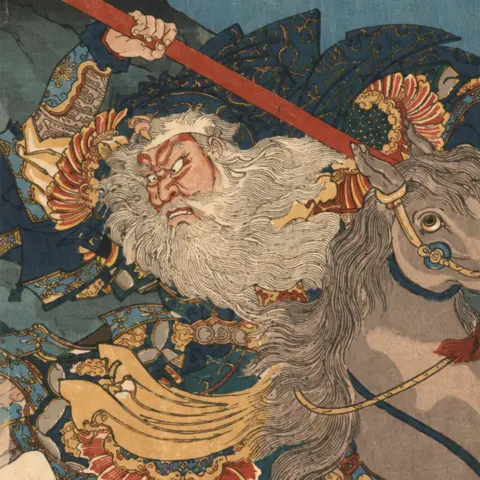 Huang Zhongsaber; bow on the third day · Changsha defender · mounted
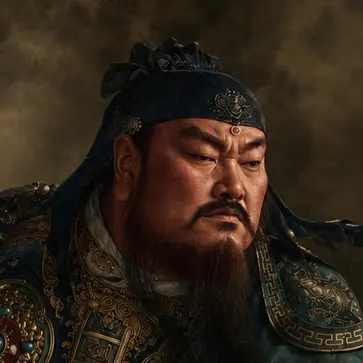 Guan Yulong blade · Liu Bei’s army · mounted
More than a hundred exchanges on day one; fifty to sixty on day two before Huang Zhong’s horse stumbled; fewer than thirty on day three before his feigned retreat and arrow.
The three mounted encounters yielded no final judgment of superior skill. Guan Yu spared Huang Zhong after his horse stumbled; Huang Zhong later struck Guan Yu’s helmet tassel without wounding him. Wei Yan then saved Huang Zhong, killed Han Xuan, and opened Changsha to Liu Bei.
Their first long bout displayed strength, blade work, and tactical adjustment on both sides. Huang Zhong fell on the second day because his horse stumbled, not because Guan Yu unseated him; Guan Yu chose to withhold the killing stroke. On the third day Huang Zhong used two empty bow draws to draw pursuit, then chose a precise shot at the helmet tassel. These encounters reveal skill and judgment, but do not establish an absolute ranking between the two.
II. Two Camps
After Liu Bei entered the western province of Yi, he came to blows with its ruler, Liu Zhang. On the road to Luo City, Liu Zhang’s commanders Leng Bao and Deng Xian held two camps that could support each other. Take one alone and the other could strike the attackers from the side. Take both and Liu Bei’s army could advance toward Chengdu.
Huang Zhong volunteered in the command tent. Wei Yan rose immediately. “Both camps will be hard to take. Why should the old general choose first?”
“Which one do you want?” Huang Zhong asked.
“Give me yours and I can take it. Give me mine and I’ll take that too.” Wei Yan remembered drawing his sword at the execution ground in Changsha. He had not counted the years between them then. Now, whenever a vanguard was chosen, the officers looked first to Huang Zhong. Wei Yan believed his own blade, his horsemanship, and the battles behind him deserved no less regard.
Huang Zhong’s hand went to his saber. He had heard the insult about his age, and his anger was real. He was about to answer when Liu Bei checked them both. Pang Tong pointed to the map: Huang Zhong would attack Leng Bao, Wei Yan would attack Deng Xian, and the first to take a camp would have the leading honor. Huang Zhong looked once at Wei Yan, then bent over the mountain roads. He ordered food prepared in the fourth watch and the march begun in the fifth. Wei Yan soon learned the hour.
Wei Yan fed his men earlier, took the bells off the horses, furled the flags, and set out in the night. At first he rode toward Deng Xian. Halfway there he changed course. If he could take the camp assigned to Huang Zhong and then turn on Deng Xian, no one could say he had merely begged for a chance to win glory. An officer asked whether they should send word to the rear. “By dawn,” Wei Yan said, “a letter will be slower than our horses.”
Leng Bao came out at the mountain mouth as the light rose. Wei Yan fought him for thirty exchanges without giving ground. His men, however, had marched half the night. Before they had formed properly, Leng Bao’s soldiers struck from two sides. Wei Yan broke off to rally them. Drums then sounded behind him: Deng Xian had brought men out through another valley to block the retreat. Wei Yan had stolen a few hours’ march, not the enemy’s command of the ground.
He drove his horse toward a gap. It stumbled and threw him. Deng Xian came at him with a spear. Wei Yan had barely pushed himself up when a bowstring sounded from the slope. Deng Xian fell. Huang Zhong rode down behind the arrow and met Leng Bao’s pursuit with his saber.
Huang Zhong had marched at the appointed hour. Hearing drums from both enemy camps, he guessed that Wei Yan had changed roads. Instead of hurling all his men at Leng Bao’s gate, he took the slope overlooking the valley and waited for the fugitives to emerge. After rescuing Wei Yan, he took Leng Bao’s camp; Liu Bei’s following force seized the other. Leng Bao fled along a narrow path. Wei Yan, having gathered his scattered men, caught him alive.
Wei Yan brought the prisoner into the tent. Huang Zhong said he had disobeyed orders and should answer under military law. Wei Yan lifted his head. “In Changsha I did not wait for orders either.”
“That day you were saving a man,” Huang Zhong said. “Today you led a company of men.”
Neither went further. With Leng Bao captured and both camps won, Liu Bei allowed Wei Yan’s achievement to redeem his offense and ordered him to thank Huang Zhong for saving him. Wei Yan did. Huang Zhong accepted it. He knew Wei Yan was able; that was precisely why he could not call a reckless bid for honor, which had nearly cost the whole company, a small matter. They rode together again. Wei Yan still wanted to be first through the next gate. Huang Zhong was still willing to let him command men, provided he looked at the whole battle before he rode into it.
III. The Road to Hanzhong
The western province was Liu Bei’s, but its northern approaches were not secure. Cao Cao held Hanzhong and its roads through the mountains. If his army came south, Jiameng Pass would take the first blow. Zhang He led Cao’s troops toward it. The defenders failed to drive him away, and an urgent report reached Liu Bei.
Zhuge Liang called the officers together. Some wanted to draw seasoned troops away from other passes; he warned that those gates could not be left empty. Huang Zhong offered to go. Zhuge Liang asked whether he could stand against Zhang He and mentioned his age. Huang Zhong took up a blade and made the room watch what he could still do with it. When asked for a second commander, he named Yan Yan.
Yan Yan knew the mountain roads of the west: how many men a track could conceal, and where a retreating force would be trapped. Before departure, he and Huang Zhong bent over a map. Huang Zhong traced the main road with the point of his blade, ready to fight below the pass and pursue. Yan Yan pressed two fingers on the mouth of a valley. “Go past this point and he can leave men behind you. You may win the first fight and lose the road home.”
Huang Zhong looked up. Yan Yan moved his hand to a narrow path behind the enemy. “Keep his eyes on your blade. He will have none left for me. But you must hold him below the pass.”
“How long?”
“Until he thinks I am not coming.”
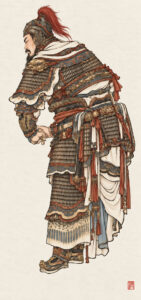
Huang Zhong met Zhang He in mounted combat. After twenty or so exchanges, shouting rose behind Cao’s line. Yan Yan had reached its rear. Zhang He withdrew. Huang Zhong pursued a little way, wanting to drive him farther. Yan Yan came in from the side road and pointed to the enemy’s rear ranks, still formed and dangerous. Huang Zhong looked at their flags and reined in. Zhang He had lost a forward camp, but Xiahou Shang and Han Hao were bringing reinforcements. The road was not yet open.
Scouts brought news of a larger prize: Cao’s army stored food and fodder on Mount Tiandang. At the pass, Huang Zhong said a direct attack would put every guard on alert. Yan Yan moved markers backward across the map. “Let them chase us here first. A camp can be retaken. If they bring their wagons forward, we may take the wagons with it.”
Huang Zhong studied the camps he would have to surrender. “You give them up easily.”
Yan Yan pushed a wooden wagon marker toward him. “Keep them, then, and we can spend a month fighting outside their walls.” Huang Zhong closed his hand around the marker and ordered ropes and torches prepared for a night march.
He yielded one camp, then another. Xiahou Shang and Han Hao took both and piled captured grain and tack in the new positions. From a distance even Liu Bei’s messengers saw only Huang Zhong retreating. He gave them no long explanation; he had the men at the pass ready the path downhill in darkness.
When the Cao troops relaxed, he came down at night. Their new walls were unfinished, and their own wagons clogged the way out. Xiahou Shang and Han Hao abandoned one camp after another. By evening Huang Zhong was close to Tiandang. His soldiers were tired, and an officer asked to halt. Huang Zhong first asked where Yan Yan’s men had reached. A scout pointed toward the rear of the mountain. Only then did he order the advance.
Han Hao came down to meet him, crying that Huang Zhong had brought about his brother Han Xuan’s death. Wei Yan, not Huang Zhong, had killed Han Xuan in Changsha, but the old grievance had found Huang Zhong’s path. He did not stop to argue. He rode through Han Hao and cut him down. As Cao’s soldiers gathered to defend the heights, fire rose behind them. Yan Yan had reached their stores. Xiahou De turned his men toward the flames, met Yan Yan, and died by his blade. Huang Zhong pressed from the front, Yan Yan from the rear. Zhang He and Xiahou Shang could no longer hold Tiandang; they fell back toward Mount Dingjun.
Huang Zhong climbed among wagons saved from the fire. Yan Yan appeared on the other side, blackened with smoke. Before answering anyone, he had the wounded from his rear attack carried clear of the flames.
“How much burned?” Huang Zhong asked.
“Enough to grieve them. We kept enough for ourselves.” Yan Yan pointed down the slope. “Two wagons are stuck there. Men first, wagons after.” Huang Zhong sent his own soldiers to help. Then each commander went to count his people. The blades at the front and the fire at the rear had taken the mountain together.
IV. The Hill Opposite
News of Tiandang reached Liu Bei. Fa Zheng, one of his strategists, saw that the loss of the grain mountain had driven Zhang He toward Xiahou Yuan. If Liu Bei stopped now, Cao’s army could still defend Hanzhong from Mount Dingjun. Its approaches were narrow. Men attacking uphill could be caught from either side. Liu Bei decided to advance and asked Huang Zhong whether he would take the mountain.
He would. Zhuge Liang reminded the council that Xiahou Yuan, whom Cao Cao trusted with this defense, had led armies for years. He was no remnant from a defeated camp. Huang Zhong heard another challenge to his age and gripped his saber, asking to leave at once. Zhuge Liang sent Fa Zheng with him and arranged a supporting force. Outside the tent, Fa Zheng was waiting.
“Have you come to tell me to slow down too?” Huang Zhong asked.
“I have come to find where you can move quickly,” Fa Zheng said, “and where you must not.”
When word of Tiandang’s loss reached Mount Dingjun, Xiahou Yuan first asked how much grain had escaped and whether Zhang He had gathered his men. The mountain passes of Hanzhong depended on one another. With the stores gone, one layer of his defense was gone too. Huang Zhong challenged him several times at the mouth of the pass. Xiahou Yuan did not come down. He knew those side roads could hide an ambush; from the high ground, his soldiers could cut off an enemy who rushed too far into the valley.
One day Chen Shi, an officer under Huang Zhong, chased Xiahou Shang into those roads. Stones fell from the slopes and Xiahou Yuan’s men took him prisoner. Xiahou Yuan brought Chen Shi inside his camp and kept the watch on the mountain tracks. Huang Zhong and Fa Zheng questioned the survivors and studied the route. They would move their camps forward step by step, rather than throw another column into the same trap. Huang Zhong stood over the map for a long time before shifting the site of his next camp farther back.
As the new camps drew nearer, Xiahou Yuan sent Xiahou Shang to meet them. Huang Zhong rode out and captured him almost at once. The two sides arranged an exchange in the valley. Chen Shi ran toward Huang Zhong’s men; Xiahou Shang ran toward Cao’s. Huang Zhong put an arrow into Xiahou Shang’s back. Xiahou Yuan saw him struck and charged. He and Huang Zhong fought more than twenty exchanges before the recall sounded from Cao’s camp. Xiahou Yuan rode back. Both men had tested the other’s blade. Dingjun remained in Cao’s hands.
Fa Zheng took Huang Zhong to a hill west of the mountain. From its crest they could see Cao’s camp and the roads leading in and out. “Hold that hill,” Huang Zhong said, “and Xiahou Yuan will not sleep comfortably in his old position.”
“He still has an army,” Fa Zheng replied. “Draw him out. Then make that army tired before you move.”
Huang Zhong took the opposite hill at night and placed his force halfway down it. Fa Zheng stood above them with two signal flags. White meant hold; red meant charge. The surviving guards brought the news to Xiahou Yuan. From his tent he could see an enemy flag on the height that overlooked his camp. If he stayed where he was, Huang Zhong could study the roads and advance at leisure. Zhang He urged him to keep the strong ground. Xiahou Yuan heard him out. Then he pointed to the captured hill. “If they settle there, which road shall we defend tomorrow?” He led men to surround it and called Huang Zhong down to fight.
At dawn Huang Zhong was armed, his horse beside him. The challenges came up from below. His front ranks gripped their weapons and waited for his order. Above them, the white flag stayed raised. Sunlight crossed the ridge. Cao’s soldiers called again, rested their shields against their knees, and called once more. Huang Zhong’s men grew stiff behind the stones. A young soldier moved to get a better view. Huang Zhong pressed him back. “Wait for the flag.”
Xiahou Yuan watched the height. He kept men guarding the way back while the front ranks took turns challenging. No one came down. After noon, their lines loosened; some soldiers dismounted. Fa Zheng saw it and raised red.
Huang Zhong sprang into the saddle and pointed his saber downhill. His men poured after him. At first there was only the hard rush of hooves and armor; then, as they broke across the slope, the horns sounded. Cao’s front ranks turned to face them while the men behind were still gathering. Huang Zhong drove at the opening before it closed.
A spear came across his path. He knocked the shaft aside without checking his horse. Beneath the commander’s canopy, Xiahou Yuan turned to meet him. Huang Zhong was already within the reach of his blade. He cut with the force of the descent, and Xiahou Yuan fell before he could guard himself. There was no long final duel. Huang Zhong’s soldiers struck Cao’s line behind him. The man carrying the commander’s standard saw the canopy pitch; men in front still shouted to form ranks, while those behind asked who had ordered a retreat. Some tried to reach Xiahou Yuan, but the attackers cut them off. The orders no longer carried through the mass of men. Once it began, the withdrawal could not be stopped.
Huang Zhong pressed on. Zhang He came to resist him and was driven back by attacks from several sides. Mount Dingjun fell. As Cao’s soldiers withdrew through the pass, some looked back toward the place where Xiahou Yuan’s banner had stood. The victors joined the captured hill to the mountain camp. Cao Cao would later bring an army to contest Hanzhong; the war was not over in a day. Yet Cao’s forces had now lost both the stores at Tiandang and the strong position at Dingjun.
When Fa Zheng reached the mountain, Huang Zhong was counting the wounded. They looked at each other once and went on with their work. The hours spent beneath the white flag had finally brought them here.
The Battle of Mount Dingjun: Huang Zhong and Xiahou Yuan
Mount Dingjun and the opposing height in Hanzhong · Romance of the Three Kingdoms, Chapters 70–71
Huang Zhongsaber; bow in the earlier exchange · Liu Bei’s commander · mounted and mountain assaultAn earlier mounted bout lasted more than twenty exchanges before the Cao recall. Later, Fa Zheng signaled Huang Zhong to wait under a white flag and attack under a red flag; Xiahou Yuan was killed before he could parry.
Huang Zhong killed Xiahou Yuan and Liu Bei’s army took Mount Dingjun. The earlier mounted exchanges were distinct from the final blow; the outcome followed the contest for the opposing height and the timed downhill assault.
Huang Zhong held his own in the earlier bout, then followed Fa Zheng’s signals, waited for the Cao troops to tire, and led a downhill attack. Xiahou Yuan was an experienced commander; his death cannot be reduced to inferior individual skill. The final strike was no prolonged duel. The battle shows Huang Zhong’s courage, patience, and decision, alongside Fa Zheng’s plan, terrain, and army movement.
V. Honors After the Battle
Liu Bei later took the title King of Hanzhong and appointed Huang Zhong alongside Guan Yu, Zhang Fei, Zhao Yun, and Ma Chao. When the news reached Jingzhou, Guan Yu resented being placed beside Huang Zhong. The envoy Fei Shi persuaded him to accept Liu Bei’s decision.
Huang Zhong was nowhere near Jingzhou and heard none of their words. From his encounter with Guan Yu beneath the walls of Changsha to the capture of Dingjun, he had traveled farther than one contest between two blades. Guan Yu had lowered his weapon and given him another horse; Huang Zhong had sent an arrow into a helmet tassel. In those days, all they could give each other was a little room before steel came down. Military honor and the talk carried between distant camps could not be settled by fighting one more time.
There was still work in Hanzhong. Huang Zhong took his new commission and went to inspect horses, wagons, and the army’s arrows. When men called him old general, he answered. When they asked where to march tomorrow, he asked for the map.
VI. The Pursuit
Guan Yu and Zhang Fei died. Liu Bei led an army east against Wu. In a discussion of his officers, he said he no longer meant to rely on old generals. Huang Zhong heard of it while inspecting the arrows. He turned one shaft between his fingers, returned it to the soldier, took up his saber, and rode toward the front with only a handful of attendants. Years before, when Zhuge Liang had questioned his strength, he could lift a blade before the whole council. Now Liu Bei had spoken. Huang Zhong would not remain in the rear and wait for someone else to defend him.
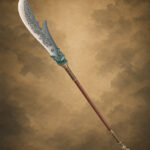
Officers at the front urged him to wait for support. He had already seen the standard of Pan Zhang, one of Wu’s commanders. Pan Zhang carried the Green Dragon Crescent Blade that had belonged to Guan Yu. Huang Zhong killed a Wu officer who had mocked his age, then met Pan Zhang. Pan Zhang withdrew; Huang Zhong pursued him for a stretch and returned victorious. Guan Yu’s son Guan Xing and Zhang Fei’s son Zhang Bao arrived under orders to help. Seeing the fight was won, they urged him to return to Liu Bei. Guan Xing heard that Pan Zhang had fought with his father’s blade and tightened his grip on the reins. Huang Zhong looked at him. “I stopped the pursuit today by my own choice.” He handed his saber to a soldier to wipe clean and gazed toward the road the Wu army had taken. “He is still ahead.”
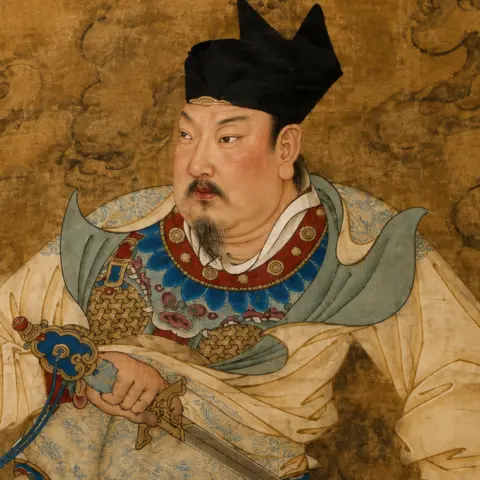
The next day Pan Zhang challenged him again. Guan Xing and Zhang Bao had their horses ready. Zhang Bao warned that the road narrowed, and men should cover both sides if the enemy fled. Guan Xing offered to scout the forks ahead. Huang Zhong knew they had reason to be careful. He assembled his own soldiers beneath his flag. “I will lead this column. Hold the road behind us.” He did not take the two young commanders with him.
After only a few exchanges, Pan Zhang retreated again. Huang Zhong pursued with his men. At first he could still see his rearward flags. The road bent around a ridge, and the flags vanished behind it. The Wu soldiers ahead were withdrawing almost too neatly. Huang Zhong slowed his horse and sent men to look toward the slopes. The hills seemed quiet. Beyond the next rise, Pan Zhang’s standard was about to disappear. Huang Zhong glanced back at the road, raised his saber, and urged his men forward.
Shouts broke on every side. Wu troops poured out of the paths crossing the valley and blocked both the advance and the retreat. Huang Zhong wheeled his horse to cut a way back. The flags that had been behind him appeared only in glimpses through the enemy ranks. He shouted for his men to stay together and faced the soldiers closing the road. More men rose on the slope. An arrow struck his shoulder. His body lurched, but he kept hold of his saber and guarded the men pulling back beside him. Guan Xing and Zhang Bao struck the encirclement from outside and got him clear. When Zhang Bao reached his horse, Huang Zhong pointed first toward the soldiers still trapped in the pass. Only when they were through did he allow himself to be helped down.
At Liu Bei’s camp the wound had begun to bleed through its fresh dressing. Liu Bei came to him and stopped beside the bed. Huang Zhong tried to rise in greeting. Liu Bei held his hand and tucked the fallen edge of the cover around him. After a while he said quietly, “You have suffered, old general.”
Huang Zhong asked whether the men who had ridden out with him had returned. Liu Bei said Guan Xing and Zhang Bao were counting them. Huang Zhong nodded and told Liu Bei to take care of himself. He died of the wound that night. Liu Bei ordered a coffin prepared to send him home for burial in Chengdu. Outside the tent, Guan Xing and Zhang Bao came with the count of those who had returned. Liu Bei took the roll, turned to the page for Huang Zhong’s men, and left his hand there.
Explore the Knowledge Graph
Related Figures
Huang Zhong
黃忠
Guan Yu
關羽
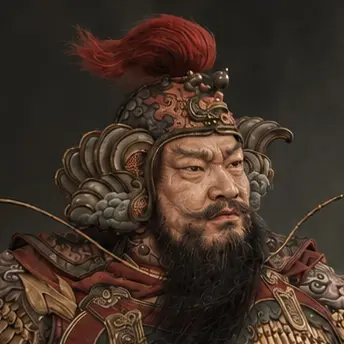 Wei Yan
魏延
夏侯渊
Xiahou Yuan
夏侯渊
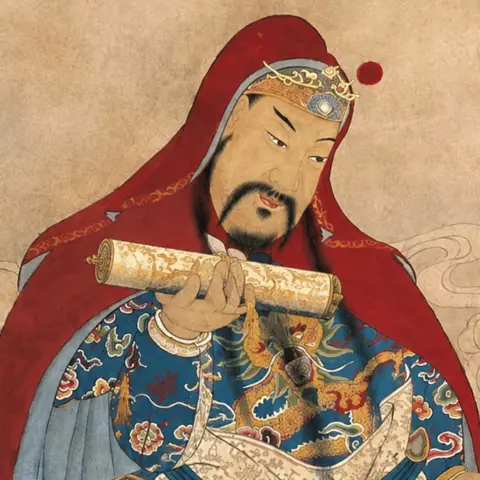 Liu Bei
劉備
严颜
Yan Yan
严颜
 Zhuge Liang
诸葛亮
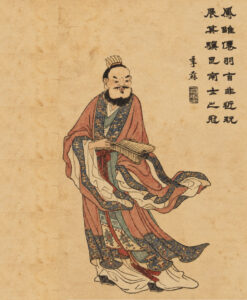 Pang Tong
庞统
 Zhang He
张郃
 Zhao Yun
趙雲
潘璋
Pan Zhang
潘璋
 Guan Xing
關興
张苞
Zhang Bao
张苞
 Cao Cao
曹操
刘表
Liu Biao
刘表
 Zhang Fei
張飛
 Ma Chao
馬超
法正
Fa Zheng
法正
韓玄
Han Xuan
韓玄
夏侯尚
Xiahou Shang
夏侯尚